
Related videos:
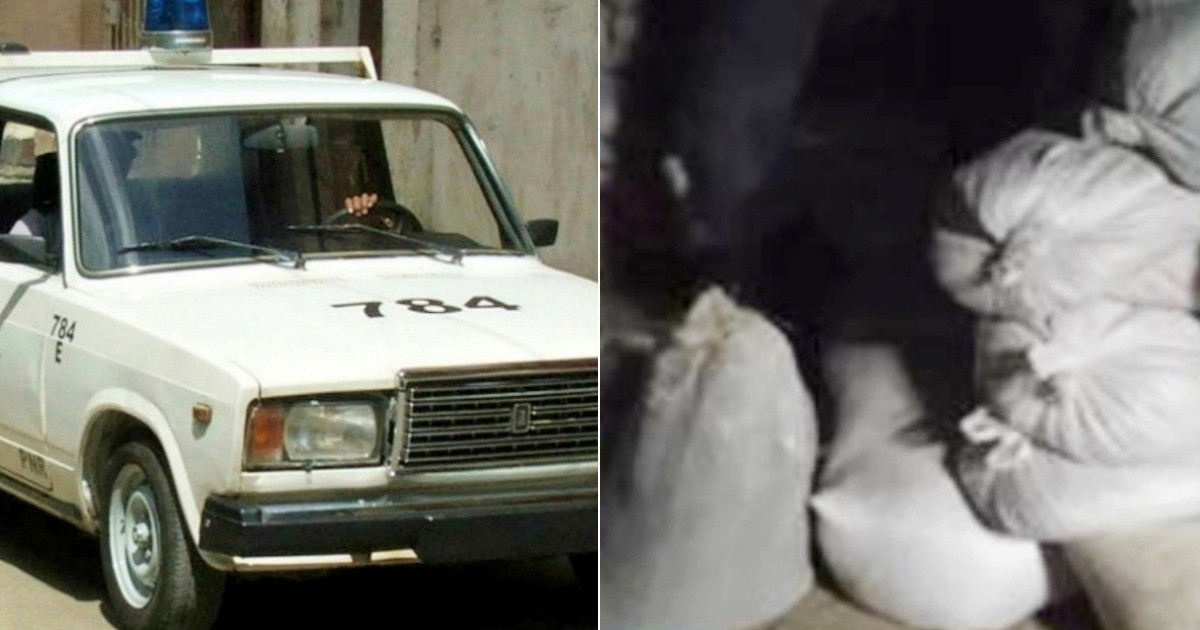
Authorities in Las Tunas seized more than a hundred bags of coffee that were being transported secretly in a truck coming from Santiago de Cuba, according to a report by the official Facebook page Claridad Tunera.
The incident was witnessed by a witness who requested anonymity and was at a checkpoint of the National Revolutionary Police (PNR).
According to his testimony, the cargo was camouflaged among sacks of charcoal to avoid being detected.
"I managed to count them up to 100, but at that moment the officer returned the documents to me and asked me to continue my travel, and listen, there were still bags there," said the witness, who also claimed to have taken photographs of the seizure.
The official page itself justified the operation with a reflection that points to the informal commercialization of the product: "If when there is a harvest it goes in another direction, we will never have coffee in our cup."
It also pointed out that the goods would be sold at high prices on the black market, leaving "a nice chunk for the owner."
"I know there will be critics and 'armchair critics' who will point out the lack of supplies in the state sales network. But do you really think that at this rate the State can ensure the availability of coffee in its stores?" concluded the official source, anticipating possible questions about the product's scarcity.
Shortage and informal market: the other side of the seizure
The incident brings to the forefront the deep coffee crisis in Cuba, a country that has historically been a producer but today struggles to ensure its availability in the state network.
Recent data highlights the seriousness of the issue: Santiago de Cuba, the main coffee-growing region, barely met 65% of its production targets at the beginning of 2025, while nationwide collection was around 43%.
The lack of labor, the abandonment of the mountains, and the inefficiency of the state system have worsened the situation.
As a result, coffee prices have surged in the informal market, where they can reach between 1,500 and 1,800 CUP for 500 grams, prohibitively high prices for most of the population.
Division of opinions among Cubans
The seizure sparked intense debate on social media, where many users questioned the effectiveness of such actions amid widespread shortages.
Some defended the informal market as the only way to access the product and were critical of the state management, as the official media had anticipated.
"Thanks to those who sell clandestinely to taste a little cup of coffee, but the good kind"; "The government stopped caring a long time ago if we drink coffee or not," commented two internet users.
There were also those who pointed out that the restrictions fuel the scarcity: "As long as the prohibitions continue, the scarcity will persist," comparing the situation to past periods of agricultural control on the island.
Several comments agreed in questioning the fate of the seized coffee: "What are they going to do with that coffee? Because you buy it on the street since it's never available in the store." Meanwhile, others suspect that these products end up beyond the reach of the average citizen.
There were certainly critical voices against those who justify the illegal market: some users warned about the impact of these practices on general shortages, although these opinions were in the minority compared to the prevailing discontent.
A structural problem with no visible solution
Beyond the specific seizure, the case reflects a persistent reality: the state's inability to ensure basic products and the growing dependence on the informal market to meet those shortfalls.
For many Cubans, these operations do not address the underlying issue.
On the contrary, they reinforce the perception that coffee—like other products—will continue to be an inaccessible luxury or will rely on alternative means to reach consumers
Meanwhile, the question that hangs in the air is the same one that citizens keep asking: Will that confiscated coffee reach the stores, or will it once again disappear from the reach of ordinary Cubans?
Filed under: