
Related videos:
While more than 70% of Cuban households have had to reduce the quantity or quality of the food they consume, chefs from the Nitza Villapol Culinary Association in Camagüey organized a gastronomic exhibition on Tuesday featuring dishes from Mexico, China, Spain, and Cuba, presented by the official newspaper Juventud Rebelde as an act of "resistance and resilience."
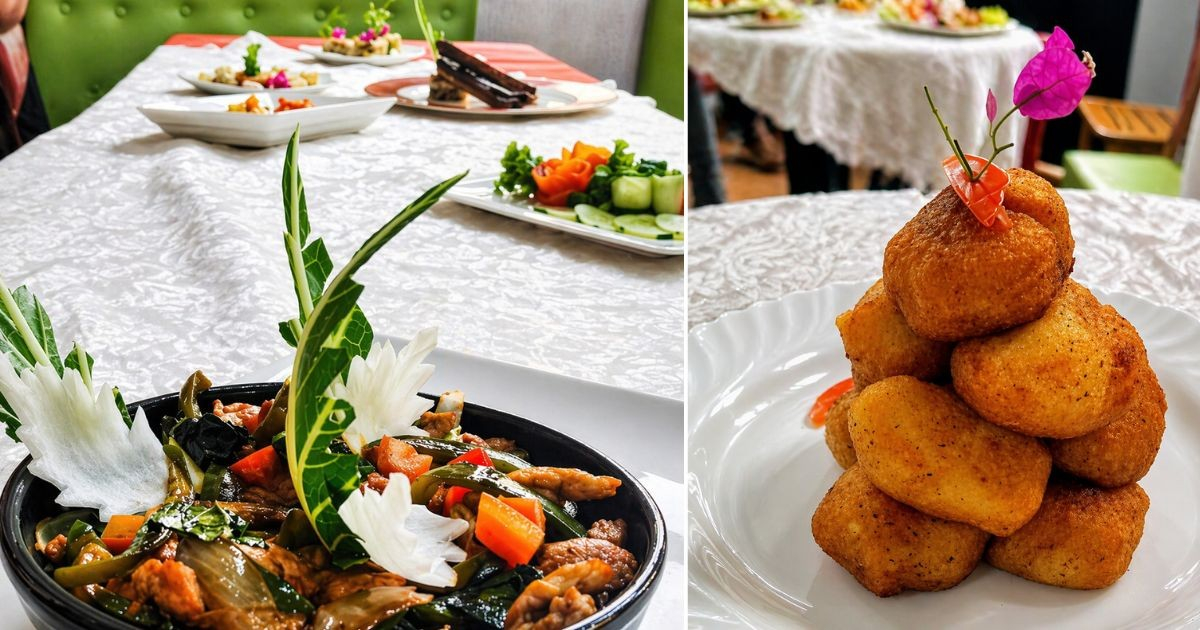
The event, titled "The Flavor of Solidarity", was held at the Nan-King restaurant in the city and was reported by correspondent Yahily Hernández Porto, who shared it on Facebook.
The exhibition brought together several local chefs with proposals from four countries. The master Aramis Valero Agüero prepared the Mexican dish Cochinilla pivi with a combination of spices and aromatic herbs.
Félix Calderón Borrero and Leandro Pino Corrale from Restaurante Lucky presented a Mediterranean Salad representing Spain and a rolled steak with Lucky sauce.
Chefs Arniel León Fonseca, Yuri Abel Rodríguez, and Bonny García González prepared traditional Chinese dishes: Chicken Chop Suey, Pork Chop Suey, and Fried Rice.
The most "revealing" detail of the event was the participation of chef Martín Urdelino López, who showcased a series of dishes—vegetarian ropa vieja, Camagüeyano Matajíbaro, spreadable pasta, Cuban-style hamburger, and criollo picadillo—entirely made from banana peels.
This practice is not new in Cuba: during the Special Period of the 90s, banana peel hash became popular as a meat substitute out of extreme necessity, not out of culinary creativity.
That in 2026 what was once a survival strategy will be presented as a gastronomic innovation precisely summarizes the food situation on the Island.
According to data from the World Food Programme for this year, 36% of the Cuban population experiences food insecurity, and 80% of Cubans believe that the current crisis is worse than the Special Period.
In 2025, the food industry met only 54.1% of the dairy plan and 71% for meat, with a total deficit in imports of soy and oil. Rice reached 340 pesos per pound in Havana.
The event also had an explicit political dimension. During the meeting, the creation of an autonomous Cuban branch of the Federation of Chefs of Tulancingo Hidalgo from Mexico was announced in Camagüey, spearheaded by chef and researcher Frank Rodríguez Pino, the first Cuban to win the Award for Best Cookbook in the World at the Gourmand World Cookbook Awards in 2011, with his book Cocina útil.
Rodríguez Pino stated to Juventud Rebelde that the project's objective is "to strengthen, consolidate, and develop ties of brotherhood and cultural exchange between both friendly nations, to confront and break the media and economic blockade imposed on Cuba," in line with the official discourse that attributes the crisis to US sanctions rather than the policies of the regime.
At the event, medals were awarded in honor of Nitza Villapol —the name of the association recognizing the chef and television host who adapted recipes to the shortcomings of the Cuban system for forty years— and the Mexican medal Rafael Hernández, in memoriam, from the Federation of Tulancingo, to the participating chefs.
The official media described the exhibition as a "school for the defense and unwavering safeguarding of its culinary culture and identity," while the majority of Cubans lack access to basic cooking ingredients.
Filed under: