
Related videos:
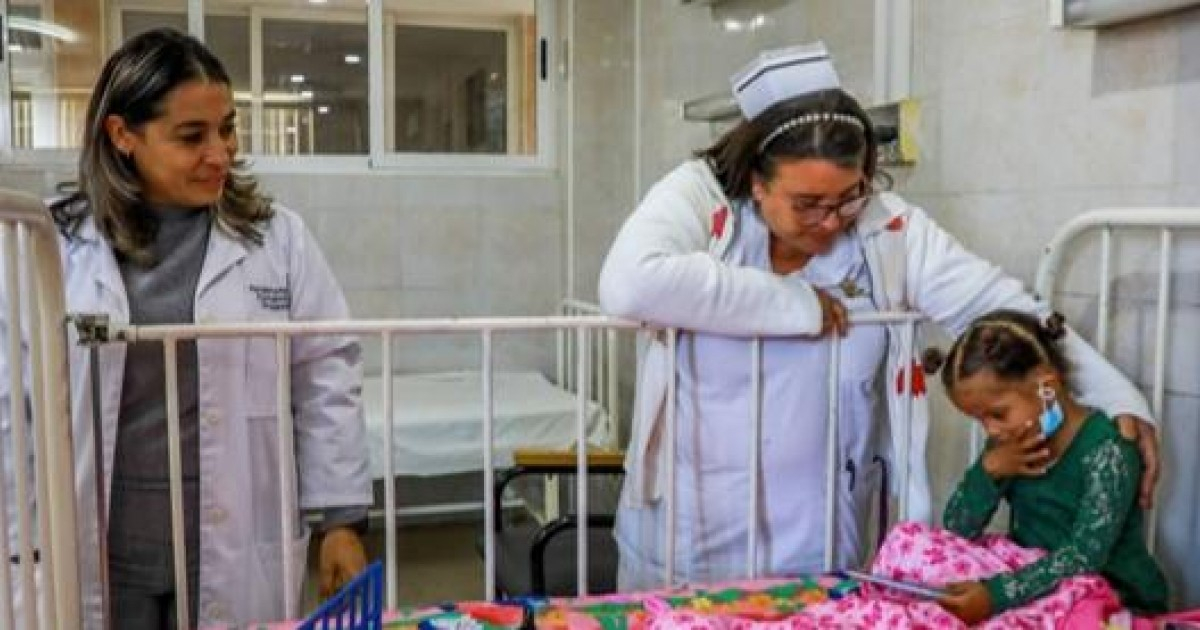
Cubadebate published an article written by Mariuska Forteza Sáez, a doctor leading the pediatric oncology ward at the Oncology and Radiobiology Institute of Havana, in which she reveals that the survival rate of Cuban children with cancer has dropped from 75% to 65%, attributing this decline to the U.S. embargo.
The text, titled "Suffocating Measures Against Cuba: More Children with Cancer are Dying," notes that each year approximately 400 children and adolescents are diagnosed with cancer in Cuba, and around 1,400 are living with the disease on the Island.
"The decline in the survival rate of our children with cancer corresponds astonishingly with the toughest years for Cuba, alongside the increasing suffocating measures," writes the doctor, who also mentions the lack of medications, equipment breakdowns, energy crisis, and transportation issues as determining factors.
The post unleashes a wave of criticism on social media.
A Cuban doctor residing in Brazil summarized the feelings of many: "The most outrageous thing about all this is not just the news, but the level of cynicism. For years, the lack of medications, the precarious conditions in hospitals, and avoidable deaths were reported… and the response was always to deny everything. It was 'lies,' it was 'a campaign,' it was 'manipulation.' Today, it turns out that it is indeed true. But they do not acknowledge it out of responsibility, rather because it now serves their purpose."
The same doctor pointed out the most evident contradiction in the regime's priorities: "There is electricity for hotels and political events. There is never a shortage of fuel for the repressive apparatus. Whatever is needed always appears for patrols and police cars. But in hospitals, there are shortages of medications, supplies, everything."
Other Cuban internet users were equally direct. "They prefer to build hotels rather than invest in the well-being of hospitals," one wrote.
Another proposed a concrete solution: "Take the fuel away from the patrol cars and allocate it for the care of children with cancer. Stop deploying so many buses to spontaneously bring people to political events, and you will see that sadness begins to change color."
A third commentator pointed directly to the internal cause of the crisis: "This acute crisis was generated (in case anyone has a short memory) by the economic restructuring, masterminded by Gill and the president of Cuba."
The episode follows a documented pattern.
In January, official media turned the helicopter transfer of a sick baby from the Isle of Youth into propaganda against the embargo, generating similar outrage.
In April, the same Cubadebate attributed the precarious care for pregnant women at the Lenin Hospital in Holguín to the embargo, despite prior complaints of negligence.
The Díaz-Canel visited the Cubadebate booth at the V International Homeland Colloquium in March and urged its workers to "insert the truth of Cuba," describing the state media as an "ideological trench."
The data on the healthcare collapse is verifiable and independent of the embargo.
The infant mortality reached 8.2 per 1,000 live births by July 2025, the highest level in 25 years, compared to the historic low of 4.1 per thousand recorded in 2017.
The healthcare system operates with only 30% of the essential medicines available, and there are 96,387 patients on the surgical waiting list, of which 11,193 are children. The Minister of Public Health, José Ángel Portal Miranda, admitted in February 2026 that the system is "on the brink of collapse".
While hospitals are experiencing power outages, the regime invests in energy efficiency for hotels in Varadero and Jardines del Rey, and the tourist circuits remain shielded from electrical cuts.
The resident doctor in Brazil concluded his analysis with a statement that echoed among thousands of Cubans: "Using sick children as a political tool, after having denied the crisis for years, is not only hypocritical… it’s disgusting."
Filed under: