
Related videos:
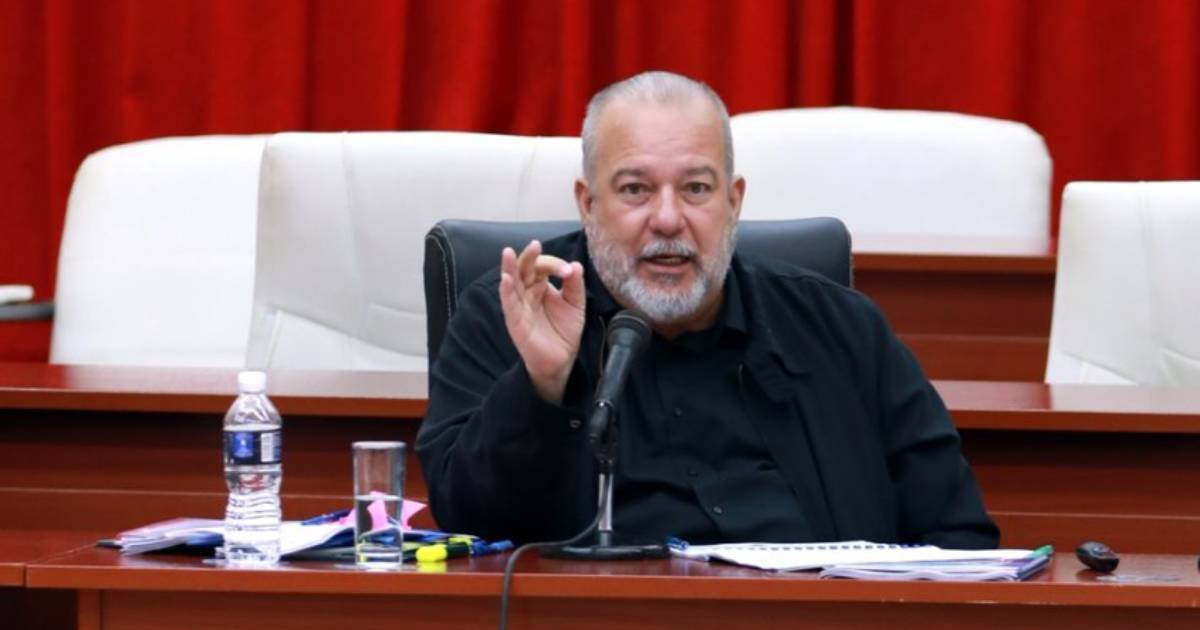
The Cuban Prime Minister Manuel Marrero Cruz demanded on Saturday to intensify the fight against fuel theft in Cuba, labeling these crimes as particularly serious due to their direct impact on the economy and basic services for the population.
"There is a need to intensify the fight against crimes, particularly those related to fuels, which take on a particular seriousness due to their impact on the economy and essential services for the population. Let it be known that there is resistance," wrote Marrero on his X account.
The message arrived a day after the Prime Minister chaired a meeting of the Working Group for the prevention and confrontation of crime, corruption, illegal activities, and social indiscipline, which was held on Friday via videoconference with the regions.
In that meeting, Leisy Hernández González, the director general of the National Office for the Rational Use of Energy (Onure), presented the results of prevention and efforts to combat fuel theft during 2025 and the first quarter of 2026.
Marrero described the theft of dielectric oil from transformers as a crime of "high sensitivity," noting that its removal leaves entire communities without electricity, and called for greater awareness to engage the public in addressing the issue.
The prime minister also requested to strengthen controls at production centers and warehouses, and to improve the Ticket application and the sales system at service stations.
"Let it be known that there is no tolerance for fuel theft, oil theft, or corruption. (...) We also want a firm hand with those administrative irresponsibles who are not fulfilling their role, who are not demanding accountability, and who are not controlling as they should." he said.
Extreme fuel shortage in Cuba
Cuba needs eight fuel ships per month and from December 2025 until the end of April 2026, it received only one, which has caused gasoline prices on the black market to skyrocket to 4,000-5,000 Cuban pesos per liter, a figure that exceeds the average monthly salary of about 3,000 pesos.
In that scenario of scarcity, fuel theft has taken on multiple forms: siphoning diesel from generators, tampering with records at CUPET depots, and nighttime robberies at service stations.
The theft of dielectric oil from transformers is a growing trend that directly exacerbates power outages.
In Amancio, Las Tunas, the theft of 600 liters left around 5,000 people without electricity, including a polyclinic and a pumping station. In Ciego de Ávila, 41 thefts of this type were recorded in 2025, affecting 84 transformers.
This week, three men were charged with electrical sabotage in Jatibonico, Sancti Spíritus, after stealing dielectric oil from a substation of the Uruguay Agroindustrial Complex.
The Cuban Prosecutor's Office classifies fuel theft as sabotage, with penalties ranging from seven to 30 years in prison, although the regime acknowledges that the complicity of officials and the lack of internal controls facilitate impunity.
This is not the first time Marrero addresses issues of corruption and crime in Cuba. In July 2025, he chaired a similar meeting where he described fuel theft as "unacceptable" and acknowledged high levels of criminality despite an alleged overall decrease in crime rates.
Filed under: