
Related videos:
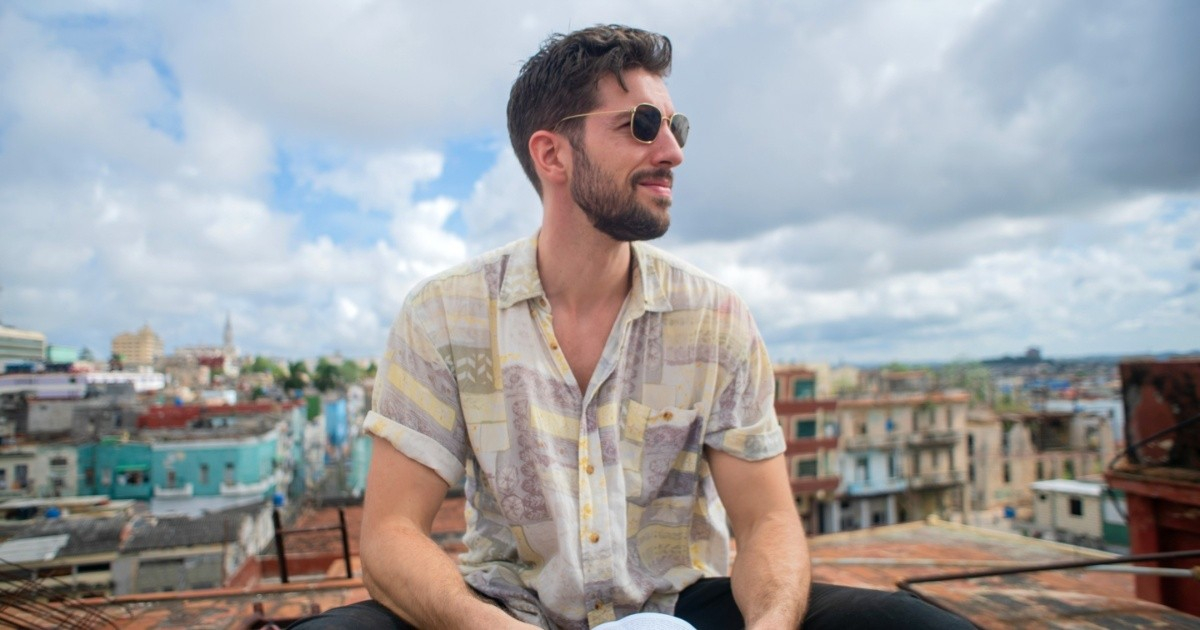
The Norwegian anthropologist Ståle Wig lived in Havana from 2015 to 2018, working as a taxi driver at night and in a clothing and shoe market during the day, to document the daily lives of Cubans under the regime.
His experience is captured in the book Havana Taxi: Cuba and the Years of Illusion, published by Editorial Hypermedia in February 2026.
Wig arrived in Havana for the first time in December 2014, just as Barack Obama and Raúl Castro announced the restoration of diplomatic relations between the United States and Cuba. That moment of apparent openness generated a wave of hope among Cubans that the anthropologist sought to capture from within.
Inspired by the Iranian documentary Taxi Tehran, he decided to buy a car and drive through the streets of Havana as a taxi driver to spark spontaneous conversations. "Knowing that taxi drivers want to talk, I found it interesting to do," he explained.
The vehicle was purchased with funds from the organization Palabra Libre, but obtaining the license plate was a long process, "very difficult" and involved "a lot of bribery."
She partnered with the owner of the car, whom she calls Catalina in the book: a militant of the Communist Party, known as "the queen of the underworld," who used the car to transport hair from the countryside to Havana and sell it in the informal market. Today, Wig considers her her "second mother."
The book portrays three real characters who embody the contradictions of Cuban society.
Catalina expresses her love for Fidel Castro but has not participated in official mobilizations for years, unable to see herself represented by the current authorities. This duality—pretending loyalty to survive—has become essential on the island.
Linette, a woman from Santiago who fled an abusive relationship in Russia, reinvented herself in Havana with an Airbnb business.
Norges Rodríguez, a young journalist who founded a blog about human rights and press freedom, was threatened with 20 years in prison and ended up in exile after being labeled a conspirator following the protests on July 11, 2021.
Wig under the regime's harassment
Wig himself was not exempt from the regime's surveillance: his phones were tapped, he received unexpected visits from the police, and he was subjected to interrogations about his activities.
Scarcity marked daily life, from food to toilet paper and butter, even for him, who had a Norwegian university salary and a European passport.
When he returned in 2021 to read the manuscript to Catalina—with Bob Marley playing in the background "to keep the neighbors from hearing"—he found a country that was "dimmed," with power outages lasting almost twenty hours in the eastern provinces and a hope that had evaporated after the repression of July 11th.
After that social explosion, more than 1,500 people were detained and the exodus accelerated dramatically, with Cuba losing nearly 18% of its population in just two years.
"The future transformed, not into another time, but into another place," says Wig about that massive exodus.
During his recent visit to Buenos Aires, where he presented the book, the anthropologist described the current situation on the island in stark terms: "There is a wild desperation (...) There is total uncertainty about what is going to happen."
"To understand Cuba, you have to experience it," asserts someone who spent years immersed in its reality. He sums up his experience in one sentence: "I left with a broken heart."
Filed under: