
Related videos:
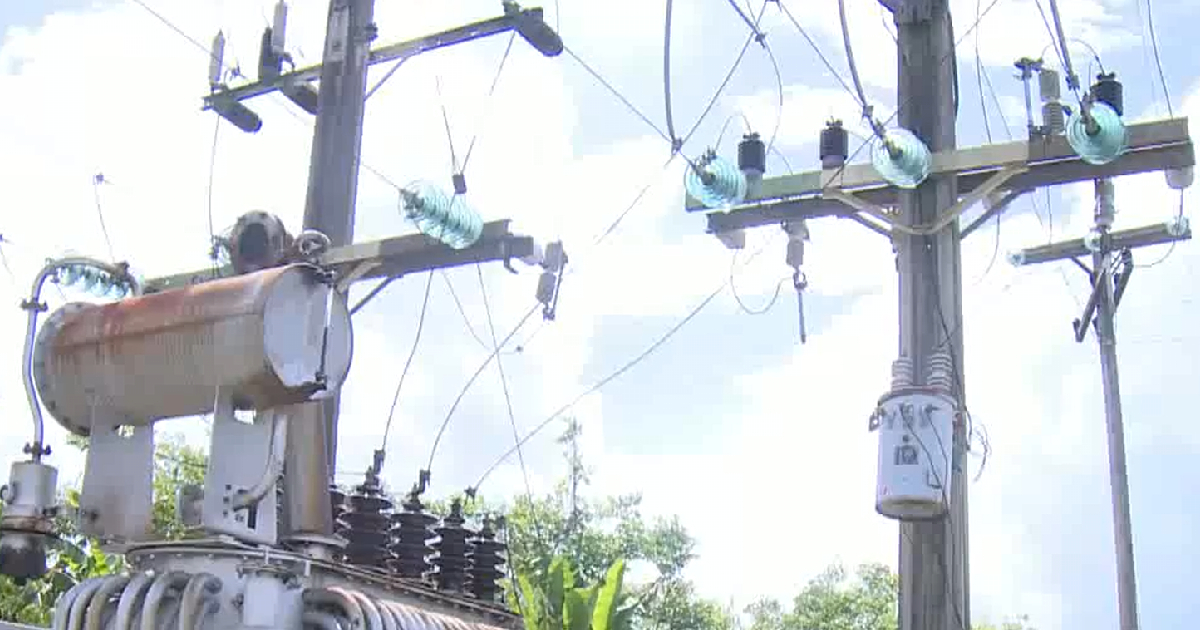
The theft of 600 liters of dielectric oil from two 500-kilowatt transformers located near the Agroindustrial Sugar Company in the municipality of Amancio, in Las Tunas, left 40% of the local customers without electricity since Friday afternoon, according to official sources.
The blackout has affected a total of 4,947 customers, including residents in the neighborhoods of El Batey, Nueva Paz, and El 12, as well as rural communities ranging from La Lomita to San Felipe, from Las Marías to Las Pulgas, and the localities of La Estrella, Yamaqueyes, and La Manzanillera, reported this Saturday the local station Radio Maboas.
Among the institutions that were left without electricity are the Luis Aldana Palomino polyclinic, which offers hospitalization services, the Telecommunications Center, and the Alipio Carrillo water pumping station, which worsened the impact on the most vulnerable population of the municipality.
Radio Maboas indicated that "one of the individuals linked to this criminal act is in custody" to conduct the necessary investigations.
The engineer Aramis García Pérez, director of the Electric Base Business Unit of Amancio, confirmed that part of the stolen oil was recovered, but he specified that it could no longer be reused because it was "contaminated". He also pointed out that the authorities were looking for "alternatives to resolve this situation."
This Sunday it was announced that, following "coordination between the Electric Company, the Communist Party of Cuba, and the Provincial Government, along with efforts from other provinces," a solution to the problem has been found.
According to the information published by the newspaper 26 on Facebook, in the coming hours, "the replenishment of the resource is expected to arrive in that territory," which will allow for the restoration of electrical service to nearly 5,000 clients who have been without power since Friday.
The theft of dielectric oil is a growing phenomenon in Cuba that has worsened with the energy crisis. The oil acts as an insulator and coolant in transformers; its removal irreparably damages the equipment and leaves communities without power for days or weeks. Thieves resell it on the black market as lubricant or fuel for tractors, for prices of up to 500 Cuban pesos per liter.
The incident in Amancio is not isolated. In recent weeks, the theft of dielectric oil from the transformers at the Lora irrigation substation has affected the communities of the Lora and El Trompo popular councils at least three times, in the municipality of Jesús Menéndez, in northern Las Tunas.
Similar incidents have been reported in various provinces. In September 2025, a man died from electrocution while attempting to extract oil from a transformer on the Siboney Road in Santiago de Cuba.
During 2024, Ciego de Ávila recorded 32 criminal incidents of this type involving more than 13,700 liters stolen across six municipalities, according to official data.
In response to the surge in thefts, the regime has reacted with unprecedented legal strictness. The Council of Government of the People's Supreme Court recently reaffirmed the validity of its ruling from May 2025, which states that those who commit illegal acts that harm the country's critical infrastructure commit the crime of sabotage.
The established penalties range from seven to 15 years under basic circumstances, and from 10 to 30 years, life imprisonment, or the death penalty when serious consequences occur, for offenses that include the theft of components from photovoltaic parks, dielectric oil from transformers, fuel from generators, and parts of solar panels.
Between January 2025 and the first quarter of 2026, 100% of those tried for sabotaging the National Electroenergy System (SEN) received sentences exceeding 10 years of imprisonment, according to the People's Supreme Court.
In the state television program "Hacemos Cuba", spokesperson Humberto López issued warnings to the public that the maximum penal severity will be applied to individuals who damage the country's electrical infrastructure.
Such events occur in the midst of a profound national energy crisis, marked by prolonged blackouts, fuel shortages, and a power grid plagued by frequent structural failures.
The government attributes the collapse of the SEN to the U.S. embargo and acts of sabotage; however, experts and citizens have pointed out internal issues for years, such as a lack of investment, the deterioration of thermoelectric plants, and inefficiency in the management of the sector.
Filed under: