
Related videos:
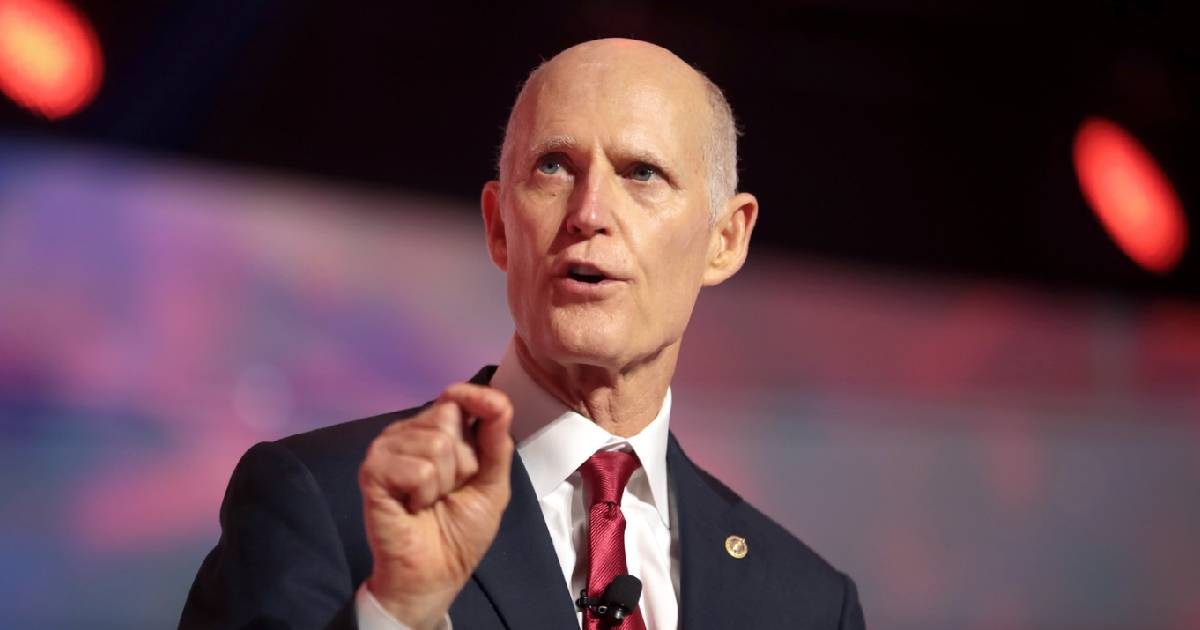
The Republican senator from Florida Rick Scott sent a formal letter to the top executives of Comcast Corporation and NBC News to denounce the interview conducted by journalist Kristen Welker with the Cuban leader Miguel Díaz-Canel.
The interview, aired on April 12 on the show Meet the Press, "helped to grant greater legitimacy" to the ruler, according to Scott, who described it as "complacent."
"The lenient treatment of a violent dictator has greatly harmed the cause of freedom for Cubans," Scott stated. "This is unacceptable and I am demanding accountability and answers!" he added in a message posted on the social media platform X.
The letter was addressed to Brian Roberts, president and CEO of Comcast; Cesar Conde, chairman of NBC Universal News Group; and Rebecca Blumenstein, editorial president of NBC News.
In it, Scott expressed his "extreme disappointment" at the decision by NBC to invite Díaz-Canel, effectively granting him a platform in the U.S. media without any real scrutiny.
The interview, recorded at the José Martí Memorial in Havana, was the first granted by a Cuban leader to American television since Fidel Castro in 1959, and lasted 53 minutes in its full version.
Scott specifically criticized Welker for stating that it was "an honor" to speak with Díaz-Canel and for presenting him as a victim of the United States in front of President Trump, instead of confronting him about the allegations of repression and political persecution on the island.
According to the senator, the journalist allowed Díaz-Canel to evade the question of whether he would relinquish power, without pressing him on the holding of free elections.
Scott listed five issues in his letter that Welker did not address rigorously: the actual release of political prisoners, Cuba's medical missions abroad, the regime's alliances with China, Iran, and Russia, the refusal to allow free elections, and the restricted access to the internet for the population.
The senator highlighted the case of Alexander Díaz-Rodríguez, a political prisoner aged 45 from Cárdenas, Matanzas, who was sentenced to five years for participating in the protests on July 11, 2021, and was released in early April after fully serving his sentence.
The photographs of his release showed a devastating physical condition: he lost between 25 and 50 kilograms during his imprisonment and developed untreated thyroid cancer, hepatitis B, and severe malnutrition.
Scott attached those images to his letter as evidence of the regime's treatment, noting that "the photos made it clear that he was tortured, malnourished, and denied medical attention".
"Through this journalistic failure of holding a dictator accountable in one of the most-watched programs on its network, NBC tacitly legitimized the regime, which will use that legitimacy to continue repressing its citizens," the legislator concluded.
Díaz-Canel's interview on NBC also sparked criticism beyond Congress. The Cuban journalist Mónica Baró Sánchez, winner of the 2019 Gabo Prize, described it as a success for Castroist propaganda, pointing out that Welker allowed the leader to speak without interruptions or rebuttals.
During the interview, Díaz-Canel denied the existence of political prisoners in Cuba, calling it a "big lie," despite organizations like Prisoners Defenders documenting 1,214 political prisoners on the island at the end of February 2026.
In response to the question of whether he would resign to save the country, the leader reacted with irritation: Would you ask that question to Trump? Is that your question or one from the State Department?
Scott concluded his letter by demanding that NBC in future coverage practice "journalism that reflects the strong American legacy of a free and brave press, rather than simply handing a megaphone to dictators".
Filed under: