
Related videos:
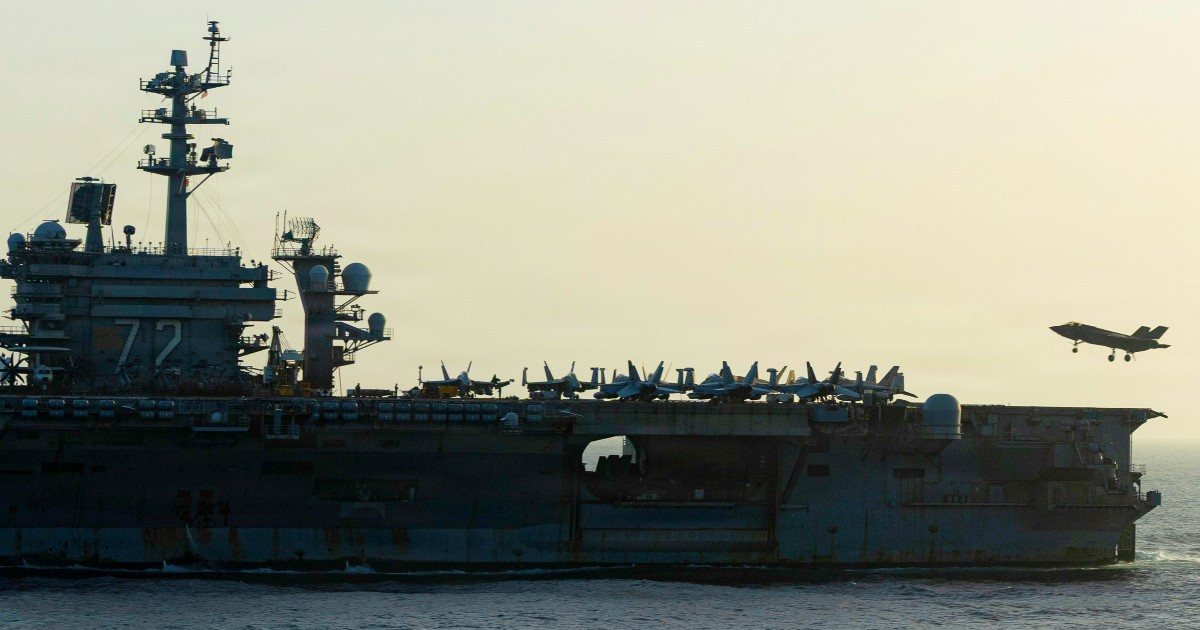
For the first time since 2003, three U.S. Navy aircraft carriers are operating simultaneously in the Middle East, as part of Operation Epic Fury and the U.S. military reinforcement in the region in response to rising tensions with Iran.
The USS George H.W. Bush (CVN-77) arrived in the region last Thursday, coming from Naval Station Norfolk, where it set sail in March, and joined the USS Gerald R. Ford (CVN-78) and the USS Abraham Lincoln (CVN-72), which were already operating in the area.
“For the first time in decades, three aircraft carriers are operating in the Middle East simultaneously,” reported the United States Central Command (CENTCOM) on its social media, specifying that the strike groups include over 200 aircraft and around 15,000 personnel, including sailors and marines.
The deployment is part of Operation Epic Fury, which began in February, during which U.S. forces have conducted over 13,000 attacks against Iranian targets and have destroyed or damaged more than 155 vessels.
In addition, the U.S. Navy is conducting mine-clearing operations in the Strait of Hormuz and is involved in a naval blockade aimed at controlling traffic to Iranian ports, amidst escalating tensions with Tehran.
Keys to the escalation between the U.S. and Iran
The simultaneous deployment of three aircraft carriers in the Middle East occurs at a time of heightened tension between the United States and Iran, following months of military escalation in the region.
Since the beginning of Operation Epic Fury at the end of February, Washington has increased its naval and air presence with the goal of weakening Iranian military capabilities and ensuring the security of strategic routes such as the Strait of Hormuz, through which a key part of the world's energy supply is transported.
The administration of President Donald Trump has taken a firm stance against Tehran, ordering direct actions against Iranian assets and strengthening maritime control in the area.
As part of this strategy, the U.S. Navy has increased surveillance, attack, and demining missions, in addition to implementing a selective blockade on vessels linked to Iranian ports.
The simultaneous use of three aircraft carrier strike groups— a capability not seen since the invasion of Iraq in 2003—reflects the scale of the ongoing military operation and Washington's interest in maintaining strategic superiority in the region.
Analysts believe that this deployment also aims to send a deterrent message to Iran and other regional actors, amidst an increasingly volatile geopolitical scenario.
Filed under: