
Related videos:
China has entered a new phase in its automotive industry where the battle is no longer mechanical or electric: it is digital, and it is being fought among its own manufacturers.
The China Auto 2026, inaugurated last Thursday in Beijing with nearly 1,500 vehicles on display and over 200 debuts in a space of 380,000 square meters, demonstrated that Chinese manufacturers have shifted their competition to the realm of software, artificial intelligence, and technological ecosystems.
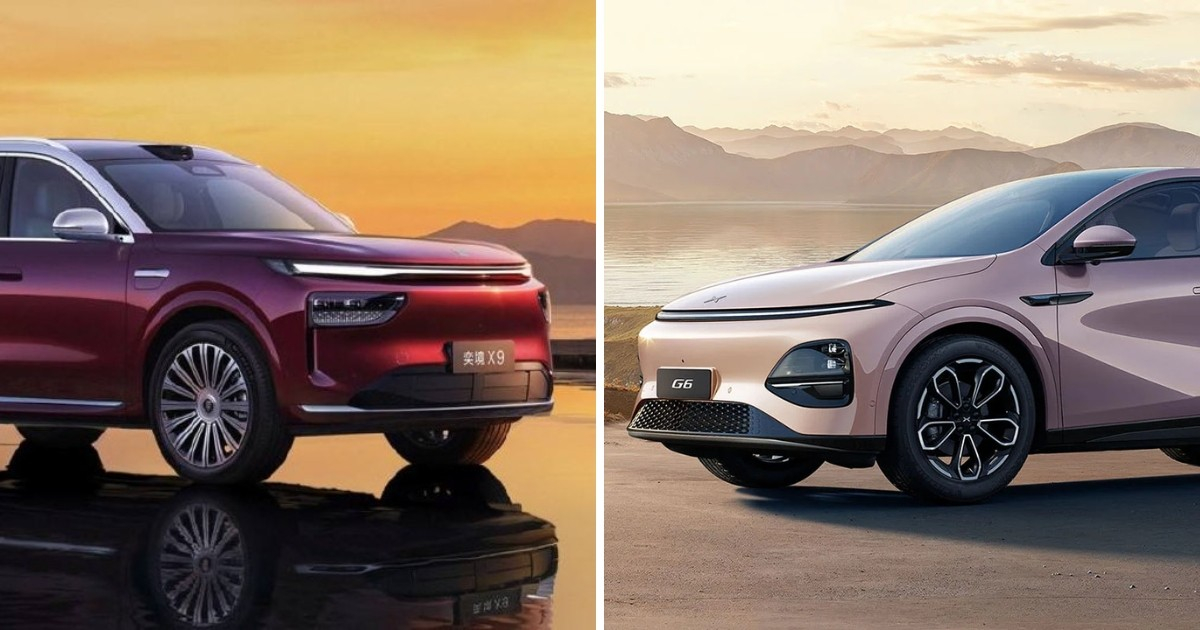
The starting point was the alliance Dongfeng-Huawei, which introduced the Yijing X9, the first vehicle to integrate Huawei's complete technological solution. The model features the HarmonySpace 5 cockpit with dual 17.3-inch displays, voice control in four zones, and the Qiankun ADS 4.1 autonomous driving system, equipped with 896-line LiDAR and 11 high-definition cameras.
But the Yijing X9 is just the tip of the iceberg. Huawei announced an investment of between 70 billion and 80 billion yuan—approximately 11 billion to 13 billion dollars—in the next five years to develop autonomous driving software and computing capabilities. In 2026 alone, the company will allocate 18 billion yuan to research in intelligent driving, of which 10 billion will be focused on computing power to train vehicular artificial intelligence models. At the exhibition, Huawei showcased 38 models from various brands equipped with its intelligent systems, including partners such as Audi and Toyota.
Confronted with that closed ecosystem, BYD —a global leader with 12.1 million electric vehicles sold in 2025— focused on supremacy in energy infrastructure. Its Flash Charging system of 1,500 kW allows a vehicle to charge from 10% to 70% in just five minutes, reaching 97% charge in nine minutes, with a range exceeding 1,000 kilometers. The company plans to deploy 20,000 ultra-fast charging stations by the end of this year. Its subsidiary Denza also unveiled the electric supercar Z, boasting over 1,000 horsepower and an acceleration from zero to 100 kilometers per hour in under two seconds.
XPeng, for its part, arrived at the show with the most ambitious bet in artificial intelligence. The company unveiled the GX, the first mass production robotaxi prototype developed entirely in-house in China, equipped with up to four proprietary Turing chips delivering 3,000 TOPS of computing power. Its VLA 2.0 autonomous driving system, launched in March, already boasts a satisfaction rate of 98% among nearly 100,000 consumers who have tested it, and orders for the Ultra series have grown by 118% month over month since its release.
XPeng's CEO, He Xiaopeng, was direct about his goal: "We have set a target: to completely surpass Tesla's FSD system in the Chinese market by August." He added, "The driving environment in China is more complex. If we can overcome it here, our overall capability will be stronger."
The internal competition has a structural explanation. Passenger vehicle sales in China fell by 17% in the first quarter of 2026 following the end of government subsidies, and BYD has experienced seven consecutive months of declining domestic sales. In light of this situation, software and artificial intelligence have become the new source of recurring revenue, through subscriptions and updates.
As noted by Tu Le, managing director of the consultancy Sino Auto Insights: "The fact that nearly all manufacturers have some version of smart driving makes it different from almost any market in the world."
While Chinese automobile exports grew by more than 60% in the first quarter of 2026, the industry makes it clear that the car of the future is not won on the mechanical testing track, but on the artificial intelligence server.
Filed under: