
Related videos:
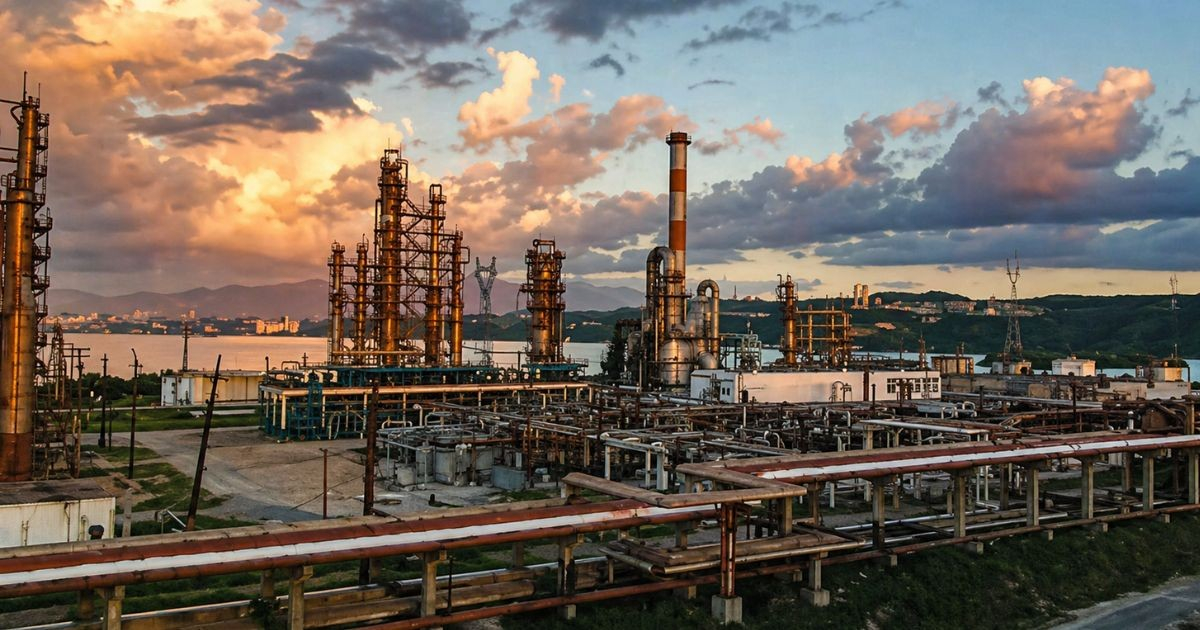
The Hermanos Díaz Oil Refinery, located in Santiago de Cuba and belonging to the Cuba-Petroleum Union (Cupet), succeeded in processing heavy national crude oil to obtain three derivatives: naphtha, fuel oil, and diesel, as reported by the official newspaper Granma.
The announcement comes amid the worst energy crisis that Cuba has faced in decades, with fuel reserves that barely last until the end of April and a structural deficit that the regime has been unable to resolve.
The general director of Hermanos Díaz, Irene Barbado Lucio, who is also a member of the Central Committee of the Communist Party of Cuba, explained that facilities previously used to refine imported heavy crude have been adapted to instead process national crude, which is highly viscous and contains high levels of sulfur and other contaminants.
"Previously, we had managed to process the imported heavy crude with a solvent that brought it to 16 degrees API, allowing it to convert into medium crude, because our industry was designed to do so with the light crude; however, we did not consider doing it with the national one," specified engineer Víctor Manuel Díaz Despaigne, leader of the multidisciplinary group that materialized the innovation.
The gasoline obtained covers 15 days of operations at the oil wells in Varadero, the diesel is marketable, and the fuel is being evaluated for power plants and the nickel industry.
Lucio Barbado stated that "both that derivative as well as fuel oil and diesel should be made available to the country," and that the process was "characterized by extensive study and experimentation," alongside the work of the Oil Research Center (Ceinpet).
The day before, Díaz-Canel had presented to the National Innovation Council the thermoconversion technology developed by Ceinpet as a historic achievement, stating that “we broke a taboo” regarding national crude oil.
However, the deputy director of Cupet, Irenaldo Pérez Cardoso, confirmed in that same meeting that the Sergio Soto refinery in Cabaiguán, in Sancti Spíritus, has been processing domestic crude since 2010, which contradicts the narrative of the "taboo" proclaimed by the head of state.
Thermoconversion—industrially known as visbreaking or thermal cracking—is also a process that has been used globally for decades, with an installed worldwide capacity of about four million barrels per day since 1996, which puts the novelty of the official announcement into perspective.
Pérez Cardoso explained that the technology "basically aims to reduce the viscosity of the crude oil without the need to mix it with gasoline, a product that has been in short supply due to the intensified blockade, the crackdown on fuels since 2019, and now because of the energy blockade."
A pilot plant is planned to be installed at the Sergio Soto refinery in Cabaiguán, though no costs or specific timelines have been provided. A second stage involves catalytic development using Cuban laterites to reduce the sulfur content of the crude oil.
The context driving these emergency measures is harsh: Cuba produces only 40,000 barrels per day of its own oil compared to a demand of between 90,000 and 110,000 barrels per day. Supplies from Venezuela were cut off following the capture of Nicolás Maduro in January 2026, and Mexico suspended shipments on the 9th of that same month.
The Executive Order 14380 by Trump, signed on January 29, 2026, worsened the situation by imposing secondary tariffs on any country that exports oil to Cuba.
The only recent relief came from Moscow: the Camilo Cienfuegos refinery processed 100,000 tons of crude oil donated by Russia, and the distribution of these derivatives began on April 19, although the Cuban government acknowledged that there is "almost nothing" in fuel to support the economy.
Barbado Lucio announced that "another round of national crude is expected to be conducted as part of the continuous improvement of industrial processes," although he did not specify when or in what volume, leaving it uncertain whether this technical effort will be able to compensate even a fraction of the energy deficit that is overwhelming the Island.
Filed under: