
Related videos:
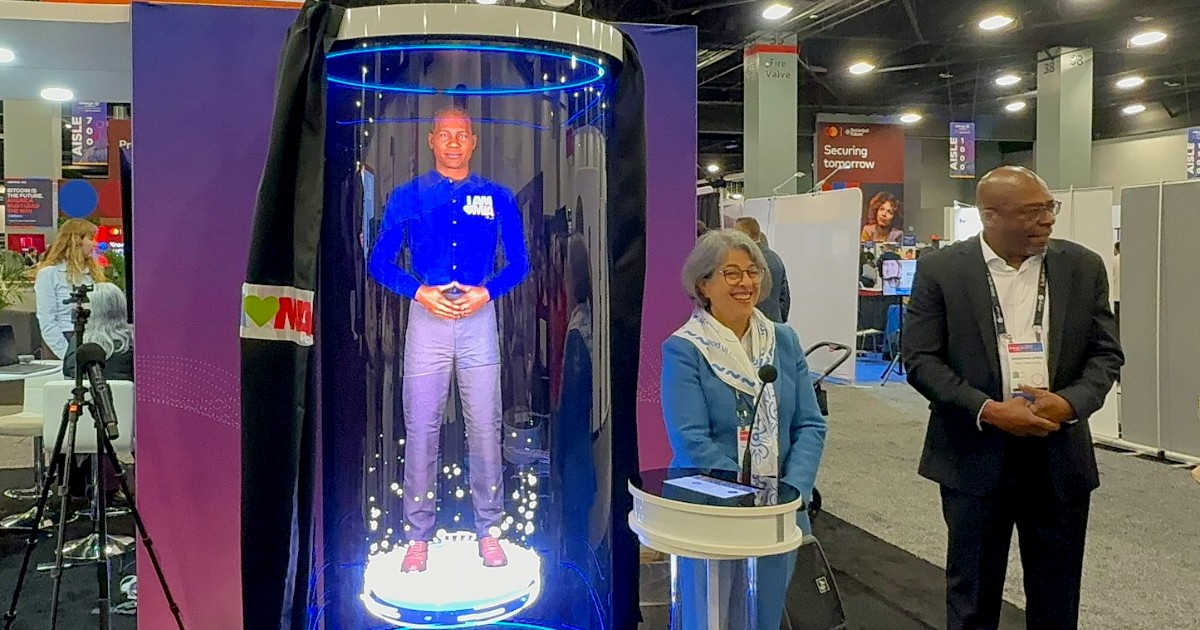
The Miami International Airport (MIA) has become the first airport in the world to deploy a large-scale AI-powered holographic chatbot to assist passengers, as announced by Miami-Dade County on April 20.
The technology was officially presented by the Mayor of Miami-Dade, Daniella Levine Cava, during the eMerge Americas 2026 technology conference, held at the Miami Beach Convention Center.
"Miami-Dade is at the forefront of eMerge Americas 2026. From government services driven by AI to the new virtual assistant at MIA, the future is being built right here. We are Future Ready!" the mayor wrote on social media X last Thursday.
The system was developed in collaboration with three companies: Mappedin (indoor mapping), Satisfi Labs (conversational AI), and Hypervsn (three-dimensional holograms).
The hologram is installed at four key entry points of the airport, including a location near checkpoint 4 of the Transportation Security Administration (TSA), and promises to guide passengers from the curb to the boarding gate.
According to the report from the platform OnlyinDade, "the hologram provides real-time, location-based assistance to travelers through natural conversational interaction, available on-site screens, kiosks, mobile platforms, and the web."
The technological key of the system is its geo-aware capability: it knows exactly where the passenger is within the airport and provides precise real-time directions in multiple languages.
The launch is part of the 'Future-Ready' strategy of Miami-Dade County, which also includes hygiene robotics and AI computer vision for traffic flow at the Port of Miami.
The company Hypervsn, a provider of holographic technology, had previously implemented similar solutions at the Keflavik Airport in Iceland to instruct passengers on safety regulations, which reduced baggage rejections and waiting times. However, the integration with geo-aware conversational AI on the scale of MIA is presented as a global novelty.
The announcement was not without criticism. Users on social media pointed out the contradiction of investing in holograms while the airport struggles with unresolved infrastructure issues.
"This does not improve the passenger experience at all and is further evidence of the county wasting taxpayer funds on third parties and magic tricks, instead of addressing the fact that the airport resembles a third-world bus terminal from the seventies," wrote a user on X, as quoted by the Miami New Times.
The MIA was ranked among the worst airports in the world in August 2025, specifically due to the deterioration of elevators, escalators, and walkways.
The airport has been undergoing a modernization process valued at 9 billion dollars for years, which includes new parking facilities and infrastructure improvements. In December 2025, it also unveiled gates with facial recognition in the TSA PreCheck lines.
The MIA handled 55.9 million passengers in 2024, making it one of the busiest airports in the United States and a high-impact environment for testing traveler service technologies.
The airports of South Florida are preparing for record numbers in the coming years, which adds pressure to enhance the passenger experience both in infrastructure and digital services.
Filed under: