
Related videos:
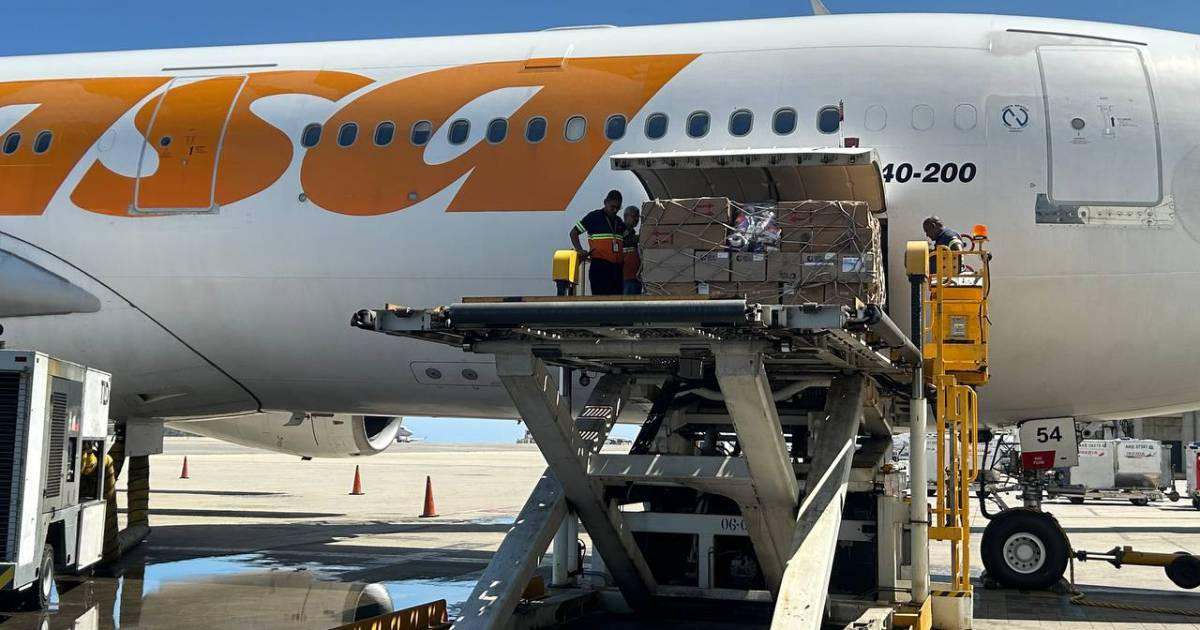
The Movement of Friendship and Mutual Solidarity Venezuela-Cuba announced the shipment of 25 tons of food and medicine to the island, raised in just 15 days as part of the campaign "Love is Paid with Love," launched in February of this year.
The organization, which has the support of the Simón Bolívar Institute for Peace and Solidarity —a Venezuelan state agency— as well as governors and social movements aligned with Chavismo, presented the shipment as a gesture from the "organized people" rather than from government institutions, although the state's involvement is evident.
On its Instagram account, the movement described the shipment as "25 tons of love and resistance" and stated that "nothing can break the historic bonds of brotherhood that unite us."
The rhetoric of the announcement blends ideological solidarity with political allusions: "No blockades, no lying campaigns, no storms, because our friendship was forged in struggle and remains steadfast in active solidarity," proclaimed the organization.
What the movement presents as a spontaneous gesture from the Venezuelan people, however, comes from a country that is undergoing its own severe food crisis. Thousands of Venezuelans protested with empty refrigerators on May 1, 2025, under the slogan #EmptyRefrigerators, while inflation devours the incomes of the population.
The covert shipment through non-governmental channels raises suspicions. The Chavista regime, now led by Delcy Rodríguez, which must have negotiated with the U.S. following Maduro's ousting, could be seeking hidden ways to continue supplying its ally without disturbing Trump.
It is not the first time that the Chavista regime has sent food to Cuba in recent months: in August 2025, it had already dispatched 6,000 tons of food and fertilizers, and Venezuela accumulated over 12,000 tons of humanitarian aid sent to Cuba in four shipments between October and December of that year, after Hurricane Melissa.
The pattern of these donations between two allied regimes fuels skepticism about their true destination. A report by TV Azteca from March 4, 2026, documented the sale of "Bienestar" beans—donated by Mexico—in TRD Caribe stores, a currency-linked chain associated with the military conglomerate GAESA, at $2.97 for half a kilogram. The Cuban ambassador in Mexico had to respond to those accusations.
NGOs like Cruz Verde Internacional and Solidaridad Sin Fronteras accuse the regime of diverting humanitarian aid, selling it instead of delivering it to hospitals and the sick. Civil society has demanded transparency from the Cuban regime regarding the management of international donations.
Cuban authorities systematically deny the accusations. The Deputy Minister of Public Health, Tania Margarita Cruz, stated in March 2026 that donations are distributed free of charge through the supply booklet to prioritized groups.
Meanwhile, the humanitarian crisis in Cuba shows no signs of letting up. 80% of the population suffers from food insecurity, and 89% lives in extreme poverty, according to the Food Monitor Program. Families in Holguín reported going up to three days without eating in April 2026, while the electricity deficit reached 2,000 MW during peak hours.
The UN launched an emergency plan in March amounting to 94.1 million dollars to assist two million people in 63 Cuban municipalities, but by mid-April only 26.2 million had been raised, highlighting that 25 tons of food —however welcome— are insufficient in light of the magnitude of a humanitarian catastrophe caused by 67 years of communist dictatorship.
Filed under: