
Related videos:
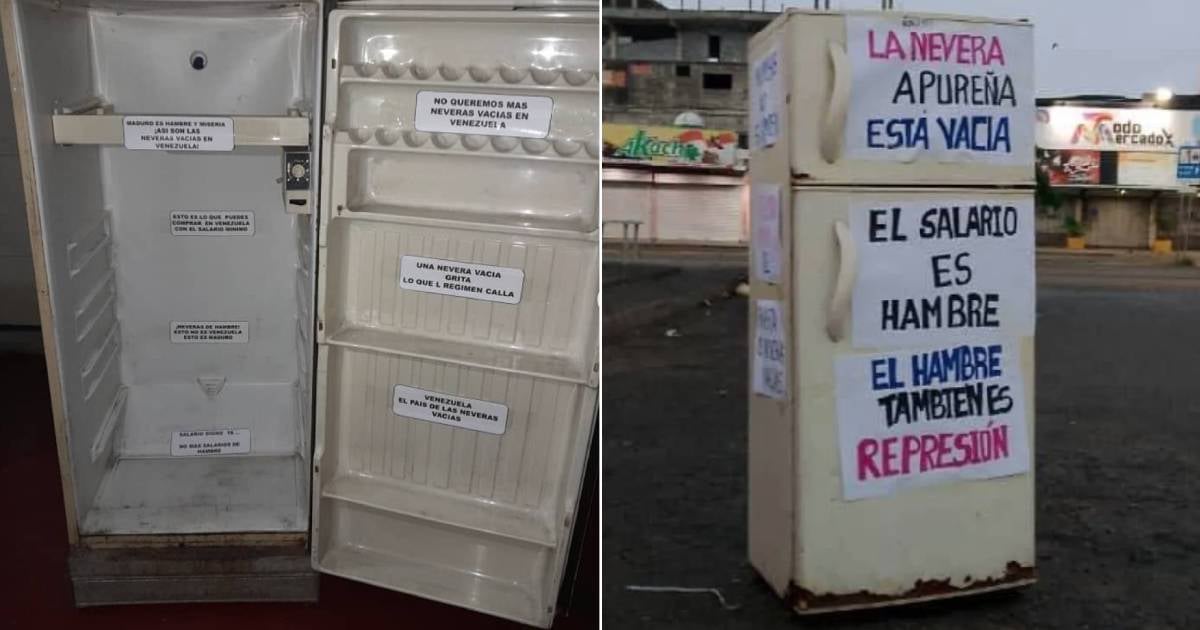
Thousands of Venezuelans chose this First of May for a symbolic and striking protest: to display their empty refrigerators as a denunciation of the food poverty being experienced by millions of families in the country.
Under the hashtag #NeverasDeHambre, citizens from various regions shared images on social media displaying the inside of their empty refrigerators. The message is clear: repression is also exercised through hunger, as noted by the site La Patilla.
The campaign aims to highlight the daily tragedy faced by the most vulnerable sectors — pensioners, single mothers, children — who are trapped in a collapsed economic system with no response from the state.
Alongside the photos, some protesters took to the streets with coffins, banners, and empty appliances in a demonstration heavy with symbolism that denounces the slow death of purchasing power in Venezuela.
Meanwhile, in Cuba: gasoline for the parade, but none for cooking
In parallel, Cuba held its traditional May Day parade, with the regime mobilizing more than 600,000 people in Havana and over 5 million nationwide, according to official figures.
Despite the prolonged blackouts, shortages, lack of transportation, and suffocating inflation, the government stocked up on fuel to ensure mass participation in the main event at the Plaza de la Revolución, led by Miguel Díaz-Canel and his wife Lis Cuesta, both dressed in patriotic shirts and Palestinian scarves in a gesture that has become customary.
While in Venezuela reports indicate salaries that are not enough to buy a bag of flour, in Cuba the situation is no less dramatic: most families lack both food to cook and the means to prepare it.
The structural crisis, compounded by productive paralysis and massive exodus, leaves millions of Cubans immersed in daily anguish.
A contrasting First of May: between citizen protest and official propaganda
The images that have come from Venezuela, depicting empty refrigerators as a symbol of resistance, contrast sharply with the image projected by the Cuban regime, which tries to maintain the fiction of a people mobilized by conviction, when in reality, the assistance is forced and monitored.
Both scenarios share an underlying reality: two allied regimes, two peoples subjected to scarcity, and two distinct ways of expressing their frustration.
This May Day revealed not a celebration of labor, but an x-ray of hunger and resilience in two nations marked by authoritarianism, propaganda, and the neglect of the ordinary citizen.
Frequently Asked Questions about the Food Crisis and Protests in Venezuela and Cuba
Why did Venezuelans protest with empty refrigerators on May First?
Venezuelans protested with empty refrigerators to denounce the severe food poverty affecting millions of families in the country. This symbolic demonstration aims to highlight the lack of food and the economic repression suffered by the most vulnerable sectors, such as pensioners, single mothers, and children.
How does the situation in Cuba contrast with that of Venezuela during May Day?
While protests with empty refrigerators were held in Venezuela to denounce hunger, a massive parade organized by the regime took place in Cuba, showing an apparent display of popular support. However, the Cuban reality is also characterized by food shortages, blackouts, and a severe economic crisis, which causes both countries to share a situation of scarcity and repression.
What implications does the mobilization of resources for the parade in Cuba have?
The Cuban government prioritized the mobilization of resources to ensure assistance for the May Day parade, despite the deep fuel crisis and blackouts affecting the country. This decision reflects the importance that the regime places on political propaganda over the well-being of the populace, generating criticism and discontent among citizens.
How does the energy crisis affect the daily lives of Cubans?
The energy crisis in Cuba, characterized by prolonged blackouts, severely impacts the quality of life for Cubans. Families are struggling to cook, preserve food, and carry out basic tasks. This situation has led to growing discontent and a demand for tangible solutions from the government.
What role do social media play in the protests in Venezuela and Cuba?
Social media has been a crucial tool for highlighting protests and discontent in both countries. In Venezuela, images of empty refrigerators were shared to denounce food poverty, while in Cuba, citizens use these platforms to express their rejection of government-organized marches and to share their daily reality of shortages and blackouts.
Filed under: