
Related videos:
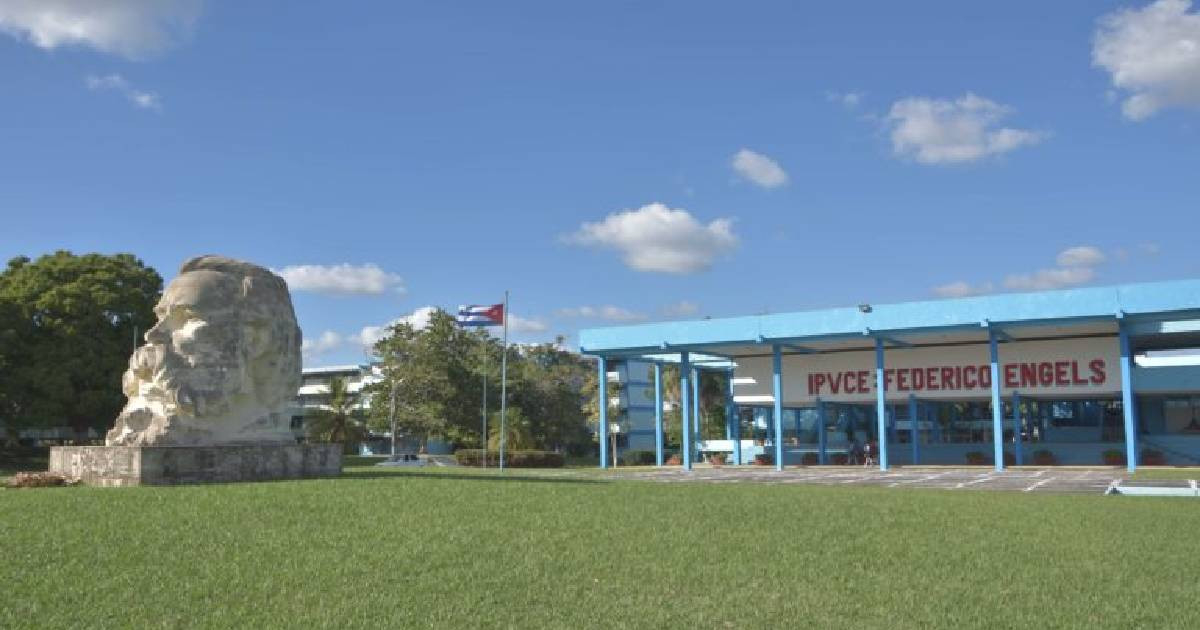
The energy crisis paralyzing Cuba forced the educational authorities of Pinar del Río to suspend the entrance exams for the Federico Engels Vocational Pre-University Institute of Exact Sciences (Ipvce), the most selective center in the province, and replace them with a municipal ranking based on the academic record from the three years of Basic Secondary education.
This was confirmed by Evelio Herrera Padrón, the Director General of Provincial Education, who candidly admitted that the situation exceeds the system's capacity.
"Transportation affects us greatly; the situation was already difficult and complicated, and now it is intensifying and becoming more complex," Herrera pointed out in statements to the provincial newspaper Guerrillero.
The usual admission process to Ipvce requires passing exams in Mathematics, History, and a science subject, in addition to a minimum academic index of 88 points from seventh, eighth, and ninth grades.
With the new system, all interested students who meet the requirements will be able to submit their applications directly at their schools, and the available spots will be allocated based on the figures assigned to each municipality.
The measure is part of a series of emergency adaptations implemented throughout the province to support the 2025-2026 school year, the source indicated.
These include the decentralization of students from internal centers, the establishment of classrooms in primary schools for Secondary and Pre-University students, and the continuation of pedagogical practices in centers close to the students' homes.
Herrera also announced adjustments to the programs and changes to the evaluation system, as in some levels, the second control assessments will not take place, although he assured that the course will conclude in July, according to the established schedule.
This situation is a direct consequence of the collapse of the National Electric System (SEN), which the UN described as a "systemic and increasingly severe humanitarian impact" affecting health, water, food, education, and telecommunications, and which prompted a humanitarian appeal for 94 million dollars to assist approximately two million people.
The regime, far from acknowledging the structural failure of the SEN, ordered to continue the school year despite the electrical collapse, with cosmetic measures such as allowing attendance without uniforms and adjusting schedules.
Cuban mothers reported power outages lasting over 15 hours before final exams for twelfth grade, describing the situation as "stressful and devastating."
In some areas of the country, power outages have exceeded 56 and 72 continuous hours, and students have described in class the hunger and hardships they face daily in order to study.
At the national level, the Ministry of Higher Education had already postponed the university entrance exams to June, with Mathematics on the fifth, Spanish on the ninth, and Cuban History on the twelfth, offering 96,305 places available for the 2026-2027 academic year.
The elimination of entrance exams to the Ipvce Federico Engels in Pinar del Río represents the most significant break from the traditional model of academic selection in Cuba, and highlights to what extent the energy crisis has started to dismantle even the educational structures that the regime showcases as "achievements" of the revolution.
Filed under: