
Related videos:
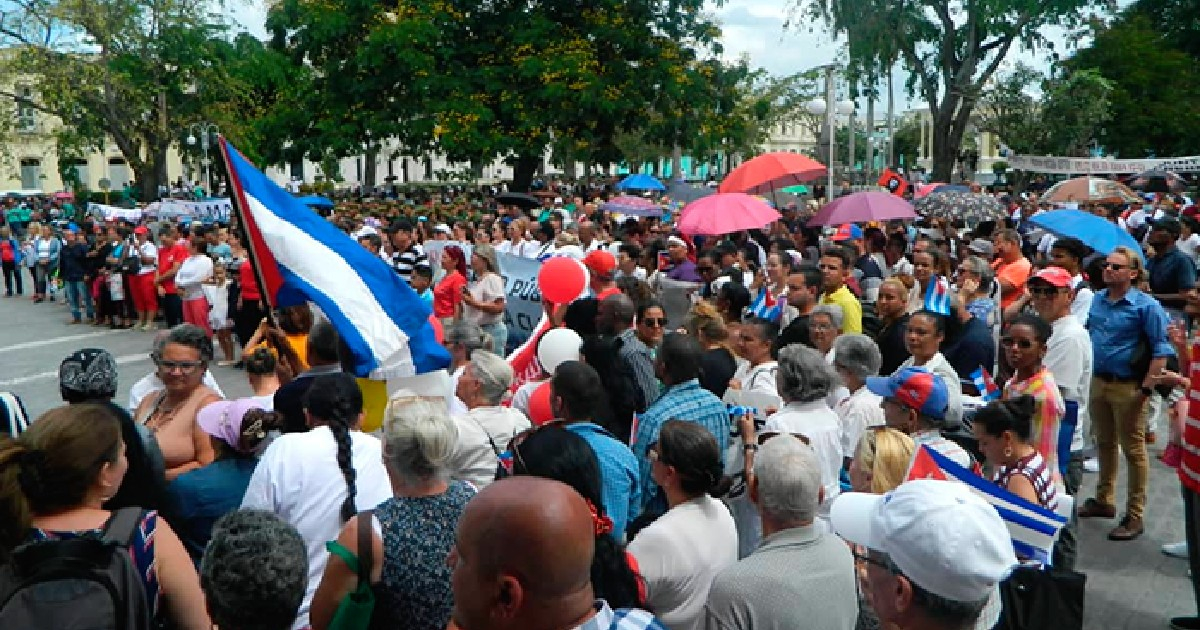
Villa Clara is preparing with plenary sessions, awards, and acts of "revolutionary" reaffirmation to celebrate International Workers' Day, according to a report from the Cuban News Agency that covers a week of preparations for the "celebration", which included a gathering in the Vidal Park of Santa Clara, as if the workers marching had something to celebrate.
The note describes how "representatives from various unions, institutions, and mass organizations gathered to reaffirm their participation in the May Day celebration, which this year is held under the slogans of unity, commitment, and defense of peace." Everything sounds lovely, except for one detail that the account skillfully omits: these same workers earn an average of 6,930 pesos per month, around 15 dollars at the informal exchange rate, while a couple needs over 45,000 pesos a month to cover basic expenses.
The contradiction between the official celebration and reality is so great that it almost seems comical. Cuban salaries and pensions are barely enough for a pizza and malt combo, and the minimum pensions do not exceed 4,000 pesos—less than 10 dollars—insufficient for the basic food needs estimated at least 30,000 pesos per month.
If that weren't enough, this Saturday, the day before the ACN published its festive report, Cuba experienced 17 hours and 45 minutes of continuous power outages, with a maximum impact of 1,461 MW, according to the Electric Union. In fact, the blackouts in the country are surging again while officials finalize the details of the parade. The National Electric System has collapsed at least seven times in 18 months and five times just in 2026 alone.
In Villa Clara, the situation has its own chapter of shame. Since February, the bodega bread in that province is only sold to those under 13 and over 65 years old, because the authorities of Internal Trade have admitted that it is "a very complex issue that depends on the arrival of ships and logistical support in a scenario of extreme scarcity of resources, electricity, and fuel." But of course, for the parade, there is plenty of organizational energy.
The Jesús Menéndez medal awarded to Maricel Montero Lago, director of the INPUD factory for nearly two decades, along with other honors for distinguished individuals, is presented by the ACN as a "beacon of dedication and patriotism in a context marked by the worsening of the economic blockade by the United States." The regime, true to its habit, called for May Day in a warlike tone with the national slogan "The Homeland is defended," launched by the Central Workers' Union of Cuba on April 12. That workers do not have enough to eat is clearly the fault of the embargo.
Prime Minister Manuel Marrero Cruz has already warned that the parade will be held "with rationality" due to existing restrictions, an official euphemism to say that it appeals to the war rhetoric to mobilize for May Day without the fuel or resources to stage the usual spectacle. Economist Elías Amor states it bluntly: the Cuban state is the main exploitative force against workers, as it controls their wages and appropriates the value of their labor.
Meanwhile, 89% of the Cuban population is living in extreme poverty, the GDP has fallen by 23% since 2019, and the inflation accumulated since 2021 exceeds 206%. This week, the news agenda in Villa Clara also highlighted the preparation of a book on sweet potato production. Because when there is no bread in the store, there is always sweet potato left. With the small issue that there is also no sweet potato.
Filed under: