
Related videos:
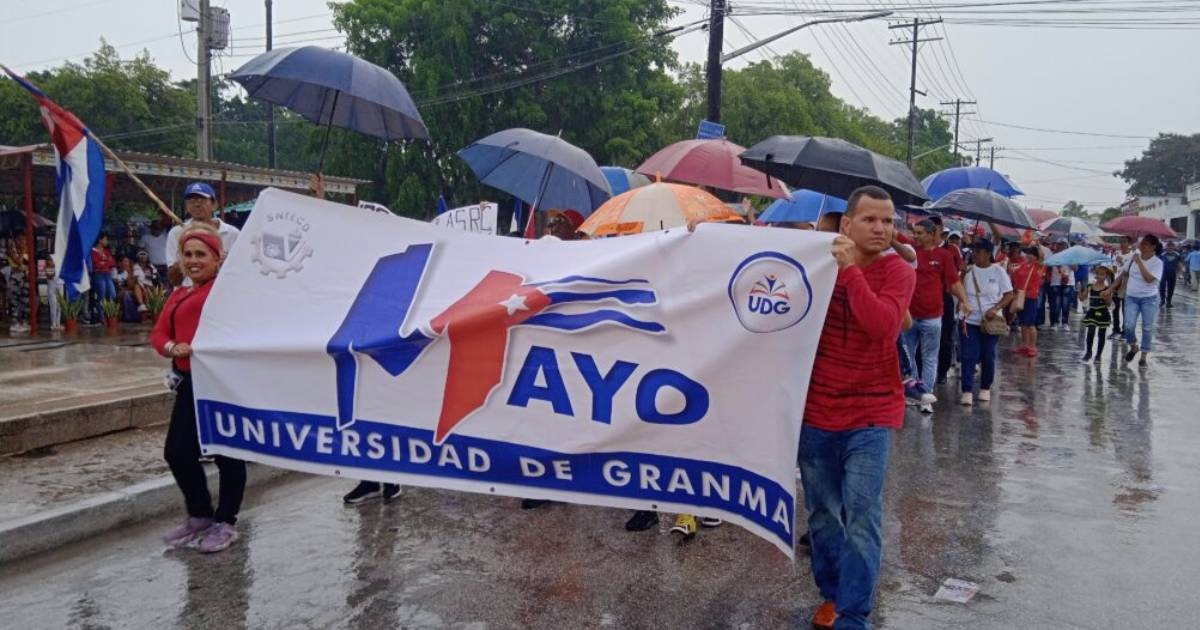
Cuban Prime Minister Manuel Marrero Cruz called on the population this Monday to participate in the May 1st parade under the slogan "The Homeland is defended," in a message posted on his account on X that reflects the markedly martial tone with which the regime is confronting its worst crisis in decades.
"The celebration of May 1st will be a day of revolutionary reaffirmation, unity, and commitment from our people, because 'the homeland must be defended,'" wrote Marrero, who added that "defending the Revolution means contributing, each person doing their part of the duty."
Marrero's call joins that of other leaders such as Roberto Morales Ojeda and Salvador Valdés Mesa, who also urged the defense of the Homeland on that date, following the official announcement for May 1, 2026, made by the Central de Trabajadores de Cuba (CTC), its national unions, and the National Association of Innovators and Rationalizers.
This announcement, presented by Osnay Miguel Colina Rodríguez, president of the organizing committee of the XXII Congress of the CTC, openly acknowledges the existence of a real military threat and cites the line from the National Anthem: "To die for the Fatherland is to live."
Colina Rodríguez called for "a May 1st that shakes us as a country, rooted in unity and the commitment to be useful, to contribute, and to defend the project that Martí dreamed of and Fidel fulfilled."
The warlike tone of the call directly responds to the tensions with Washington. On March 28, Trump declared in Miami that Cuba is next, referring to possible actions following the capture of Nicolás Maduro in Venezuela.
The White House spokesperson, Karoline Leavitt, clarified on April 8 that Trump was referring to the collapse of the regime, not a military action, but described Cuba as a country in "a very weak economic and financial position" and stated that the Cuban people are fed up with their government.
The regime, which declared 2026 as the "Year of Preparation for Defense," conducts military exercises every Saturday under the people's war doctrine, involving students and children, while the National Defense Council, chaired by Raúl Castro, approved plans on March 27 for the "transition to a State of War."
All of this is happening in the most critical economic and energy context in decades. The capture of Maduro on January 3 interrupted shipments of Venezuelan oil—between 25,000 and 30,000 barrels per day— and Mexico suspended its shipments on January 9 under pressure from Washington. Cuba has recorded at least six total electrical system failures in 18 months, with blackouts lasting up to 25 hours a day and a generation deficit of up to 2,040 megawatts against a demand of 3,000.
Independent economists project a contraction of the Cuban GDP of 7.2% in 2026, with 89% of the population living in extreme poverty and more than a million Cubans having emigrated since 2021.
The CTC's own announcement subtly acknowledges that the parade will not be able to take place normally, as it calls for it to be held "with the rationality we have had to adopt in light of the imposed restrictions."
Filed under: