
Related videos:
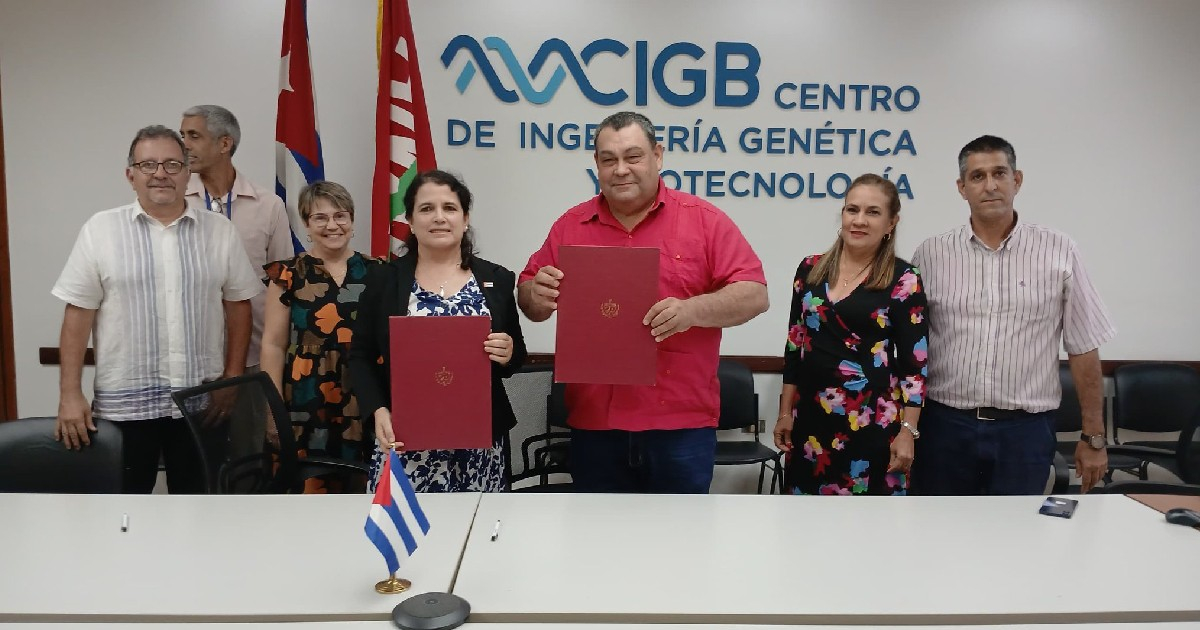
The National Association of Small Farmers (ANAP) and the Center for Genetic Engineering and Biotechnology (CIGB) signed the update to their Work Agreement last Friday in Havana, effective for the next five years, with the stated aim of "enhancing the quality and yield of food production for the people."
The event was led by Dr. Marta Ayala Ávila, General Director of the CIGB and a member of the Political Bureau of the Party, and Félix Duartes Ortega, National President of the ANAP and a member of the Council of State, who signed the agreement at the headquarters of the scientific institution.
The agreement, according to the ACN's note, aims to apply biotechnological achievements in the peasant cooperative sector to replace imports, ensure greater agricultural yields, and support veterinary activities. It sounds good. The problem is that Cuba has been signing agreements, launching plans and slogans, and holding congresses for decades while food production continues to decline.
The very signing ceremony revealed an involuntary confession: Juan Guerra Gómez, an official from ANAP, acknowledged that the products developed by CIGB "are still underutilized in the fields." In other words, the products exist, agreements are signed, but the reality in the fields is different.
This agreement is not the first of its kind. The ANAP has been working for years to strengthen ties with scientific institutions and universities in the country. The cumulative result of that strategy is evident in the recent official figures: the production of root vegetables fell by 44% in 2023 compared to previous years, pork dropped by 93.2%, egg production decreased by 43%, and cow's milk production declined by 37.6%, according to official data.
Rice, a staple of the Cuban diet, illustrates the gap between plans and reality. Cuba produces only 80,000 tons compared to an annual demand of 600,000 tons, which represents a coverage of 13% of the national demand, according to data from 2024. The yield per hectare has dropped from between four and six tons —at the end of the 2010s— to just 1.7 tons in recent data.
The country imports more than 80% of the food it consumes, with an expenditure of approximately 2 billion dollars annually, a figure that is unsustainable for a collapsing economy.
The social outlook is alarming. The Food Monitor Program reports critical levels of food insecurity in five provinces: Havana, Matanzas, Cienfuegos, Guantánamo, and Santiago de Cuba. In August 2025, 96.91% of Cubans lost access to food due to inflation.
The recent history of the ANAP does not inspire optimism. At the XIII Congress of the ANAP held in May 2025, the disappearance of 49 Agricultural Production Cooperatives and 65 Credit and Service Cooperatives since the previous congress was acknowledged, while Duartes Ortega himself launched the slogan "grow more with less."
In that same congress, President Miguel Díaz-Canel scolded the farmers, warning them that there was "much idle land," as if the lack of fertilizers, fuel, and tools were the responsibility of those who work the land with empty hands.
The regime has responded to the agricultural crisis with a menu of announcements that feeds no one. In February 2026, Díaz-Canel reactivated "Option Zero," a contingency plan from the 1990s that appeals to local self-sufficiency with animal traction. In April, the government announced the end of the monopoly of the Acopio company, with governors directing local production accounts. Now, a new biotechnology agreement adds to the collection.
While the executives appointed by both parties prepare to "follow up on the agreements" and establish "monitoring programs with indicators," millions of Cubans continue to search for what to put on the table. The agreement is valid until 2031. Currently, there is no set arrival date for root vegetables, fruits, and grains.
Filed under: