
Related videos:
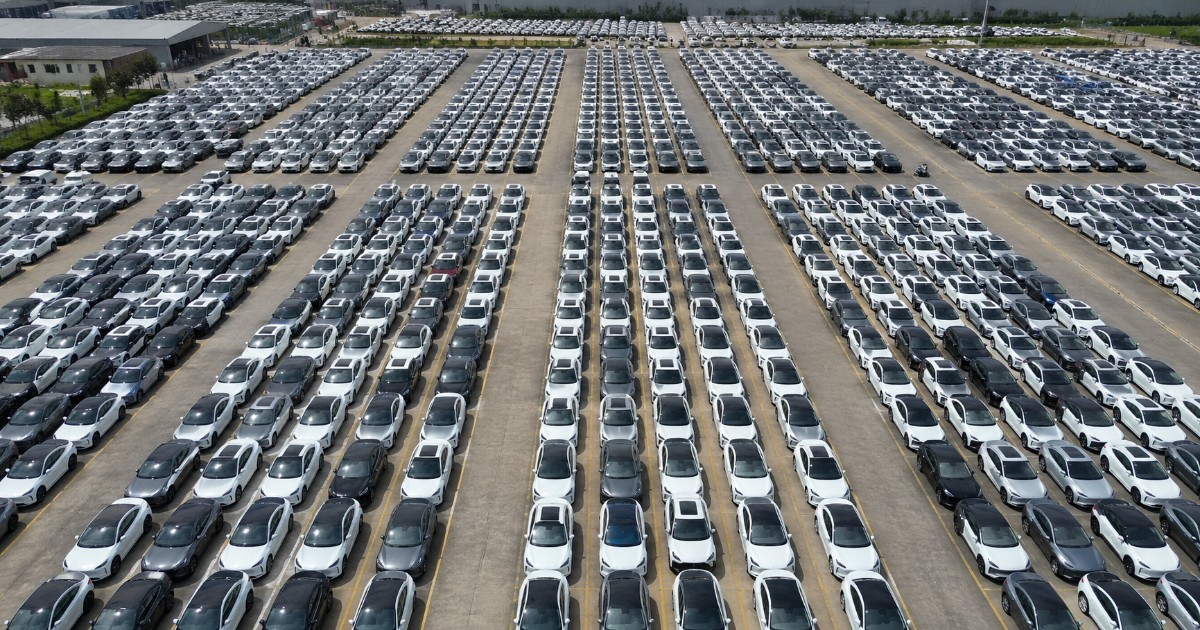
China is about to cross the threshold of 60% monthly penetration of new energy vehicles for the first time in history, according to estimates from the China Passenger Car Association published this Monday: retail sales of these vehicles are expected to reach around 860,000 units in April, which would imply a record rate of 60.6%.
The data is striking because it does not reflect a booming market, but rather the opposite: total passenger car sales in April are estimated at just 1.42 million units, a decline of 13.8% compared to March.
In other words, electric and plug-in hybrid vehicles are not growing because the overall market is expanding, but rather because internal combustion engine cars are declining more rapidly.
The association itself acknowledges without hesitation: "The moderate macroeconomic recovery has not immediately translated into a strong uptick in the consumption of high-value goods, and the upward pressure on oil prices keeps the combustion vehicle market under continuous tension."
The first quarter of 2026 was already pointing to this trend: total passenger car sales fell 17.4% year-on-year, down to 4.226 million units, even though China's GDP grew by 5% during the same period.
This market milestone coincides with the Auto China 2026 in Beijing, the largest automotive exhibition in the world in terms of scale, which set a record with 380,000 square meters across two venues, 1,451 vehicles on display, and 181 world premieres.
More than 80% of the vehicles displayed at the show are electric, reflecting the direction in which the industry is headed.
BYD arrived with its four brands and demonstrated fast charging from 20% to 97% in just 12 minutes in a chamber at -30 degrees Celsius. The alliance Dongfeng and Huawei presented the Yijing X9, a luxury electric SUV with native integration of the Huawei ecosystem. Xiaomi showcased the SU7 Ultra and its Vision Gran Turismo concept.
Competition is no longer centered around price. "The focus of competition in the Chinese automotive market is experiencing a significant shift, evolving from simple price wars to competition based on product strength," stated the association.
This shift is also felt in Europe. According to the consultancy Horváth, Chinese brands already exceed a 10% market share in Norway, the United Kingdom, and Italy, representing nearly 14% of the European battery electric vehicle market. "One in two European consumers is open to buying a Chinese car as their next vehicle," stated Georg Mrusek, automotive expert at Horváth, at the margins of the fair.
The interest in electric vehicles is not exclusive to China: tensions with Iran have spiked interest in electric cars in the United States, where pressure on fuel prices is driving consumers towards alternatives.
The Chinese trajectory is hard to overlook: from a penetration rate of 6.3% in 2020, the country reached 47.9% annually in 2024, crossed the 50% monthly mark for the first time in July of that year, and is now aiming to close 2026 with an annual penetration rate close to 60%, with domestic sales projected between 16 and 16.5 million units of new energy.
The China Auto Show 2026 opens its doors to the public this Tuesday, April 28.
Filed under: