
Related videos:
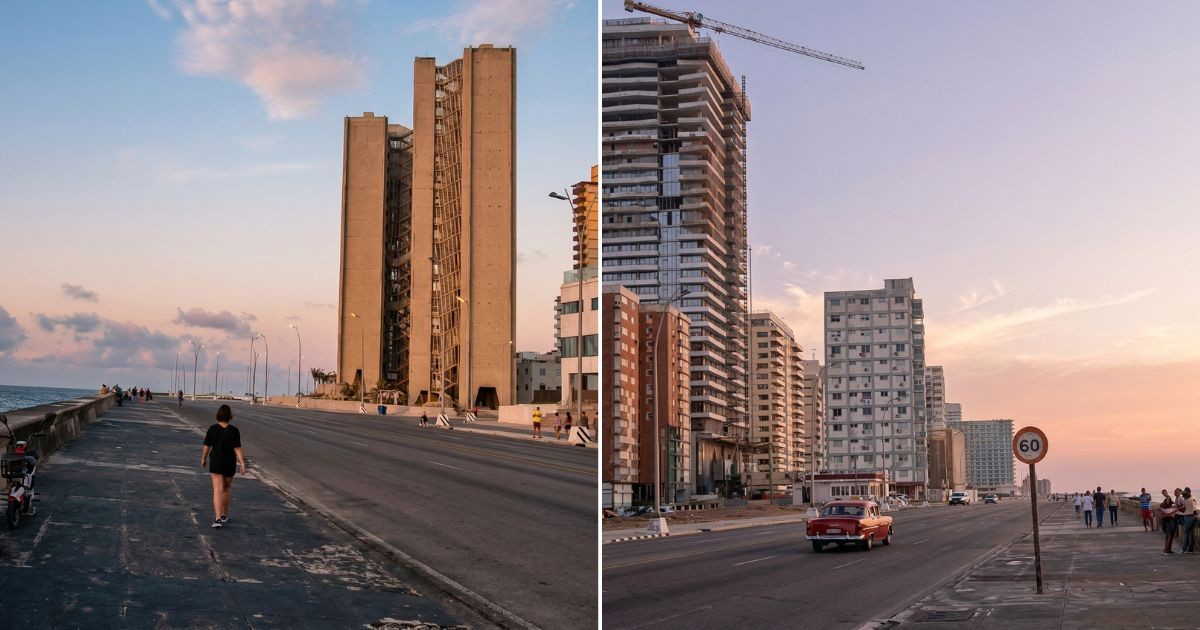
The Spanish journalist Pascual Serrano, known for his historical defense of the Cuban regime, published an article in Globalter about the energy crisis in Cuba, claiming that "getting around Havana is not complicated" and describing a city where people go to work and entertainment venues have crowds on weekends, not comparing it to the "special period" of the 1990s.
Serrano, founder of the Spanish newspaper Público, former director of Le Monde Diplomatique in Spanish, and a regular contributor to Granma—the official organ of the Communist Party of Cuba—traveled to Havana and presented a narrative that directly contradicts the reality documented by multiple journalistic sources and international organizations.
In his text, the journalist attributes the crisis solely to what he calls an "energy blockade" imposed by the Trump administration, which would have prevented the entry of oil for four months, and praises the management of the Cuban government as a model of efficiency and resilience.
However, on February 6, 2026, Transportación Habana officially confirmed that urban transport in the capital completely collapsed: no bus or minibus routes were operating due to a lack of fuel, leaving hundreds of thousands of Havana residents without a way to get to work, schools, or hospitals.
The images of the completely empty Havana tunnel have become a symbol of the collapse.
CUPET gas stations limited sales to 20 liters per vehicle, paid in dollars, with wait times of up to 26 hours.
In Ciego de Ávila, only two out of 135 transport routes were operational in March 2026. National trains were operating with a departure every eight days.
What Serrano describes as Chinese electric motorcycles and tricycles that "carry up to six people" is, in reality, the desperate response of the population to a transport system that has collapsed with no formal alternatives.
The electricity deficit surpassed 2,000 MW during peak hours, with blackouts lasting up to 18 hours a day. On March 23, a total collapse of the national power grid was recorded. Satellite images from NASA revealed that cities in eastern Cuba lost up to 50% of their nighttime lighting.
The crisis has structural roots that Serrano's article overlooks: Cuba produces only 40,000 barrels of crude daily compared to a consumption of over 110,000, historically relying on subsidized imports from Venezuela, Russia, and Mexico.
On January 3, 2026, the capture of Nicolás Maduro halted the flow of Venezuelan oil. On February 13, a fire at the Nico López refinery further exacerbated the situation.
Miguel Díaz-Canel himself acknowledged that the 730,000 barrels that arrived on the Russian ship Anatoly Kolodkin on March 31 represented just "a third of what we need in a month."
Serrano is the author of Traidores a la causa (2008), in which he accuses leftist journalists of betraying their ideals by criticizing Cuba.
He was also criticized for downplaying the repression following the protests of July 11, 2021, during which more than 1,363 people were arrested according to the organization Justicia 11J.
His editorial pattern is repetitive: this is what Havana looks like without electricity or fuel, a reality that the journalist prefers not to reveal.
The newspaper El País described the situation as "apocalyptic" in February 2026, while U.S. Ambassador Mike Hammer stated on February 7: "There is already a collapse in Cuba."
Filed under: