
Related videos:
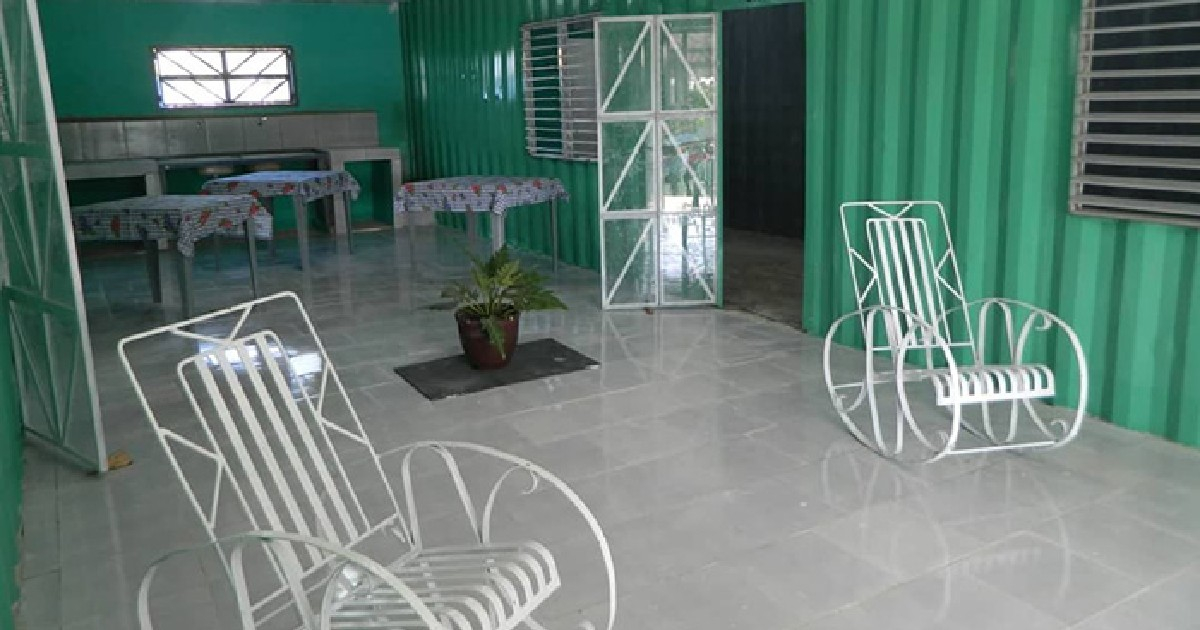
The Electromechanical Company of Villa Clara inaugurated this Sunday the first senior citizens' home in the country located within a state labor center, an announcement that the official press presented as a "milestone" and "an act of justice" while 1.77 million Cuban retirees survive on pensions that are insufficient even for basic sustenance.
The project was born out of a commitment from the labor union following President Miguel Díaz-Canel's visit to the facilities in 2024, and it will be financed not with state funds—which are unavailable—but with resources generated by the workers themselves, including a self-sustaining agricultural module, according to the note from ACN.
Justo Rodríguez Gattorno, director of the unit, described the facility as "an act of justice for those who dedicated their lives to production," adding that retirees "will be able to share their experiences with new generations and support the company's organoponic efforts." In other words, the elderly beneficiaries will also be engaged in work.
Susely Morfa González, the first secretary of the Party in Villa Clara, celebrated that "social commitment can flourish even in a workshop," a phrase that involuntarily encapsulates the state of well-being in Cuba: it is not flourishing anywhere. Only one single company is doing what the State has been unable to guarantee for decades.
The reality surrounding the grandiose announcement is devastating. The collapse of the Cuban social assistance system has left the vast majority of elderly people abandoned: 99% of retirees claim that their pensions do not cover basic needs for food, housing, and medication, according to the Cuban Citizen Audit Observatory.
The minimum pension, set at 4,000 Cuban pesos since September 2025, is equivalent to less than 10 dollars at the informal exchange rate, while the monthly cost of living is eight times that amount. Forty years of work for just seven dollars is the harsh reality for thousands of Cubans who dedicated their lives to the system and today cannot afford to eat three meals a day: 79% of those over seventy years old are unable to manage that.
Cuba is the oldest country in Latin America, with 25.7% of its population over sixty years old by the end of 2024. At the same time, mass emigration has left the elderly alone: over 1.1 million people left the island between 2021 and 2024, and today, 17.4% of seniors live without any close relatives. An elderly woman whose son emigrated summed it up frankly: “I go up to three days without eating”.
The Family Care System only covers 67,000 people from that universe of retirees, with a budget equivalent to just 14,600 dollars for the entire country in 2026. Vice President Salvador Valdés Mesa candidly acknowledged in March, "You can't live on pensions."
In light of this collapse, the government authorized in February for small and medium-sized enterprises and cooperatives to open private residences for the elderly, effectively admitting that the State cannot fulfill its constitutional obligation. According to data from 2021, Cuba had only 300 senior citizen homes and 157 nursing homes for nearly two million retirees. Given the country's ongoing deterioration since then, it is possible that the number has even decreased.
In that context, engineer Domingo Ocaña Piedra, 76 years old and founder of the Electromechanical Company of Villa Clara, who returned to work after retiring, enthusiastically celebrated the opening: "This senior citizens' home is an act of love and an example that, with willpower, it can be done." What he did not mention is who should have had that willpower for decades: the same regime that has been promising to take care of its people for 67 years.
Filed under: