
Related videos:
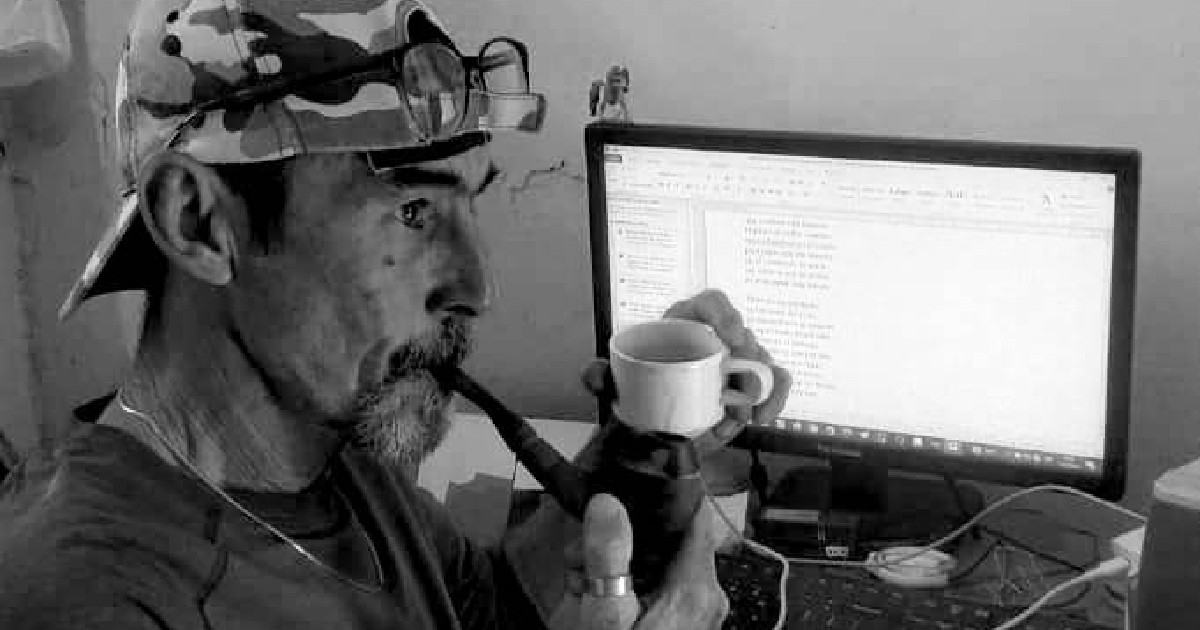
The Cuban writer Jorje Luis Veleta Mederos published on his Facebook profile this Monday the poem "A country where poets escape", an elegy about exile and the spiritual emptiness of a nation that immediately elicited emotional responses from other creators and resonated with interpretations of Cuba's migratory tragedy.
The poem opens with a statement that serves as a diagnosis: "A country where poets escape / is a country without a soul." From that first line, Veleta Mederos builds a sustained metaphor about the cultural hemorrhage affecting Cuba, where each departure is equivalent to "a river of blood that diverts into silence, / to another wound of anemia in the flag."
The lyrical piece does not shy away from the intimate dimension of exile. "Every verse that the poet writes far from home / is a gravestone, / a well of loneliness between childhood and manhood / who has already lost his corner, his guitar, and his spirit," the author writes, painting the portrait of an identity fractured between origin and exile.
The piece reaches a particularly political point when it states: "A country without poets is a country without a name. / And it is not a dead country, it is a defeated country / that learned to say homeland with a borrowed mouth / and to bloom in lands that do not understand its bones." The image of the "defeated" country could directly point to the regime's responsibility in the cultural depletion of the Island.
Veleta Mederos also questions the condition of the exiled poet, trapped between nostalgia and the impossibility of return: "Ask the poets why they die away from home / and they will tell you of the side where the country bleeds." This condemnation, the poem specifies, "is not hatred nor oblivion, / but that useless tenderness that returns like a dog / to lick a door where no one lives."
In the comments of the post, the writer Alexander Jimenez del Toro responded with a sonnet of his own that serves as an autobiographical counterpoint. In the first-person voice, he narrates the final departure: "I said goodbye to the neighborhood, to the people, / to my fleeting mark on the path, / to the anemic bread, bitter wine, / and I walked slowly across the bridge."
The sonnet moves toward a total rupture: "I separated the root from my body, / I no longer know where I lost the keys, / I forgot the song, I burned the ships / of the eternal return to my country." And the closing encapsulates the existential anguish of the emigrant: "I kept poetry in my suitcase, / I left, as some souls do, / still clinging to my body."
This trauma has historical dimensions without precedent. Between 2021 and mid-2024, more than 860,000 Cubans arrived in the United States, the largest exodus in the history of the Island. In March of this year, fear of a new mass departure grew due to the worsening of the crisis.
The psychologist Roxanne Castellanos Cabrera has pointed out that exile has caused devastating emotional repercussions —guilt, loneliness, despair— that particularly affect children and the elderly who are left behind.
Among the creators who have died far from Cuba are the poet Reinaldo García Ramos, who passed away in Miami in August 2024; the writer Armando de Armas, in October 2024; and the poet Orlando Rodríguez Sardiñas "Rossardi", in December 2024.
The dilemma faced by Cuban writers between staying or leaving with their nation in their suitcase encapsulates, on an individual level, the same collective tragedy that Mederos captures in his final verse: “No country is dead if it is invaded, / it dies if its poets cease to invade it.” Although the poet never directly mentions the name of the country he refers to—true poetry suggests more than it denotes—there are ample elements to draw connections between the concrete reference and the lyrical work.
Jorge Luis Mederos, known in the Cuban literary scene as "Veleta," is a member of the literary group "El Club del Poste" in Santa Clara. Among his books are: Romanza del malo, El tonto de la chaqueta negra, Otro nombre del mar and El libro de otros. His frequent posts on Facebook make a profound lyrical incision into the social reality of the country.
Filed under: