
Related videos:
The Cuban regime reacted to recent publications from the American media outlet Axios that revealed sensitive details about alleged negotiations between Havana and Washington, amid a backdrop of high political and migration tension.
Through an article published by the Cubadebate Media Observatory, the government accused the American portal of acting as a leak channel for the State Department by disseminating information attributed to U.S. officials without independent verification.
The publication claims that Axios has obtained data “with a level of detail that suggests connections to government circuits of security, justice, and diplomacy,” which, according to the analysis, demonstrates a functional relationship with the United States' foreign policy towards Cuba.
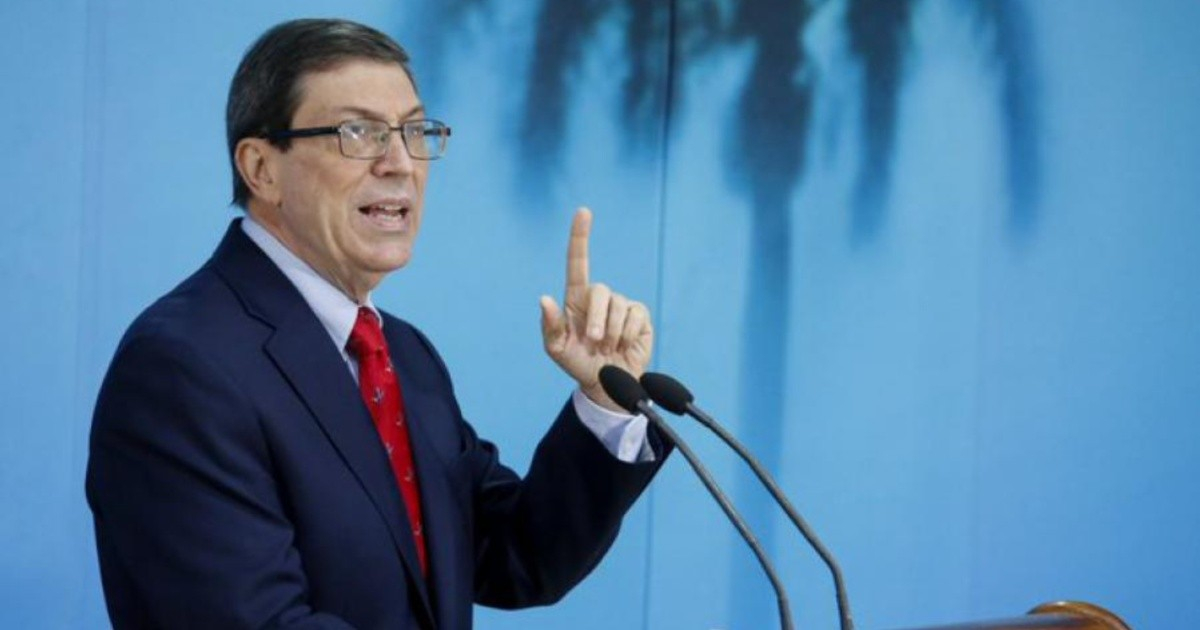
The issue has escalated to the political realm. The Cuban Foreign Minister, Bruno Rodríguez, publicly reinforced this narrative by stating that the media has been “selected” by the State Department to take positions, issue threats, and leak strategic information about the island.
In a message disseminated on social media, the minister accused Axios of operating as a "highly functional leak-receiving platform" for Washington's interests. He also questioned the outlet's practice of publishing sensitive information without independently verifying it, which, in his view, contributes to portraying Cuba as a country in terminal crisis and a threat to regional security.
The most direct trigger for the regime's reaction is the article from April 17 signed by journalist Marc Caputo, which revealed details of meetings between State Department officials and Cuban representatives in Havana—including Raúl Guillermo Rodríguez Castro, known as "El Cangrejo," grandson of Raúl Castro and lieutenant colonel of MININT.
According to Axios, a senior official from the State Department stated that the Cuban economy is in "free fall," that the elites have a "small window" for reforms supported by Washington, and that the U.S. will not allow the island's collapse to become a threat to its national security.
That same article was the first to reveal that a U.S. government plane had landed in Cuba since President Obama's visit a decade ago, a detail that the regime preferred to keep confidential.
On February 18, Axios had already published another exclusive report about secret talks between Rubio and Raúl Castro's inner circle, in which a source from the Trump administration stated: "Our position —the position of the U.S. government— is that the regime has to go."
The Cuban regime has maintained a contradictory stance towards negotiations, formally denying the existence of high-level dialogues while admitting to "exchanges of messages." Meanwhile, Díaz-Canel threatened to sever contacts if Washington insisted on regime change.
The regime's attack on Axios fits into its strategy to discredit the leaks that reveal details of negotiations that Havana prefers to keep secret, while the two-week ultimatum issued by the U.S. on April 20 expired without visible results and Marco Rubio has conditioned any agreement on structural reforms, the release of political prisoners, and a change in leadership.
Filed under: