
Related videos:
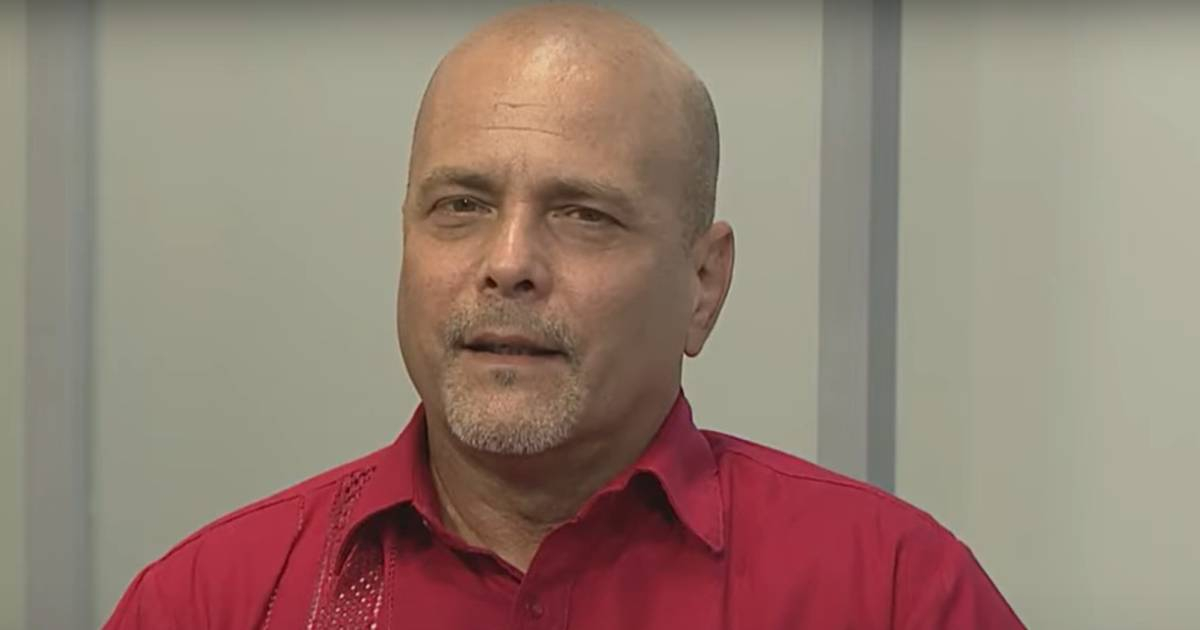
Gerardo Hernández Nordelo, national coordinator of the Committees for the Defense of the Revolution (CDR) and one of the so-called "Five Heroes" of the Cuban regime, posted on Facebook an ironic reflection on the deployment of U.S. military aircraft near Cuba, which ultimately backfired amid the avalanche of criticism he received.
The post emerged as a response to a publication by journalist Mario Vallejo, who has a verified account on Facebook, and warned: "THIS IS NOT A CASUAL DEPLOYMENT: IT IS AN INTELLIGENCE PERIMETER AROUND CUBA." Vallejo had shared screenshots from the public application Flightradar24 showing U.S. military aircraft—such as a tanker plane, an MQ-4C Triton, an unmanned aerial vehicle, and another unidentified aircraft—flying over the Caribbean region and Cuba.
Hernández took the opportunity to make an ironic comparison: "Cuba doesn't need agents; it has volunteer informants! For reporting less than this, #LosCinco were declared 'foreign agents' and three of them were found guilty of 'espionage'... It's good to know that now some offer that service without facing prison."
The shot backfired. The comments section filled with replies that dismantled his argument with a basic point: Flightradar24 is a free, publicly accessible platform available to any user with a phone. The information provided by such services comes from signals emitted by the aircraft or vessels themselves—including those from the United States—which can be limited or even turned off in certain circumstances, so it does not consist of confidential data or restricted access.
"That news is public, it’s not a secret," wrote a user. Along the same lines, another commented, "You know that's a public page, right? That's not any state secret." There were also those who insisted on the basics of the matter: "That app is free and open, and if you consider this 'inside information,' may God protect you."
Some comments were more direct in questioning the argument: "You can really see how foolish you can be when you don't realize that platform is public," or "He acts smart and funny. He knows perfectly well that this is public information." Others even reminded that any citizen can access that data: "Something that any Cuban on the island with a phone could find out."
The harshest criticism came from making comparisons: "The difference is that this information is public, accessible for consultation, but you were a snitch criminal who engaged in international espionage, and for that, you were prosecuted." Another comment, without nuance, added: "You were spies from Cuba directly in the USA, cut the show."
The immediate context of the post is the FLEX2026 military exercise underway in Key West, officially confirmed by the United States Southern Command and the Fourth Fleet, taking place from April 24 to April 30, and incorporating artificial intelligence, unmanned systems, and traditional naval forces.
This exercise is part of an escalating surveillance effort documented since January 2026, involving MQ-4C Triton drone flights and other aircraft publicly tracked via Flightradar24. On April 17, a Triton flew over Cuba, including segments over Pinar del Río and Havana, and on April 21 another operated in the Gulf of Mexico north of the island.
Hernández was sentenced in December 2001 to two life sentences for conspiracy to commit espionage and for his role in the downing of the planes from Hermanos al Rescate, as the head of the Wasp Network, the Cuban espionage network in Miami. He was released on December 17, 2014, as part of the thaw in relations between Barack Obama and Raúl Castro, and has been leading the CDR since 2020 and is a member of the Council of State.
While Hernández tries to make humor at the expense of the U.S. military deployment, days earlier Díaz-Canel insisted that Cuba must prepare for a confrontation with the United States, in a regime that has been criminalizing access to information for decades.
Filed under: