
Related videos:
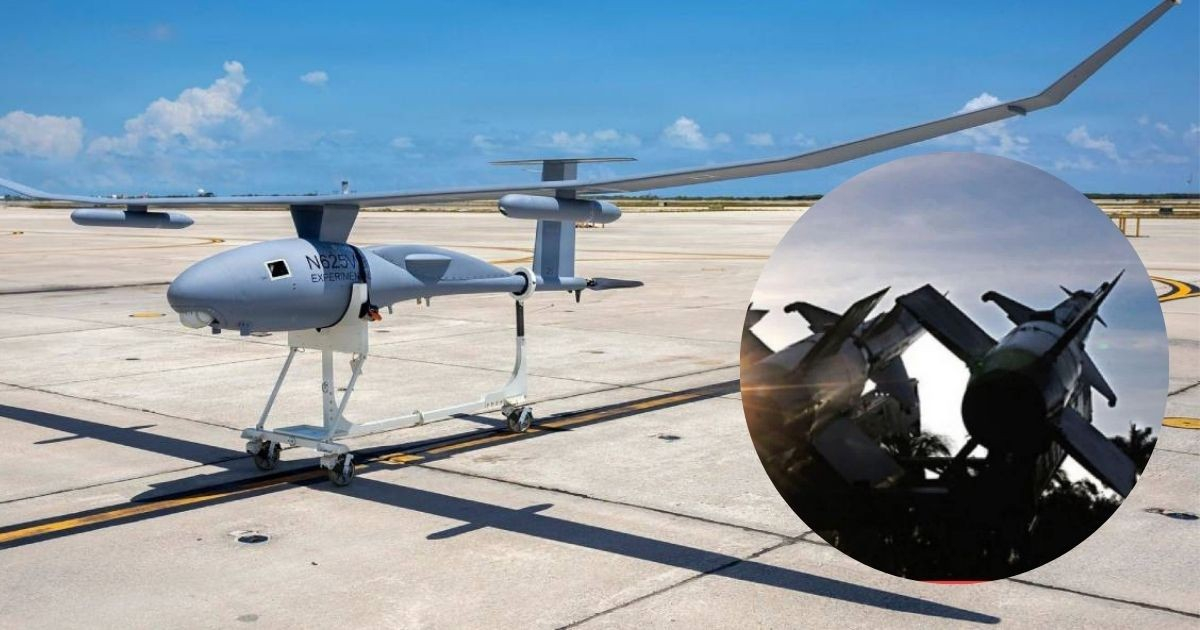
The Ministry of the Revolutionary Armed Forces of Cuba (MINFAR) and the United States Southern Command (SOUTHCOM) both posted images of their respective military capabilities on social media on the same day, which can be interpreted as a signal exchange amid rising tensions in the Caribbean.
MINFAR shared on its X account @MinfarC a photograph of Soviet-origin surface-to-air missile launchers. The accompanying text described their systems as "the most effective means of air defense, capable of being employed from access points to defined regions, targets, and troop formations across a wide range of altitudes and speeds, at any time of day and in any weather conditions."
Hours later, SOUTHCOM posted on Facebook images of the FLEX2026 exercise in Key West, Florida, under the motto “Next Generation Capabilities.”
The images of the exercise showed long-duration drones, armed unmanned surface vehicles, and autonomous control centers operated by military and civilian personnel.
The FLEX2026 exercise, taking place from April 24 to 30 in Key West, incorporates artificial intelligence, the Vanilla UAS drone—capable of flying for up to 10 continuous days covering 15,000 nautical miles—and the Tsunami USV, an unmanned naval vehicle with confirmed offensive capabilities.
This is the first exercise that publicly integrates the newly created SOUTHCOM Autonomous Warfare Command (SAWC), established on April 22, 2026, and led by Marine Corps General Francis L. Donovan.
Southcom described the SAWC as a structure that "will work closely with the Autonomous Warfare Defense Group to employ cost-effective autonomous, semi-autonomous, and unmanned platforms and systems in support of the shared security objectives of the United States and the partner nation."
Trump's presidential budget for fiscal year 2027 allocates over $74 billion to drone and counter-drone technologies, with $55 billion specifically for that category of autonomous warfare.
In the face of this deployment, the Cuban Anti-Air Defense and Revolutionary Air Force (DAAFAR) operates a predominantly Soviet arsenal that includes S-75, S-125, 2K12 Kub, and the 9M33 OSA-AKM systems, featuring armed drones and artificial intelligence similar to those currently deployed by the U.S., posing a threat for which these systems were not designed.
There is no confirmed evidence of new acquisitions of Cuban air defense systems for 2025-2026, and the coverage is concentrated in Havana, the San Antonio de los Baños airbase, and other strategic sites, with known vulnerabilities to electronic warfare and modern cruise missiles.
The immediate context intensifies the contrast. Since January 2026, the U.S. has relocated the amphibious ships USS Iwo Jima and USS San Antonio north of Cuba, and since February, P-8A Poseidon spy planes, RC-135s, and drones have been conducting sustained missions off the northern coast of the island, gathering signals.
Analysts point out that the military deployment in the Caribbean follows a tiered pattern similar to that applied in Venezuela in 2025, which combined gradual military, naval, and intelligence pressure before escalating in intensity.
Filed under: