
Related videos:
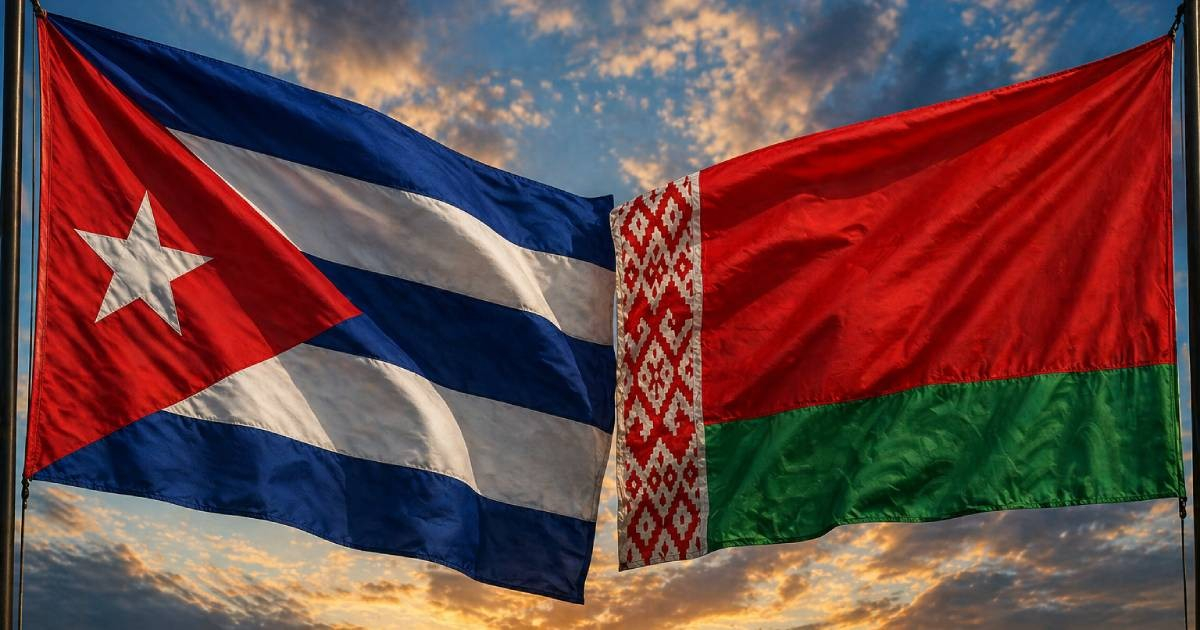
Belarusian President Aleksandr Lukashenko signed Decree No. 141 "On the Implementation of an International Treaty," which extends the mutual supply mechanism with Cuba established in the intergovernmental agreement of June 24, 2014.
The decree maintains the conditions under which Cuba supplies pharmaceutical products to Belarus in exchange for motor vehicles, agricultural machinery, medical devices, and other goods manufactured in Belarus, as reported by the state agency BelTA.
Lukashenko's press service specified that "the decree maintains the conditions for purchasing Cuban pharmaceutical products in exchange for automotive and agricultural machinery, medical devices, and other nationally produced goods supplied by the country."
The 2014 agreement functions as a mechanism for bilateral trade: Cuba exports medicines and biotechnology products, while Belarus sends MTZ tractors, MAZ trucks, and spare parts.
This scheme of compensated exchange arose as an alternative in response to the challenges faced by both countries to operate in international financial markets, with Cuba affected by the U.S. embargo and Belarus facing Western sanctions imposed after the repression of 2020 and 2021.
The renewal arrives at the worst moment of the Cuban crisis. As of April 2026, only 190 of the 651 medications in the Basic Drug List in Cuba are available, just 30%, according to provincial reports.
The Cuban Minister of Health, José Ángel Portal Miranda, acknowledged in July 2025 that the coverage of medications is at 30-32%, with access to antibiotics dependent on foreign currency.
The infant mortality rate reached 9.9 per thousand live births by the end of 2025, almost triple the figure of 3.9 recorded in 2018.
In parallel, the island is facing an energy collapse since January 2026 due to the interruption of Venezuelan oil supplies, which accounted for 76% of Cuba's electricity generation. Cuba needs between 90,000 and 110,000 barrels of oil daily but only produces around 40,000.
In that context, the agreement with Belarus has become one of the few active cooperation mechanisms for the regime of Miguel Díaz-Canel.
The bilateral relationship has not been free from trade tensions. In 2024, due to the lack of sufficient medications to balance the trade, the Cuban government proposed paying for Belarusian tractors with rum, cocoa, and coffee.
During Díaz-Canel's visit to Minsk in June 2025, Belarus pledged to supply at least 50 MTZ tractors to Cuba that year, with 12 units of the Belarus 321 model already assembled on the island and an additional 42 planned.
The cooperation between both dictatorships also has a growing military dimension. In April 2026, the twelfth meeting of the Cuba-Belarus Joint Technical-Military Cooperation Commission took place in Minsk, led by Cuban General Óscar Enrique Biosca Gallego.
Cuban ambassador Juan Valdés explained at the time that the exchange is carried out "in accordance with the volumes and value of the products, in such a way that it offsets imports according to their respective prices," a formula that the regime presents as South-South cooperation but which in practice reflects Havana's economic isolation.
Filed under: