
Related videos:
The interim president of Venezuela, Delcy Rodríguez, announced on Thursday a 26% increase in the minimum integrated income for workers in the country, which will rise from 190 to 240 dollars per month, amid growing labor protests and in anticipation of International Workers' Day.
"The first announcement I want to make is that the minimum integral income will reach the equivalent of 240 dollars. I must emphasize that this is the most significant increase in recent years," stated Rodríguez during a broadcast on the state channel Venezolana de Televisión.
The announcement comes on the same day that the Bolivarian National Police blocked a union march in Caracas by setting up barriers and vehicles in Plaza Morelos, despite the fact that the organizers had permits from the Mayor's Office granted eight days in advance.
Carlos Salazar, a member of the National Labor Coalition, reported that "more than a thousand police officers" surrounded the protest gathering point.
"The workers are not going to keep quiet any longer, and starting May first, there will be a nationwide day of protests, and we are going to surprise them," warned Salazar from the rally.
Rodríguez also announced that retirees will receive the equivalent of 70 dollars per month, and acknowledged that “it is not enough” and that he requested a special care plan for the elderly.
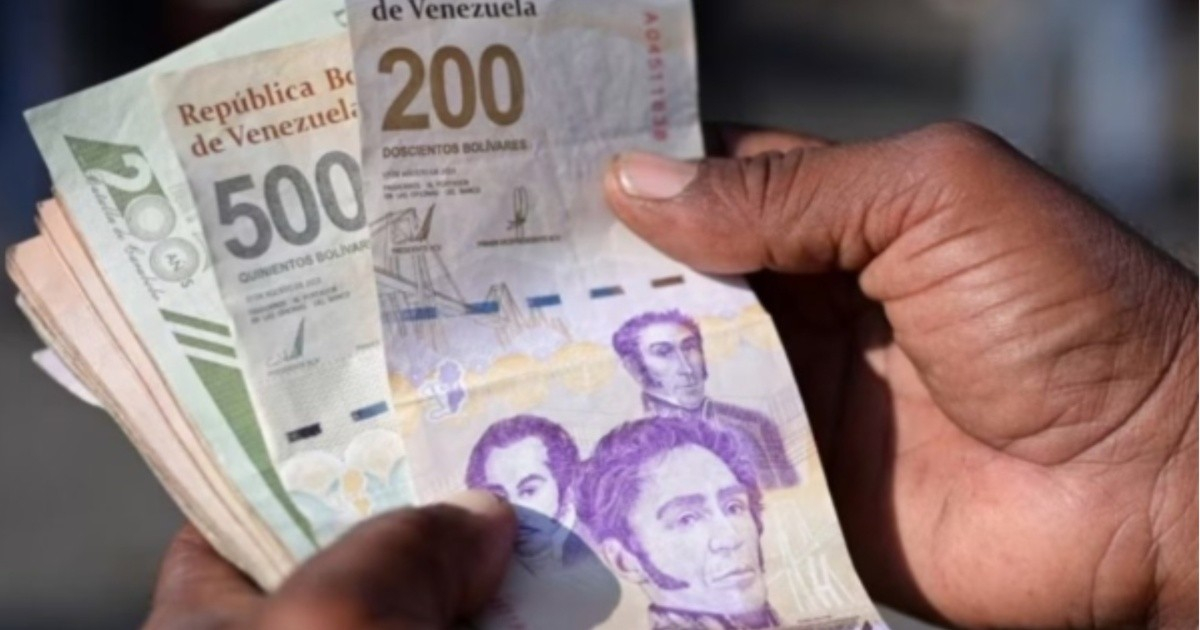
The adjustment, however, does not change the legal minimum wage, which has been frozen since March 2022 at 130 bolívares, equivalent to about 27 cents per month.
The so-called "integral minimum income" is a scheme of bonuses that does not affect labor benefits such as social security, a distinction that unions have repeatedly criticized.
This is the second adjustment in two months: in March 2026, Rodríguez had already raised the minimum wage from 160 to 190 dollars, financed through a sale of fuel oil as part of the oil opening.
The president attributed the funds from the new increase to oil revenues from agreements with the United States, and stated that it was a consensus reached with both Chavista union leaders and opposition members.
The economic context, however, remains devastating: Venezuela accumulated an inflation rate of 71.8% during the first quarter of 2026, according to official figures, and the basic food basket exceeds 700 dollars per month for a family.
José Patines, the general secretary of the Foreign Ministry union, pointed out the gap directly: "If after 27 years you cannot provide a salary increase that at least covers the cost of the basic food basket, which is around 700 dollars, then let's move towards free elections now."
The announcement comes as Rodríguez leads the “Great National Pilgrimage for Venezuela without Sanctions”, a 13-day mobilization that began on April 19 and concludes tomorrow, May 1, in Caracas.
Rodríguez assumed the role of acting president following the capture of Nicolás Maduro on January 3, 2026, and has already surpassed 100 days at the helm of the Venezuelan government, while Maduro remains detained in New York facing charges of narco-terrorism and conspiracy to import cocaine.
Patines announced that the unions will declare May 1 as "month of labor, social, and political struggle," which indicates that the mobilizations will not cease despite the announced increase.
Filed under: