
Related videos:
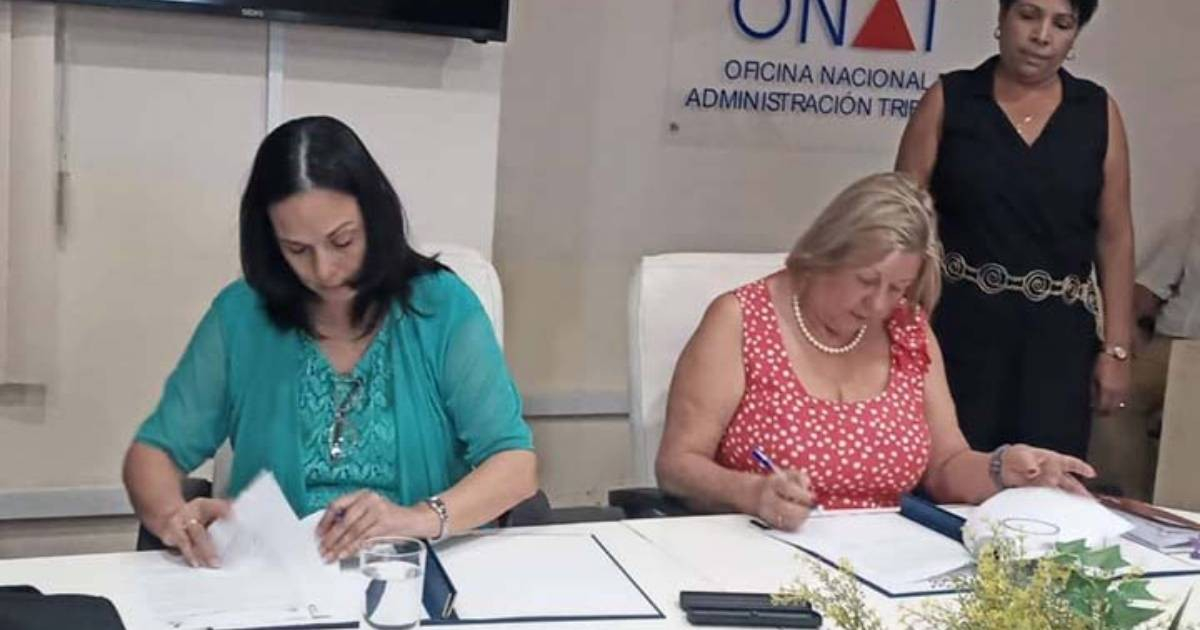
The National Tax Administration Office (ONAT) and the General Comptroller of the Republic of Cuba (CGRC) signed an agreement this Thursday in Havana for access to and shared use of computer systems and financial data to identify potential fraud and tax evasion.
The document was signed by Mary Blanca Ortega Barredo, head of the ONAT, and Mirian Marbán González, general controller, during an event that also included the participation of the Minister of Finance and Prices, Vladimir Regueiro Ale. This event was part of the conclusion of a control action by the Comptroller's Office regarding the ONAT itself, reported the Cuban News Agency.
According to the text of the agreement, through the INFOGESTI computer system and the cross-referencing of financial information, "the identification of potential fraud or tax evasion will be facilitated."
The agreement expands access to data from the General Comptroller's Office, the provincial comptroller's offices, and that of the special municipality of Isla de la Juventud, and will allow for occasional inquiries about taxpayers of interest "as part of ongoing control actions."
The regime also plans to incorporate artificial intelligence tools and data analysis algorithms into the process. The agreement states that “the data and information obtained as a result of the implementation of artificial intelligence tools and other data analysis algorithms, which contribute to the detection of irregularities, will be valuable.”
The measure comes a day after the government published the Resolution 86/2026, which requires private individuals to report suspicious operations related to money laundering and financing terrorism, turning self-employed individuals, small and medium-sized enterprises, and cooperatives into agents of financial surveillance.
Both actions are part of a regulatory escalation that includes the mandatory electronic invoicing for the private sector in 2026 and the tightening of sanctions through Decree-Law 91/2024, which establishes fines of up to 72,000 pesos for offenders.
The fiscal context explains the urgency of the regime. The Cuban budget for 2026 projects a deficit of 74.5 billion pesos, with estimated tax revenues of 349.429.9 million pesos.
The regulatory actions of 2025 identified tax debts amounting to 6.95 billion pesos, a 15% increase from the previous year, although more than 3.58 billion remained unrecovered by the end of that year.
The private sector, with over 11,000 registered MIPYMES that generate 31.2% of employment and contribute 23% of fiscal revenues, is the main target of these measures. Only 79.7% of taxpayers complied with the activation of fiscal bank accounts in 2025, a figure that the regime aims to improve with the new data matching.
The regime has intensified tax pressure on private entities since 2024, when it also eliminated tax exemptions for MIPYMES and restricted the use of foreign currency in commerce.
The agreement between the ONAT and the Comptroller came into effect at the moment of its signing and can be modified by the mutual consent of both parties, as stated in the document itself.
Filed under: