
Related videos:
The Climate Center of the Institute of Meteorology of Cuba (INSMET) published its climatic outlook for the rainy season of 2026 and predicts a summer with precipitation levels close to historical norms but maximum temperatures above average, continuing the upward trend observed in recent years on a global scale.
The forecast covers two quarters: May-June-July and August-September-October, the six months during which Cuba receives almost three-quarters of its total annual rainfall.
According to the analysis by meteorologist Elier Pila Fariñas from INSMET, "precipitation is expected to behave very close to the norm or historical average, which we can interpret as a rainy summer, as is customary."
However, heat will be the most prominent feature of the season: "The behavior of maximum temperatures is forecasted to be above the historical average, which also continues the trend of recent years on a global scale."
Minimum temperatures are expected to fall within the average range, although "very close to their upper limit," which means that nights of relief will be limited.
One of the key factors in the forecast is the phenomenon El Niño: Pila anticipates that its warm phase will solidify mainly starting in July, which would act as a "limiting factor for cyclonic formation."
This scenario aligns with the projections of Colorado State University, which in April forecasted 13 named storms, six hurricanes, and two major hurricanes for the Atlantic in 2026, equivalent to 75% of an average season from the period 1991-2020.
Scientists from the National Oceanic and Atmospheric Administration (NOAA) also warn of a 62% likelihood of a "Super El Niño" developing between June and August 2026, with Pacific surface temperatures exceeding 2°C above average.
The forecast of a more moderate summer regarding cyclones comes after an exceptionally active 2025 season, which reached 105% of the historical average and was marked by the hurricane Melissa, which devastated eastern Cuba on October 29 as a category three, with sustained winds of 195 km/h.
That cyclone affected more than 3.5 million people and damaged over 116,000 homes in the eastern part of the island, leaving the population in those provinces in a state of heightened vulnerability.
The context of extreme heat in Cuba has become an established trend. In April 2024, the country broke the 40°C barrier for the first time in its history, with a record of 40.1°C recorded in Jucarito, Granma, and weeks later reached that mark again in Bolivia, Ciego de Ávila.
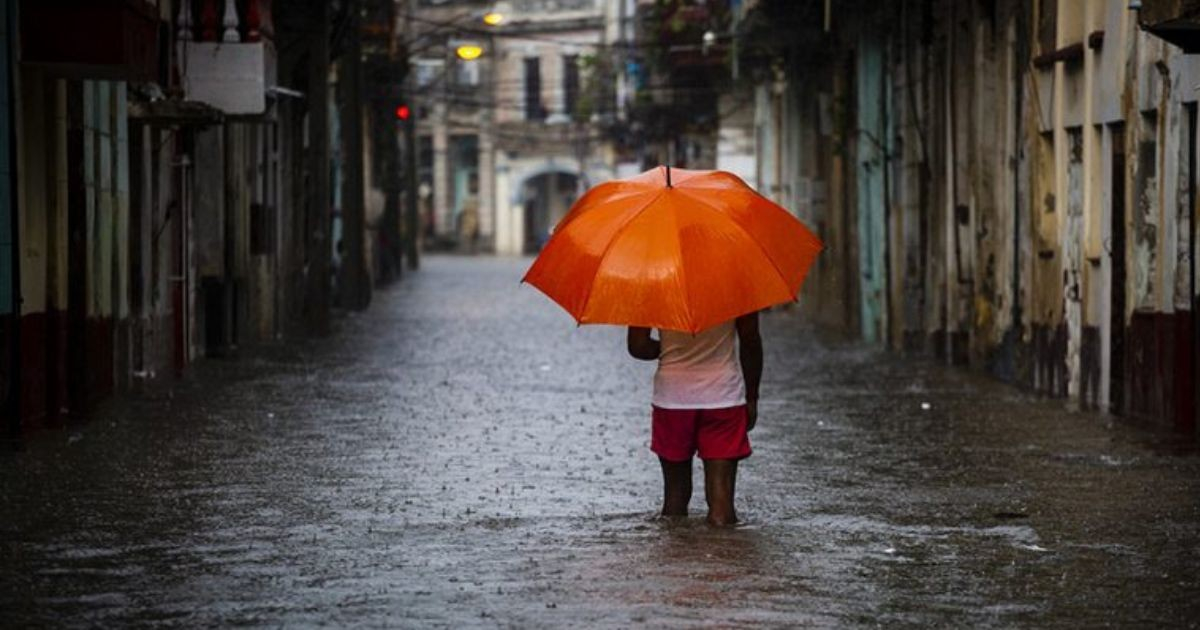
Pila recalls that "the persistence of warm days, typical of these months, is only interrupted during rainy events lasting several days, primarily during the May-June and September-October bimonths."
The forecast also warns that, although these are long-term climate projections, it "already has an idea of the summer-fall ahead," with the reliability of the models decreasing as the time horizon extends.
Filed under: