
Related videos:
On the occasion of May 1, 2026, the official account of the Presidency of Cuba on X published a message from Raúl Castro in which the former leader stated that the regime remains "with one foot in the stirrup and ready for the charge with the machete," alongside the people and "as a fighter among them, against the enemy and our own mistakes, confident that the mambí cry will always resound in this land: Long live a free Cuba!"
The message, published on the eve of International Workers' Day, accompanied the official slogan of the regime for the day: "The Homeland is defended," under the motto "To die for the Homeland is to live."
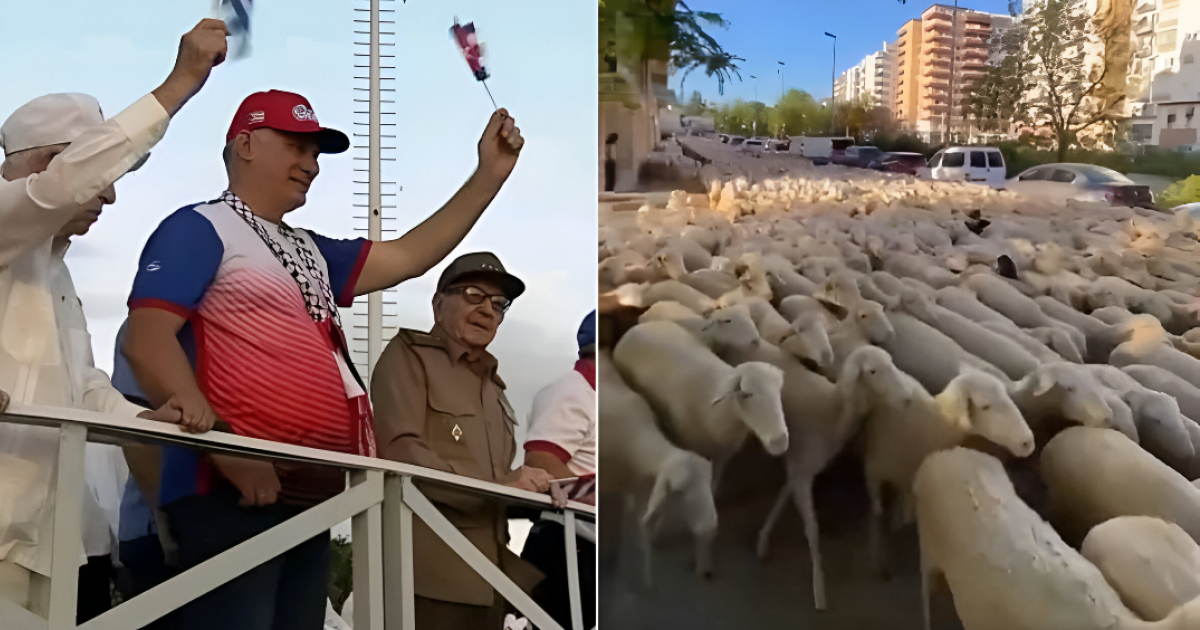
The central event of this year did not take place at the Plaza de la Revolución —the traditional venue for decades— but at the José Martí Anti-Imperialist Tribune, in front of the United States Embassy on the Havana seafront.
The change of venue was announced in April by Osnay Miguel Colina Rodríguez, president of the organizing committee of the Central Workers' Union of Cuba, who cited "austerity" and "the cruel energy blockade" as reasons.
Critics point out that the decentralization of the event —with participants marching on four fronts from different popular councils— aims to disguise the low attendance caused by the severe economic and energy crisis the island is experiencing, with power outages lasting up to 24 hours.
It was also documented that children were taken from schools to participate in local marches, such as in San Miguel del Padrón, the day before the event.
The United States Embassy in Havana issued a security alert for the morning of May 1 starting at 8:00, due to a gathering in front of its diplomatic headquarters.
Castro's rhetoric is not new: he used identical expressions—"foot in the stirrup" and "charge with the machete"—during the event for the 65th anniversary of the revolutionary triumph on January 1, 2024, in Santiago de Cuba.
In 2026, the regime has intensified its militaristic rhetoric within the framework of the "Year of Defense Preparedness."
On January 18, the National Defense Council chaired by Castro approved plans for the "transition to a State of War", and since then military exercises have been conducted every Saturday under the doctrine of "total people's war," featuring shooting practice with AK-47 rifles, drones, and anti-tank mines.
The regime's war rhetoric also serves to divert attention from the serious internal crisis: power outages of up to 24 hours, fuel shortages, and widespread deterioration of basic services.
The expression "charge with the machete" refers to a combat tactic used by the mambises during the wars of independence against Spain. The regime has historically appropriated this symbolism to legitimize its discourse of resistance.
Castro, at 94 years, formally retired from the first secretary position of the Communist Party in 2021, but he still holds significant influence over Díaz-Canel's government.
On April 3rd, he sent a letter to the Central Army of Cuba stating: "Today, when the Homeland is once again threatened, I reaffirm my confidence that you will know how to confront any aggression, convinced of victory."
Filed under: