
Related videos:
The General Customs of the Republic of Cuba detected a passenger attempting to enter the country through the José Martí International Airport in Havana with 48 ingested capsules of cocaine, during an operation announced this weekend by Cuban authorities.
The finding was published by William Pérez González, First Deputy Chief of the General Customs of the Republic, on his official account on X.
"Passenger detected entering with ingested drugs at Havana Airport, 48 capsules of cocaine were seized as a result of an effective Risk Analysis by the Customs of Cuba and the anti-drug agency, which constitutes a strong asset in this deadly battle at the border," wrote the official.
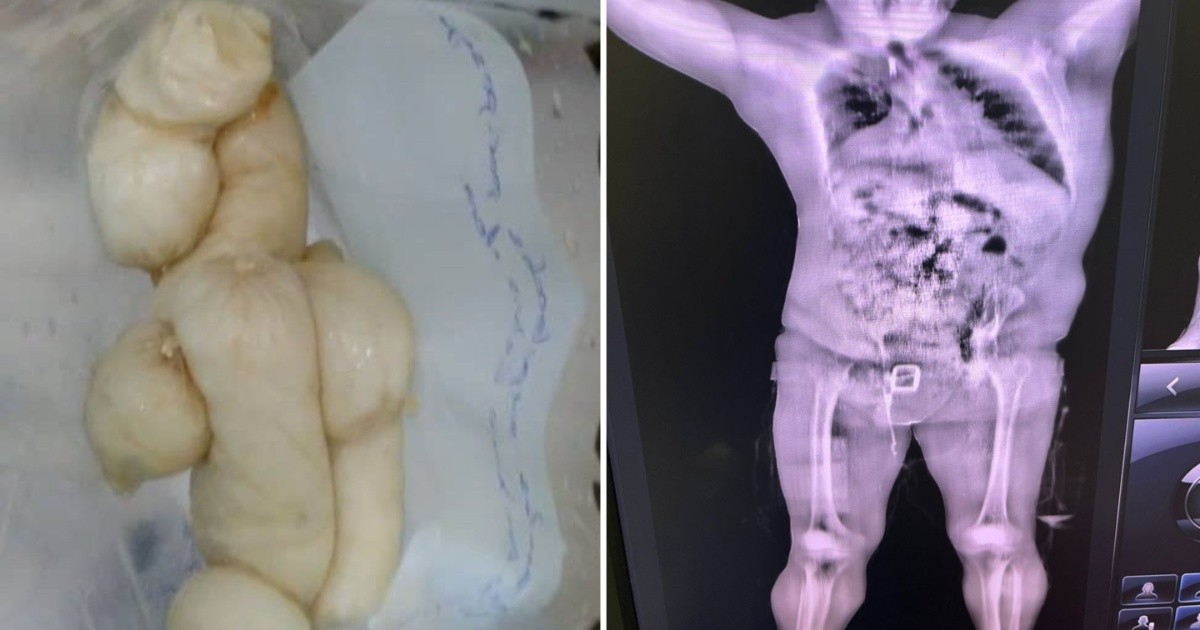
The images published alongside the announcement show the extracted capsules —organic in appearance and wrapped— and an abdominal X-ray that reveals their presence inside the detainee's body.
The case pertains to the method known as "mule" or human courier, in which the transporter ingests drug capsules to evade customs controls.
This method has a long history at Havana airport: in 2014, 35 capsules were seized from a passenger; in 2019, 36 liquid cocaine capsules were detected on a foreign traveler; and in 2017, a court case documented a traveler with 82 ingested capsules.
Since 2025, Cuban authorities have reported an increase in the sophistication and frequency of aerial drug trafficking attempts. In 2026 alone, at least six operations have been intercepted, using increasingly varied methods.
Among the most recent cases are methamphetamine hidden in a package of rice detected in April, and drugs concealed in cereals and instant drinks sent from the United States, also in April.
In July 2025, Customs detected more than a kilogram of cocaine hydrochloride hidden inside a statue of Eleguá at the same airport, and in August of that year, attempts to smuggle in scented candles and containers of modeling clay were thwarted.
Authorities have also warned about the increase in trafficking by "blind mules", individuals who transport packages without knowing their contents in exchange for money, but who are equally liable under Cuban law.
Detection at José Martí airport is carried out through risk profile analysis of travelers, X-ray technology, and body scanning.
Penalties for drug trafficking in Cuba can reach up to 15 years in prison, according to current legislation.
Filed under: