
Related videos:
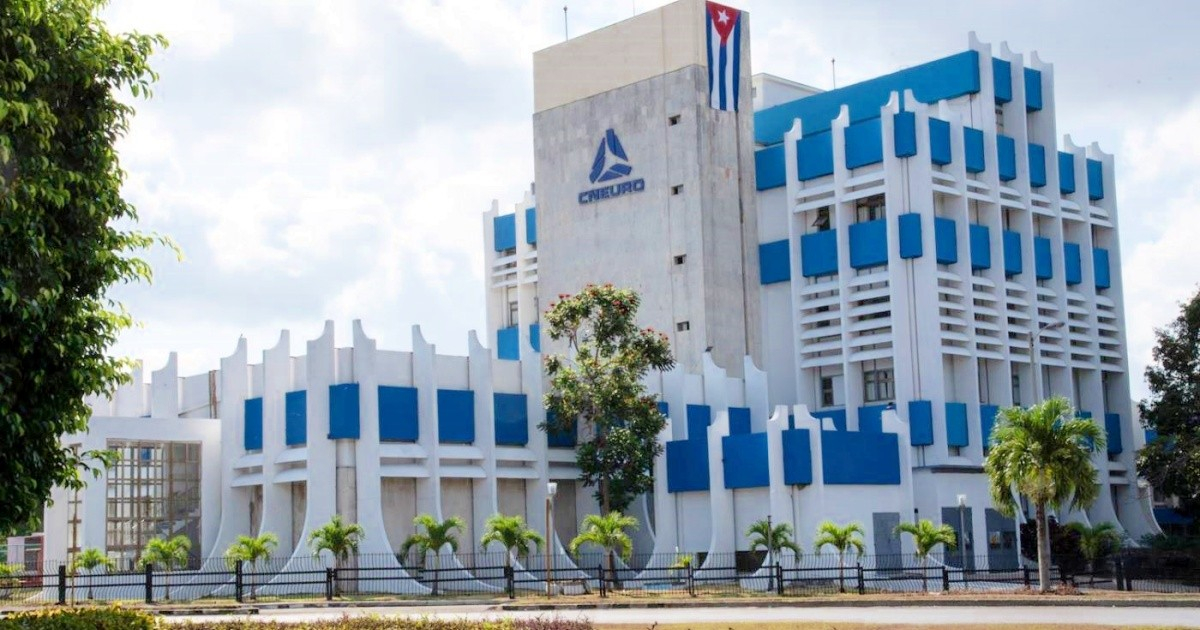
The Cuban Neuroscience Center (CNEURO), a top-tier scientific institution belonging to the BioCubaFarma Group, issued a tender on April 28 to invite the private sector—including Mipymes and self-employed workers—to take over the management of its transportation fleet, a role that the institution can no longer fulfill with its own resources.
The document, signed by Ing. Reymundo Guerra Grau, Administrative Director of CNEURO, formally calls for "the signing of a Collaboration Agreement for the use and exploitation of CNEURO's transportation", based on Resolution 149/2024 from the Ministry of Economy and Planning.
The document details five vehicles included in the agreement.
Only one - a Yutong bus with 13 seats, license plate B174903 - is currently in operation.
The other four require repairs before they can operate: a 20-seat Mercedes Benz Sprinter (B200045), two Citroën vans (B245811 and B153400), and a Peugeot van (B196283).
The contribution scheme clearly reveals the nature of the problem.
CNEURO provides vehicles, custody at its facilities, drivers from its own staff, purchasing and import capacity abroad, and a payment gateway in foreign currencies.
The private counterpart, on the other hand, must provide what the State can no longer guarantee: "liquidity for the purchase of parts and components," "liquidity for the purchase of fuel," and the maintenance and repair of vehicles, committing to do so "at the lowest possible cost."
The agreement establishes specific service obligations.
According to the document, “two daily routes (inbound and outbound) will be guaranteed for the personnel designated by the company in the areas surrounding it (Lisa, Marianao, and Playa) pending agreement between the parties.”
In addition, "both parties will conduct a monthly reconciliation of the technical status of the transport."
The call for bids does not set a limit on participants: "there will be no limit on the number of bidders or proposals," and it leaves open the possibility of incorporating other vehicles from the center, as "other vehicles from our center that are of interest to the bidder for specific activities will also be considered."
The case of CNEURO is not an isolated incident.
The transportation in Cuba sinks deeper each day while authorities acknowledge the seriousness of the situation: the Minister of Transportation admitted in March that national buses operate with only one departure per day.
The public transport system experienced a 93% decline between January and September 2025.
The energy crisis worsens the situation. Díaz-Canel warned that Russian oil is running out and that the country needs eight fuel ships per month, but has only received one since December 2025.
On February 6th, urban transportation in Havana completely collapsed, with no bus or minibus routes due to a lack of fuel.
The situation is not limited to transportation. Hospitals in Cuba are operating under wartime conditions due to blackouts and shortages, and the Cuban health system is on the brink of collapse, according to voices within the sector itself.
That a scientific institution dedicated to research on neurological diseases such as Alzheimer's, Parkinson's, and epilepsy has to turn to the private sector to ensure the basic transportation of its staff illustrates the depth of the institutional collapse that Cuba is experiencing after decades of centralized management.
The call is valid for 15 working days from its publication in official media.
Filed under: