
Related videos:
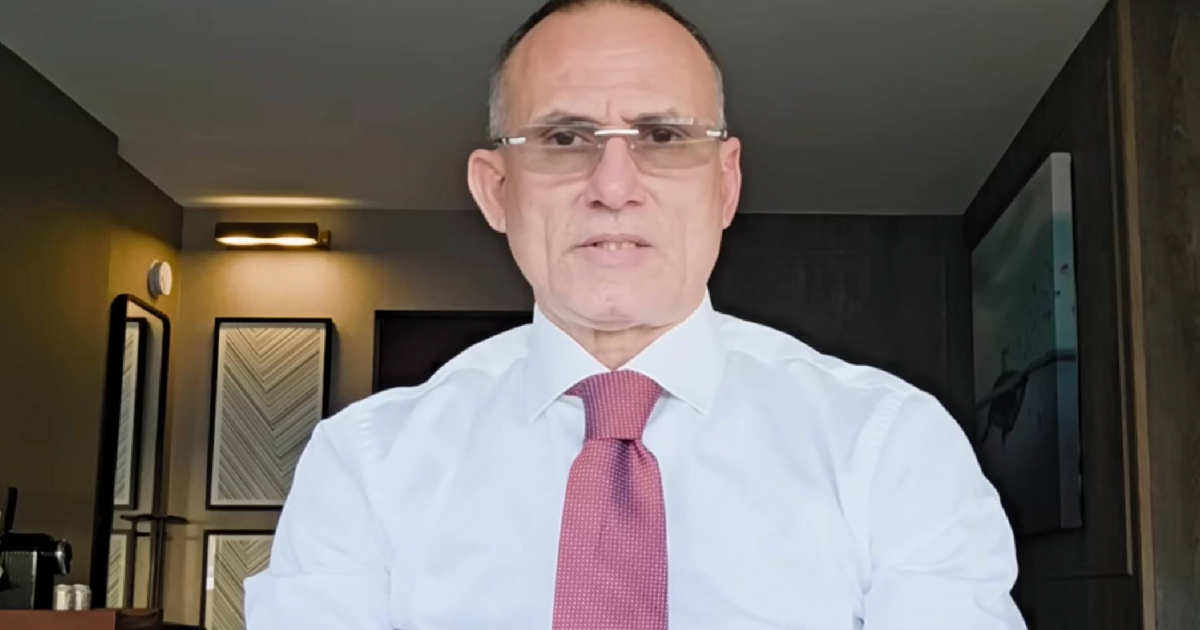
José Daniel Ferrer appeared this Monday at the European Parliament to meet with MEPs, explain the situation in Cuba, and seek support for the "Cuba Liberation Agreement", a plan for democratic transition that the opposition leader is presenting during a tour of more than ten European countries.
"I have been at the European Parliament since early this morning, and in addition to thanking several MEPs for resolutions like the one I am sharing here, I am explaining the current reality in Cuba, the severe crisis our people are experiencing, the terrible situation of political prisoners, the brutal repression against opponents and critics of the criminal regime, and the need to end the Political Dialogue and Cooperation Agreement with the Castro-communist dictatorship," Ferrer wrote on his social media.
The leader and founder of the Cuban Patriotic Union (UNPACU) added that all the MEPs he visited expressed their support for the Liberation Agreement and showed solidarity with the Cuban political prisoners.
The European tour kicked off last Friday in Madrid, driven by the organization Prisoners Defenders and its president Javier Larrondo, with whom Ferrer reunited at Madrid-Barajas Airport after ten years apart.
The purpose of the tour is to meet with legislators, parliaments, governments, and human rights organizations to denounce the regime's repression, demand the release of political prisoners, and advocate for a change in European policies toward Cuba.
The Cuba Liberation Agreement was signed on March 2, 2026, in Miami by more than 30 exile organizations, including the Assembly of the Cuban Resistance and the coalition Steps for Change led by Rosa María Payá.
The plan proposes three phases: restoration of civil liberties and release of political prisoners, stabilization with a provisional government, and democratization with internationally supervised free elections.
Last Tuesday, Florida officially recognized the Liberation Agreement as "the path to a free and democratic Cuba," through a proclamation from state senator Alexis Calatayud.
Ferrer arrived for this European tour just seven months after having left Cuba for Miami with his wife Nelva Ortega and their three children on October 13, 2025, after being released from the Mar Verde prison in Santiago de Cuba.
Before his release, he had been detained since July 11, 2021, when he was arrested during the protests of July 11, and had been kept incommunicado since March 2023, with his family unable to obtain information about his health status.
In June 2025, Ferrer began a hunger strike in prison to denounce the inhumane conditions, isolation, and torture he was enduring, resulting in a serious deterioration of his health.
The European Parliament approved on September 19, 2024, a specific resolution regarding his case that called for the immediate and unconditional release of Ferrer, condemned torture and degrading treatment, and urged the Council to impose sanctions under the EU Magnitsky Act against those responsible for human rights violations in Cuba.
That same resolution reiterated "the possibility of activating the suspension clause of the Political Dialogue and Cooperation Agreement between the EU and Cuba, given that the Cuban regime has continuously violated the fundamental human rights clauses of the Agreement."
However, despite the successive condemnations from the European Parliament and the pressure from Cuban civil society, the European Commission continues to uphold the current agreement under the "critical engagement" approach, without translating parliamentary resolutions into concrete actions.
Reliable sources cited in the resolution of the European Parliament in 2024 state that the Cuban regime is holding more than a thousand political prisoners, including minors, among them Luis Manuel Otero Alcántara and Lizandra Góngora, whose health condition has been described as critical.
Filed under: