
Related videos:
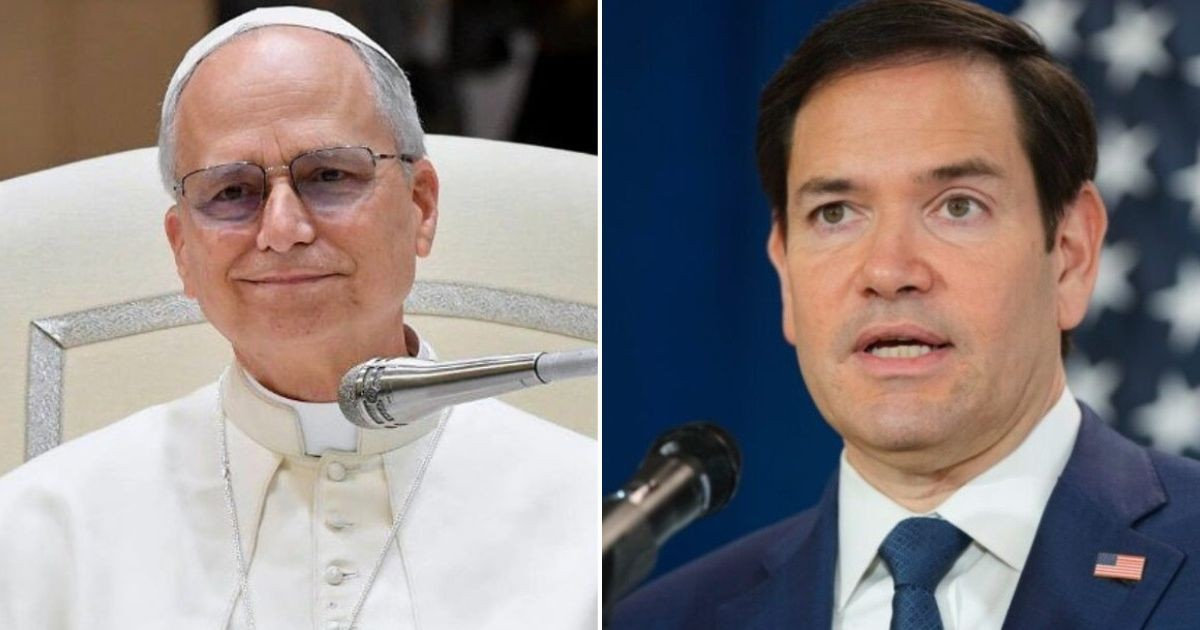
The U.S. Secretary of State Marco Rubio will travel to Rome from May 6 to 8 to meet with Pope Leo XIV next Thursday, the 7th, marking the first high-level meeting between the Trump administration and the Vatican since the president publicly attacked the pontiff last month, as confirmed by the State Department and reported by .
The spokesperson for the State Department, Tommy Pigott, stated that the official purpose of the trip is "to advance bilateral relations with Italy and the Vatican," with an agenda focusing on the Middle East and "mutual interests in the Western Hemisphere" — a diplomatic euphemism that directly targets Cuba.
Since January 2026, Washington has intensified pressure on the Cuban dictatorship through a de facto oil embargo that has reduced the island's crude oil imports by 80-90%, leading to blackouts of up to 25 hours a day and a GDP contraction of 7.2%.
Direct negotiations between both countries failed in April: the Cuban regime rejected the U.S. ultimatum to release high-profile political prisoners like Luis Manuel Otero Alcántara and Maykel Osorbo, and the deadline expired on April 24 without an agreement.
In that context, Rubio's visit to the Vatican takes on a strategic dimension that goes beyond routine diplomacy.
The Vatican has a proven track record as a mediator in the relationship between Washington and Havana: it was crucial in the Obama-Castro rapprochement of 2014, when Pope Francis facilitated the secret channels that culminated in the restoration of diplomatic relations on December 17 of that year.
According to USA Today, some analysts interpret the visit as an attempt to recruit the Vatican as a leverage point for pressure on Cuba.
Others point to a bolder interpretation: that Rubio may be seeking some form of Vatican diplomatic cover before any potential use of force, preemptively silencing the only moral leader with global authority to oppose a U.S. military operation on the island.
It would not be a minor move. The Pentagon has accelerated contingency plans for possible military operations in Cuba, and Trump stated on April 13: "We can stop in Cuba after finishing this." A military operation in Cuba would face a public and vigorous opponent in León XIV: the first pope born in the U.S. has made it clear that he will not yield to pressures from Washington.
After Trump's attack, in which he referred to him as "weak" and "poor in foreign policy", the Pope responded unequivocally: "I have no fear of the Trump administration, nor in proclaiming the message of the Gospel loudly. We are not politicians; we do not view foreign policy from the same perspective, but rather as builders of peace."
Weeks later, León XIV attempted to ease tensions clarifying that his homily on peace had been written beforehand and that he had "no interest in debating with the president."
Rubio, a practicing Catholic, already met with León XIV in May 2025, when he led the U.S. delegation to the inaugural mass of the pontiff alongside Vice President JD Vance.
On this occasion, it is also planned that he will meet with Cardinal Pietro Parolin and Archbishop Paul Richard Gallagher, and on Friday the 8th with Italian Prime Minister Giorgia Meloni.
The trip occurs at a time of tension with the European Union over trade and following Trump's threat to withdraw troops from NATO countries like Italy, which have refused to support the U.S. military campaign in Iran.
The meeting on Thursday at the Apostolic Palace will be the first real test of whether Washington and the Vatican can find common ground on Cuba—or if the clash between Trump and the Pope has left a rift too deep for diplomacy.
Filed under: