
Related videos:
The recent inclusion of Ceuta and Melilla in a document from a committee of the United States House of Representatives has reopened a geopolitical debate that is particularly sensitive for Spain and, by extension, for Europe.
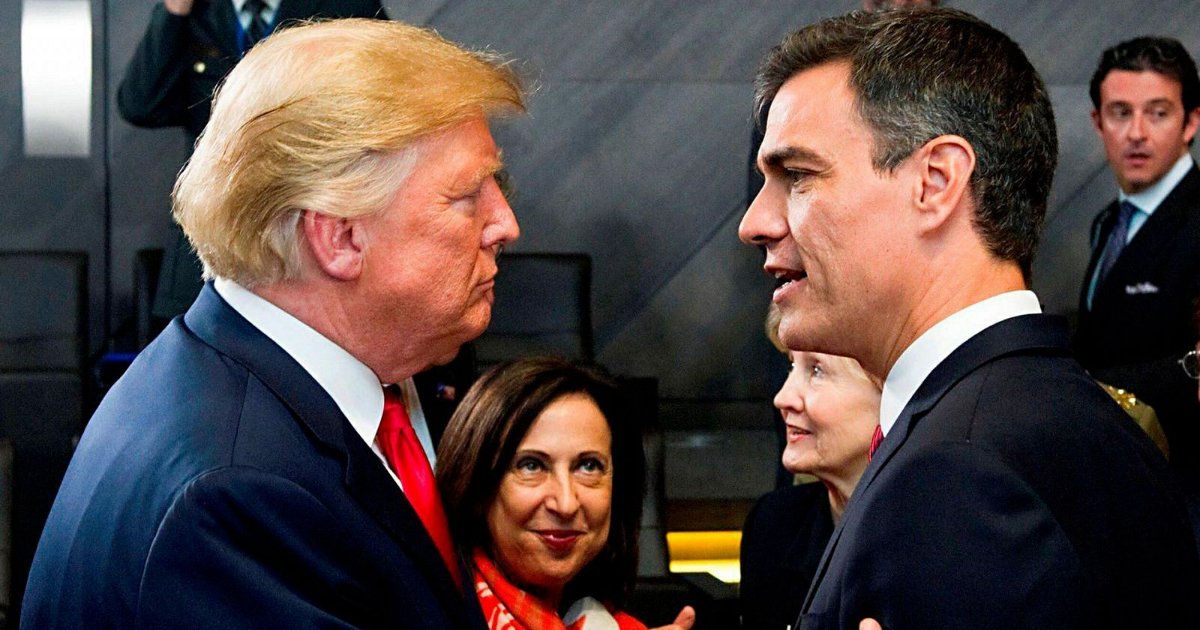
Although it is not a binding decision nor an official stance of the U.S. administration, the fact that a legislative text questions the "Spanish identity" of both cities and suggests Washington's mediation in the dispute with Morocco introduces a new element in the international arena: the possible exploitation of a historical conflict within the context of broader tensions between the United States and the Government of Pedro Sánchez.
The mention, included in a report from the Appropriations Committee, notes that Ceuta and Melilla, “administered by Spain”, are located on Moroccan territory and are part of a historical claim by Rabat.
The document also supports the efforts of Secretary of State, Marco Rubio, to promote diplomatic dialogue between Morocco and Spain regarding the future status of both cities.
This positioning, although nuanced in formal terms, breaks with Washington's traditional caution on a matter that Spain considers resolved and not open to negotiation.
A debate that transcends the bilateral
Ceuta and Melilla have been part of Spanish territory for centuries and are fully integrated into the country's constitutional order.
For Madrid, any external questioning of its sovereignty constitutes unacceptable interference. However, the emergence of the issue in a document from the U.S. Congress suggests that the debate has begun to take on a broader international dimension.
International media have interpreted this inclusion as a sign that the United States may be willing to use sensitive territorial issues as tools of diplomatic pressure.
The reference to the "historic alliance" between the United States and Morocco — formalized in 1786 — reinforces the idea that Washington may be recalibrating its strategic priorities in North Africa, a key region due to its proximity to Europe, its role in migration routes, and its importance in terms of security.
This movement recalls recent precedents, such as recognition of Moroccan sovereignty over Western Sahara during the first Trump administration, a decision that disrupted the diplomatic balance in the region and generated tensions with European partners.
In that context, the inclusion of Ceuta and Melilla in the report could be interpreted as an extension of that geopolitical logic.
The Trump variable: political pressure and accumulated conflicts
To understand the potential significance of this gesture, it is necessary to place it in the broader context of the relations between the United States and Spain under the current administration of Donald Trump.
The tensions between Washington and Pedro Sánchez's government are not new, but they have intensified in recent months due to several strategic disagreements.
One of the most significant episodes was Spain's refusal to authorize the use of the military bases in Rota and Morón for the "Epic Fury" operation against Iran.
This decision was perceived in Washington as a lack of cooperation at a critical moment. Trump's response included threats to cut bilateral trade and direct criticism of Spanish leadership.
The crisis worsened when Spain closed its airspace to
In this context, the mention of the issue of Ceuta and Melilla in a congressional document can be interpreted as a political signal directed at Madrid, rather than just a simple technical observation.
A broader pressure strategy
The hypothesis of broader pressure is reinforced by observing other recent decisions from the Trump administration, particularly concerning Cuba.
The executive order signed on May 1, 2026, not only
Spain is highlighted as one of the most exposed countries due to the presence of companies such as Meliá Hotels International in the Cuban tourism sector. The potential for secondary sanctions introduces a new layer of pressure on Sánchez's government.
This strategy is part of the "maximum pressure" policy against the Cuban regime, which has included more than 240 sanctions and measures that have worsened the energy and economic crisis on the island.
Spain between Two Fronts: Morocco and Cuba
Spain finds itself in a delicate position. On one hand, it faces indirect questioning of its territorial integrity in North Africa. On the other, it must consider a scenario of U.S. sanctions affecting its economic interests in Cuba and their possible impact.
This dual pressure could force Madrid to recalibrate its foreign policy. However, a shift in its stance towards Cuba would entail political and diplomatic costs, particularly within the European Union.
The situation also reflects an increase in tensions between the United States and Europe. The inclusion of Ceuta and Melilla in a congressional report and the pressure on European companies suggest that Washington is willing to leverage its economic and political power to influence its allies.
The European Union has occasionally demonstrated a limited response, which could be encouraging the United States to intensify this strategy.
An open stage
For now, the reference to Ceuta and Melilla does not imply an immediate change in U.S. official policy, but its symbolic value is significant. In a context of accumulated tensions, these gestures may further deteriorate the bilateral relationship.
The upcoming G7 is shaping up to be a key stage for assessing these tensions. Meanwhile, the pressure on Cuba will remain a central focus of U.S. foreign policy, with effects that extend to actors like Spain.
What is at stake is not just the situation of two autonomous cities or investments in Cuba, but Spain's role in an increasingly complex and tense international landscape.
Filed under: