
Related videos:
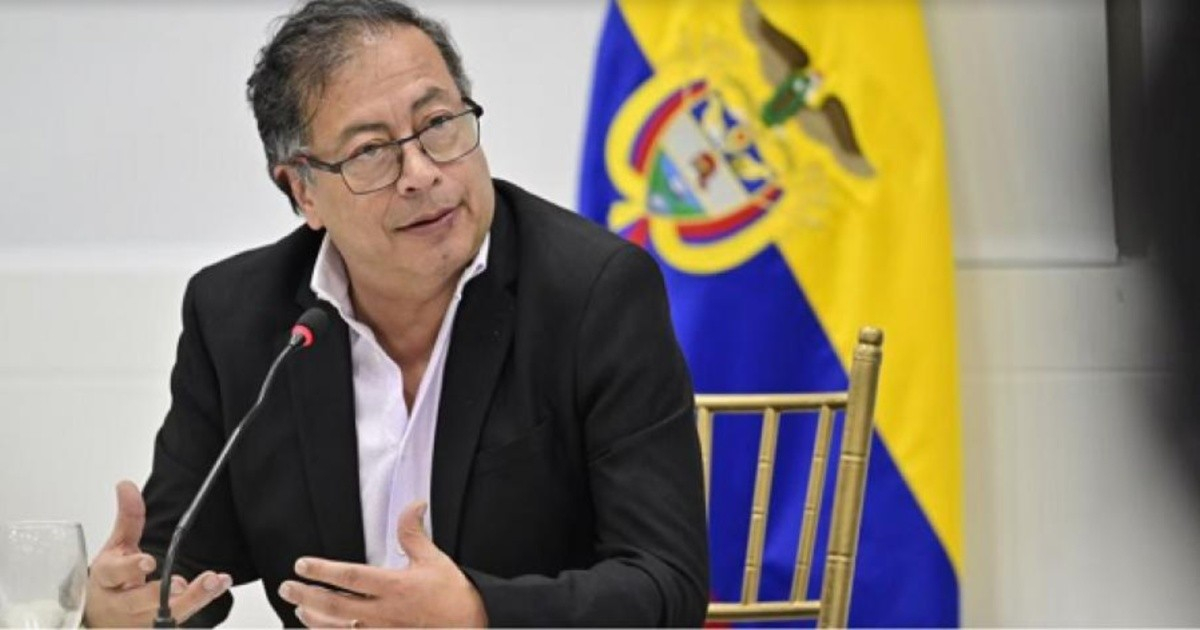
The Colombian president Gustavo Petro published a message on his X account this Sunday, attributing hunger and poverty in Cuba to the U.S. embargo and stating that lifting it would lead to political transformations on the island, in direct response to recent statements by Donald Trump regarding taking control of Cuba.
In the tweet published this Sunday, Petro wrote: "Stop talking nonsense: in Cuba there is hunger and poverty that are mitigated by education and health because there has been a criminal blockade for decades."
The publication was a response to journalist Cesar Augusto Londoño, who had quoted a previous statement from the Colombian president in which he described any military aggression against Cuba as an aggression against all of Latin America.
The central thesis of the message is straightforward: "Unlock Cuba and you will see political changes, perhaps not in the way the current Cuban system would like, but perhaps also not in the way some Miami Cubans want, who do not realize that Miami is one of the cities in the world most exposed to its end due to the climate crisis."
Petro concluded his publication with a warning: "Those who want to invade Cuba will only ignite political violence throughout Latin America and extinguish its nascent democracy."
The message comes a day after Trump stated, during a Forum Club dinner in West Palm Beach, that the United States "would take Cuba almost immediately" after concluding operations in Iran, and described the hypothetical deployment of the aircraft carrier USS Abraham Lincoln 100 yards off the Cuban coast to compel the regime's surrender.
Petro's stance is not new. On Saturday, he already published that "the Caribbean is a zone of peace and that must be respected" and that "this continent is the continent of Freedom and not of invasions," which represents a sustained pattern of complicity with Havana.
In April, during an interview on RTVE in Barcelona, Petro described the embargo as "genocide" and stated that it was "killing a people through hunger." In February, he asked Trump to restart the dialogue with Cuba and in October 2025, he boycotted an international summit following Cuba's exclusion.
The Cuban regime, for its part, responded to Trump's threats with institutional defiance. Foreign Minister Bruno Rodríguez Parrilla stated that Cuba "will not be intimidated", while Miguel Díaz-Canel asserted that "no aggressor will subdue the island" and called upon the international community in the face of threats he described as "dangerous and unprecedented."
Petro's thesis contrasts with the position of those who argue that it is 67 years of communist dictatorship — and not Washington — that is the main obstacle to the freedom of Cubans, and that the structural crisis of the island is a direct consequence of the totalitarian model imposed since 1959.
Since January 2026, the Trump administration has imposed more than 240 new sanctions against Cuba, intercepted at least seven oil tankers, and reduced Cuban energy imports by between 80% and 90%, exacerbating a crisis that was already causing blackouts of up to 25 hours a day.
Filed under: