
Related videos:
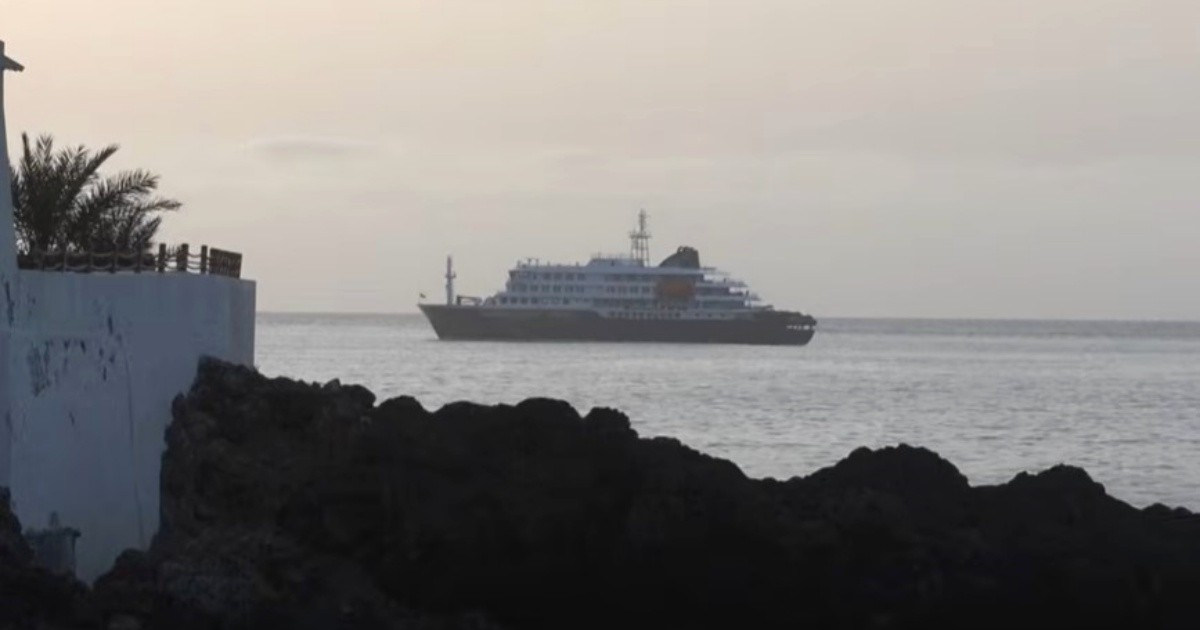
Cabo Verde denied docking permission to the cruise ship MV Hondius at the port of Praia, leaving 149 passengers from 23 nationalities stranded off its shores amid a hantavirus outbreak that has already caused three deaths and has two crew members showing severe symptoms on board.
The president of the Cape Verde National Institute of Public Health, Maria da Luz Lima, announced the decision on Sunday night: "In coordination with other authorities, the ship was not granted permission to dock at the port of Praia."
The measure aims to protect the Cape Verdean population from the health risk posed by the ship.
A trip that turned into tragedy
The MV Hondius, operated by the Dutch company Oceanwide Expeditions, departed from Ushuaia on March 20 on a 46-day itinerary heading to Cape Verde, with stops at South Georgia and the Island of Saint Helena.
The first deceased was a 70-year-old Dutch passenger who died on board on April 11; his body was disembarked on the Island of Saint Helena on April 24, accompanied by his 69-year-old wife.
The woman fell ill during the return journey and suffered a collapse at Johannesburg airport while trying to fly to the Netherlands, ultimately passing away in a hospital in that city.
On May 2, a third passenger of German nationality died on board, although the official cause of his death is still unknown.
Critical condition and pending evacuations
A 69-year-old British citizen, who was urgently evacuated to Johannesburg on April 27, remains in critical condition in an intensive care unit and is the only laboratory-confirmed case of hantavirus; the other five are suspected cases.
On board, there are also two crew members—one British and one Dutch—showing acute respiratory symptoms that require "urgent medical attention," according to the shipping company.
The World Health Organization (WHO) is coordinating the medical evacuation of these two crew members, while Cape Verde prepares a contingency air ambulance.
Oceanwide Expeditions acknowledged in a statement that "we are facing complex challenges" and assured that "the health and safety of all passengers and crew are our highest priority."
Canary Islands, a possible alternative destination
In response to Cabo Verde's rejection, the shipping company is considering directing the ship to Las Palmas or Tenerife, in the Canary Islands, a two to three-day voyage away.
The 149 passengers on board —including 17 Americans, 14 Spaniards, and at least one Argentine— remain subject to strict isolation measures, hygiene protocols, and medical surveillance.
What is hantavirus and why is it a concern?
Hantavirus is primarily transmitted through the inhalation of aerosols contaminated with the feces, urine, or saliva of infected rodents.
Suspicion is directed towards the Andes virus, found in Argentina and Chile, and the only documented strain capable of transmission between humans, albeit infrequently.
Argentina recorded an active health alert in 2026, with 32 cases reported between January and early May, mainly in the Andean provinces in the southern part of the country.
The mortality rate of hantavirus pulmonary syndrome is around 35-38%, and there is no specific antiviral treatment available.
The WHO calls for calm
Despite the seriousness of the outbreak, the WHO insisted that there is no reason for panic. "The risk to the general public remains low. There is no need for panic or travel restrictions," stated Dr. Hans Henri P. Kluge, WHO Regional Director for Europe.
The director general of the organization, Tedros Adhanom Ghebreyesus, emphasized that "swift and coordinated action is essential to contain risks and protect public health."
Kluge framed the incident in broader terms: "Health threats do not respect borders. Working together is how we protect people."
Filed under: