
Related videos:
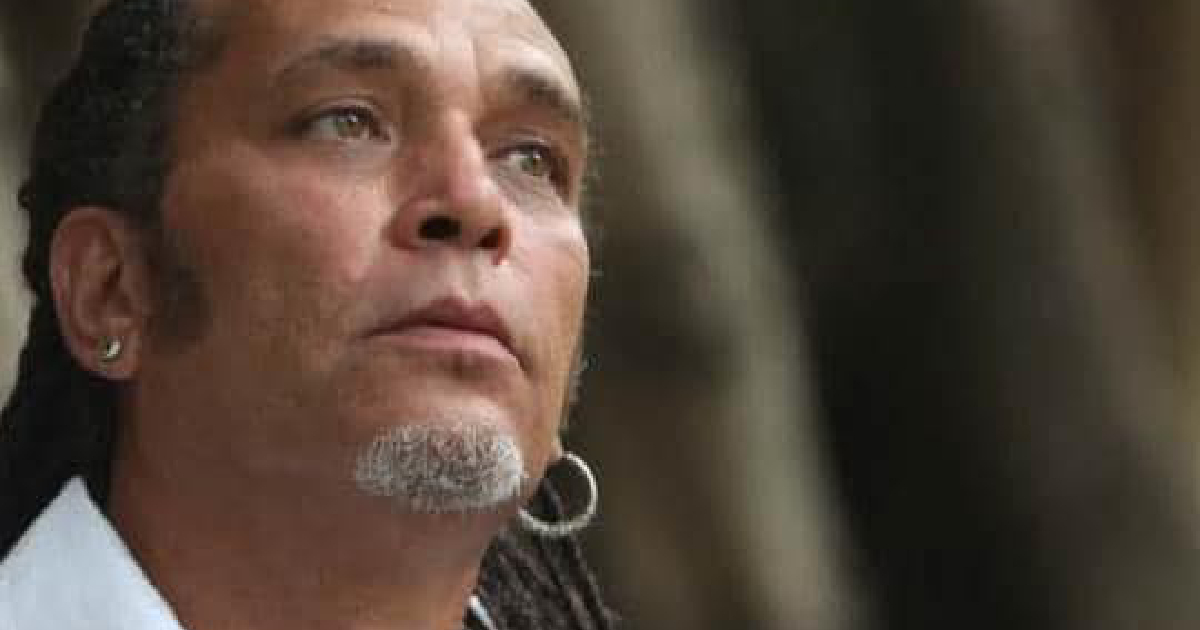
The Cuban actor Luis Alberto García posted this Tuesday on his Facebook profile an intimate and political reflection on his relationship with the Cuban regime, borrowing from the song "Yo no tanto como él," by the troubadour Pedro Luis Ferrer, and adding a personal text in which he honors his revolutionary parents while expressing his disagreement with their faith in the system.
García took Ferrer's lyrics as his own and expanded on them with a clarifying note: "Where it says my father, my mother also applies. The Pura and El Puro are El Puro and La Pura. They are not to blame for having believed. There is no further explanation."
The song, an ironic piece about the generational conflict in post-revolutionary Cuba, portrays the figure of a father who is fidelista, communist, and a member of the CDR, whom the narrator defends with filial loyalty despite not sharing his convictions: "My father was fidelista, / not as much as he, / but whoever touches my father / has to deal with me too."
One of the most direct passages of the lyrics strikes at the heart of the system: "I detest the bureaucracy / that turned efficiency / into a pile of misfortunes, / of futile prohibitions, / it increased resentments / and killed a thousand loves / What has happened to life? / So many people regretful."
Another verse reconstructs the actor's childhood during the Revolution: "My father that January / didn't take me out of the country, / dressed me as a pioneer / and taught me to fight."
In his personal text, García described his deceased parents with tenderness: "My old man is now loving dust and my old lady, a lovestruck pile of dust. Whenever I can, I put before him a plate of food very similar to what she served me for years, without the damn politics getting in the way."
Then he outlined with a single phrase the distance between his education and his awareness: «I never ate rice with ideology nor a plate of fried slogans».
The post concludes with a statement of resolve in the face of anticipated criticism: "Let all the insults come now. The impurities. I am not going to retaliate."
The publication adds to a consistent pattern of critical statements from the actor.
In January 2026, García questioned the official phrase "to doubt is to betray", describing it as "one of the most fascist statements" and defining himself as "a militant of all doubts."
That same month, he demanded explanations regarding the deaths of Cuban military personnel in Venezuela, highlighting the "deafening silence" of the government in response to the loss of 32 soldiers during the capture of Nicolás Maduro.
In March 2026, García described the Cuban situation as a "final moment" of the current model, and criticized the silence of the official press with the phrase: "I thought that at least yesterday, on the Day of the Press, the press would not be as pressed as usual."
In February, García spoke out against the detention of people for their ideas with the phrase "It is terrible to imprison ideas," in a context of increasing repression on the island.
The song that García made his own is the work of Pedro Luis Ferrer, a troubadour born in Yaguajay, Sancti Spíritus, whose work has been censored in Cuba due to its critical content and primarily circulates among the diaspora and at international concerts.
The lyrics of the song conclude with the verses that García also embraced as his own: “I’m not going to apologize / for my life. / I am what I learned to be / And what a marvel!”
Filed under: