
Related videos:
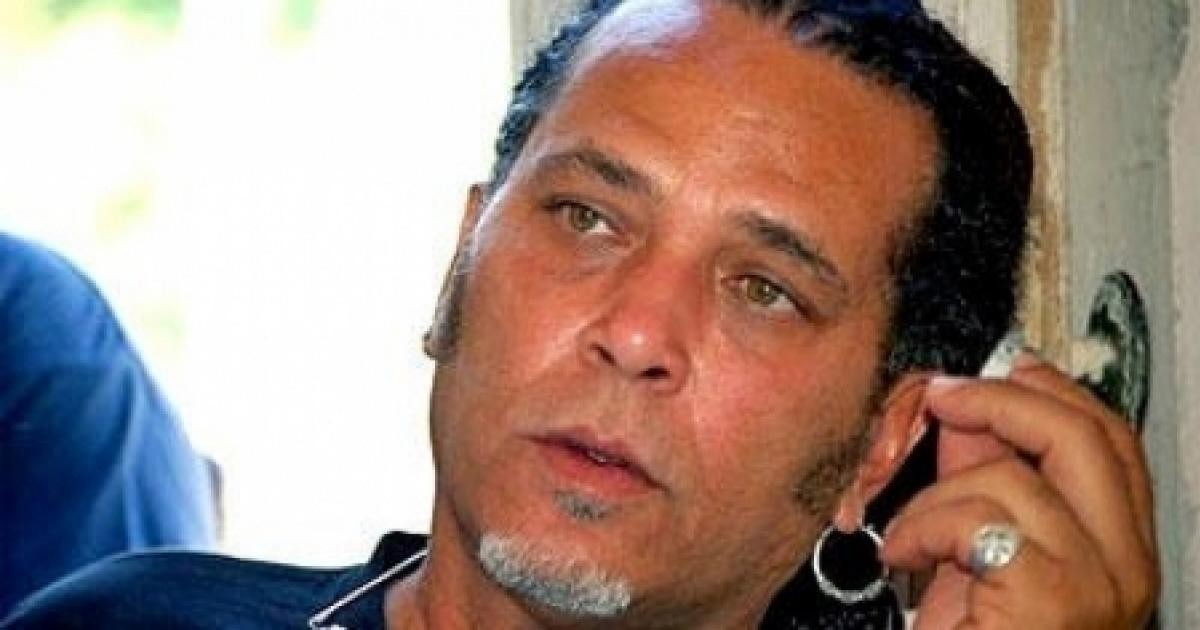
The Cuban actor Luis Alberto García Novoa posted a direct and ironically charged question to the Cuban government on his Facebook account regarding the official silence in response to the new situation in Venezuela.
"Waiting for them to explain in detail, to 32 Cuban families and to everyone, what's going on with Delcy?" he inquired.
The post highlights the wound left by the capture of Nicolás Maduro in a U.S. military operation on January 3, an action in which 32 Cubans who made up the first security cordon of the then Venezuelan president lost their lives.
The Cuban government, which for years systematically denied having a military presence in Venezuela, was compelled to publicly and abruptly acknowledge the deaths.
At the government tribute ceremony, where Raúl Castro made a public appearance, Díaz-Canel described them as "heroic" and stated that they "complicated" the Delta Force operation.
Meanwhile, in Venezuela, following the capture of Maduro, the Supreme Court appointed Delcy Rodríguez as acting president through a ruling of just three pages, under the concept of "forced absence."
Three months later, the Andean country still has no election date in sight, with Delcy clinging to the interim presidency with the support of Donald Trump.
This week, the leader stated that in January an extreme positions process came to an end that fractured the political foundations of the country, in a direct reference to the capture of Nicolás Maduro by U.S. forces.
The official, who since taking office has been promoting a Program for Peace and Democratic Coexistence, stated that Venezuela has changed and now includes spaces for convergence between sectors with different visions, something she presented as an achievement of her administration.
Days earlier, she thanked President Trump for removing her from the sanctions list of the Office of Foreign Assets Control (OFAC) of the U.S. Department of the Treasury, describing the measure as a step toward normalizing and strengthening relations between both countries.
That stance is precisely what García addresses in his publication: what the new situation in Venezuela means for Cuba, what happens to the cooperation agreements and the Cuban presence in that country, and what explanation is owed to the 32 families who lost their loved ones defending a government that no longer exists in the same way.
The actor describes the official silence of Cuba as "deafening" and labels it "powerful and mystical," with evident sarcasm. "Everything is a mystery," he writes in a phrase that encapsulates the opacity with which the regime has handled the diplomatic and human consequences of the operation.
This is not the first time that García has publicly questioned the government about issues that the state media avoids.
In January, he challenged the statement made by a Cuban official on television who claimed that "to doubt is to betray," describing it as "one of the most fascist sayings," and identifying himself as a militant of all doubts.
In March, he criticized the silence of the state media regarding recent protests, and that same month he published what he described as the "final moment" of the regime.
Filed under: