
Related videos:
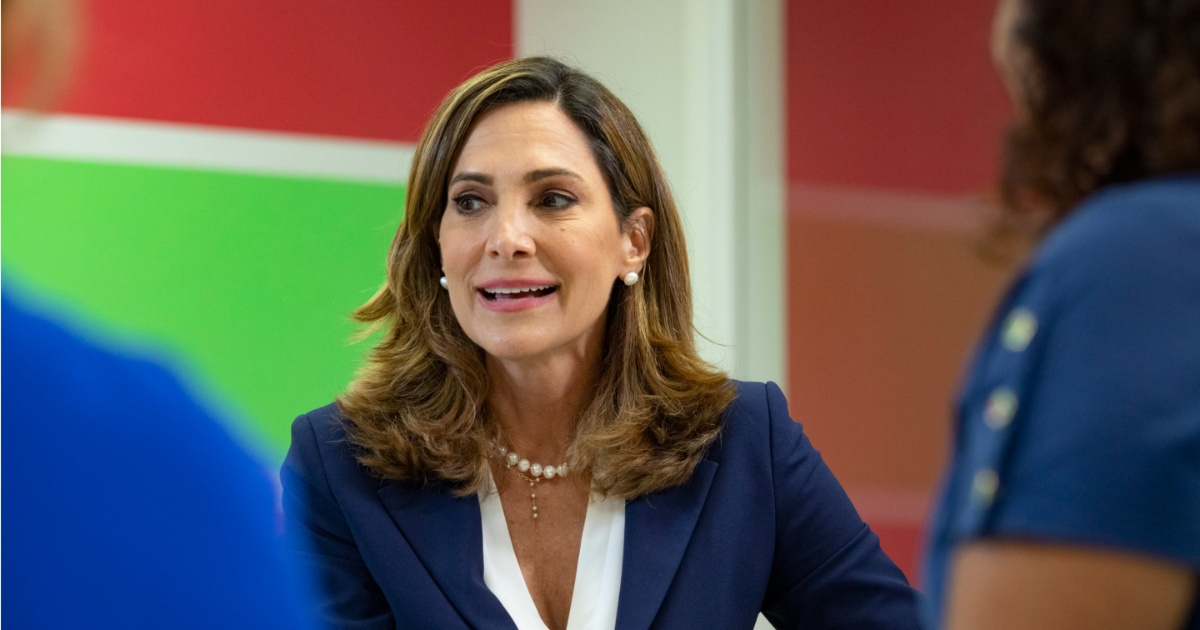
The Cuban-American representative for Florida, María Elvira Salazar warned this Thursday that the United States cannot cede its influence in Latin America to China, while supporting a meeting between the president of the U.S. Export-Import Bank (EXIM) and the president of Honduras.
"The United States cannot leave Latin America to China. That is why it is important to see the president of EXIM and the president of Honduras strengthening economic ties in our region and ensuring strategic supply chains in Central America," Salazar wrote on his account on X.
The Republican congresswoman was referring to the meeting between John Jovanovic, president of the EXIM Bank since September 2025 by appointment of President Donald Trump, and Nasry "Tito" Asfura, who took office as president of Honduras in January 2026 after winning the elections on November 30, 2025.
Honduras is a particularly relevant case in the geopolitical dispute between Washington and Beijing.
The predecessor of Asfura, Xiomara Castro, broke relations with Taiwan and established diplomatic ties with China in March 2023, signing 22 cooperation agreements with Beijing during a state visit that same year.
The arrival of Asfura to power represents a strategic shift for Washington. In January 2026, Secretary of State Marco Rubio welcomed the then-elect president of Honduras in Washington to discuss bilateral cooperation, regional security, investment, and migration.
In March 2026, Asfura participated in the "Shield of the Americas" Summit in Miami, called by Trump alongside leaders such as Nayib Bukele, Javier Milei, Daniel Noboa, and José Raúl Mulino.
In that forum, Trump revealed that four Latin American leaders, including Asfura, asked him to "take care of Cuba".
Salazar, one of the most active voices in Congress regarding hemispheric policy, has combined her stance against the regimes of Cuba, Venezuela, and Nicaragua with a warning about China's expansion in the region.
In April 2026, the congresswoman rejected a call to lift sanctions on Cuba during a hearing in the House, stating that "the Cuban people are suffering because of a brutal dictatorship, not because they need more concessions to the regime."
The dimension of national security reinforces the urgency of Salazar's message. U.S. intelligence reports have identified Chinese signal intelligence facilities in Cuba—located in Bejucal, Wajay, Calabazar, and El Salao—just 160 kilometers from Florida, adding a direct threat to the debate over Beijing's presence in the hemisphere.
China, for its part, has reoriented its strategy in the region: after the peak of 29 billion dollars in loans in 2015, it has reduced massive financing and is focusing on selective investments in lithium mining, technology, and telecommunications.
Its foreign direct investment in Latin America accounted for only 4.24% of the regional total in 2025.
"More trade with our allies. More stability in the hemisphere. More security for the United States. This is how American leadership in the Americas is defended," Salazar concluded in his post.
Filed under: