
Related videos:
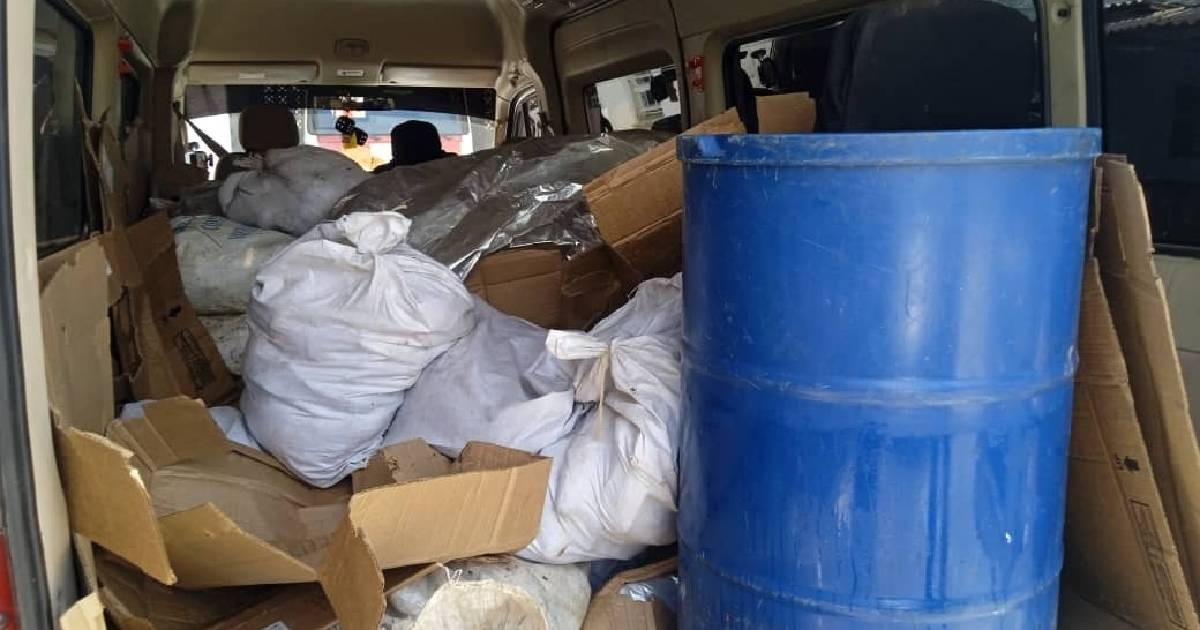
A minibus belonging to a MIPYME was intercepted in Bauta, a municipality in the province of Artemisa, carrying a large quantity of beef, lobsters, and fish intended for the informal market in Havana, according to what the Facebook account Artemisa Noticias Cuba, linked to the official body of the Provincial Committee of the Communist Party in that province, reported.
The publication identifies Francisco Ernesto Martínez and Yannier Matos as those involved, who, according to the text, were trying to evade the checkpoints of the National Revolutionary Police (PNR).
The vehicle, a FOTON T van with license plate W008732 and marked with the text "El Transportador" on the rear window, was transporting products in white bags and plastic barrels, as seen in the images shared alongside the post.
What stands out about this case is not only the seizure but also the manner in which it was disseminated: the account Artemisa Noticias Cuba follows a well-documented pattern of social media profiles that act as mouthpieces for the PNR and MININT, publishing police operations with a triumphant tone, photos of the detainees, and hashtags such as #HeroesInBlue, #WinningAgainstCrime, and #SecureArtemisa.
The post included an edited image with flame effects, decorative emergency lights, and Cuban flags, depicting the detainees inside the vehicle under the seal of the official campaign "Héroes de Azul," an initiative promoted by state media to elevate the work of the police.
The post labels those involved as "wrongdoers" and asserts that "this type of activity jeopardizes food security, the economy, and the health of the people," a language that reflects the narrative of the Cuban state security apparatus more than that of an independent media outlet.
From a legal standpoint, the operation involves highly sensitive products for the regime: the private sale of beef is prohibited in Cuba by Resolution 304/2023 of the Ministry of Agriculture, and the marketing of lobster is reserved for the state monopoly.
The MIPYME, legalized in 2021 as part of a limited economic opening, cannot include these products in their operations, which turns the use of these business vehicles into a way to provide legal cover for the transportation of goods from the black market.
This kind of seizures of meat and illegal products in Cuba has intensified in recent months across the country, amid a food crisis that is driving up demand in the informal market.
In March 2025, for example, authorities arrested traffickers in Guanabacoa with 23 sacks of beef transported illegally in a vehicle without documentation, during one of the many operations carried out that year in Havana, Granma, Las Tunas, and Santa Clara.
The structural scarcity experienced by the Cuban population after decades of communist dictatorship is precisely what drives this informal market, while the regime responds with police operations that it later transforms into digital propaganda.
Filed under: