
Related videos:
Russia celebrated this Friday the 66th anniversary of the restoration of diplomatic relations with Cuba with statements of support for the regime in Havana and promises to continue oil assistance, while the island suffers blackouts of more than 12 hours in the capital and up to 40 consecutive hours in the interior of the country, with no sign of new fuel shipments.
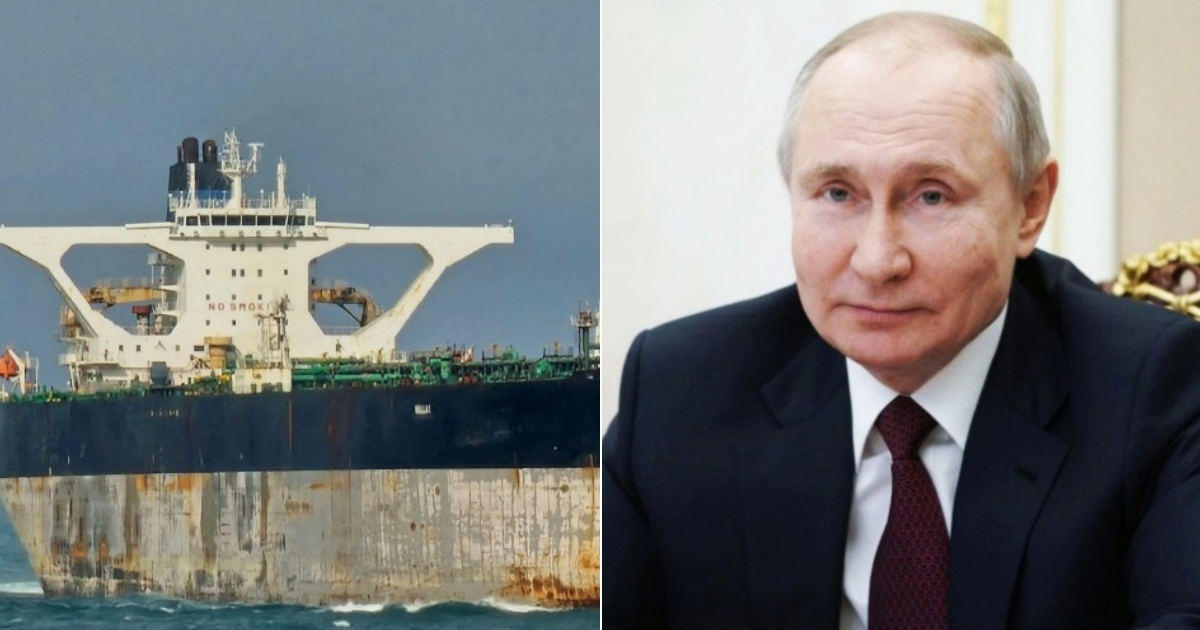
Both the Russian Ministry of Foreign Affairs and the Embassy of Russia in Cuba issued commemorative statements reaffirming the "strategic character" of the alliance and mentioned the recent arrival of a Russian tanker as evidence of their commitment.
"We will continue to support our friends in these difficult conditions. The recent arrival of the Russian oil tanker in the Greater Antilles is yet another demonstration of our willingness to help," stated the Russian Embassy in Havana.
The Moscow Ministry of Foreign Affairs, for its part, stated that Russia "confirms its firm willingness to continue providing the necessary political and material support" to the Cuban regime and described the delivery of fuel as "another tangible manifestation of Russian-Cuban friendship."
Miguel Díaz-Canel joined the celebrations on social media: "We commemorate the 66th anniversary of the reestablishment of diplomatic relations with the Russian Federation, a country with which we share excellent bonds of friendship, cooperation, and solidarity, and with which political and economic relations are deepening."
The diplomatic rhetoric, however, clashes directly with the energy reality faced by the Cuban people.
The only Russian shipment that successfully reached the island so far in 2026 was that of the tanker Anatoly Kolodkin, which docked in Matanzas on March 31 with 100,000 metric tons of Ural crude —approximately 730,000 barrels— enough for only seven to ten days of national consumption.
Since then, no new shipments have arrived. The second promised tanker, the Universal, has been adrift in the Atlantic for weeks about 1,600 kilometers from the Cuban shores, blocked by sanctions from the United States, the European Union, and the United Kingdom, with no confirmed destination.
Cuba needs eight fuel ships per month, but has only received one since December 2025, according to the Cuban Minister of Energy himself.
While Moscow celebrates the alliance, blackouts in Cuba continue to worsen. On Wednesday, there was an electrical deficit of 1,874 MW, with Havana experiencing 24 continuous hours without electricity. In Matanzas, reports indicated outages of up to 40 consecutive hours, and in eastern provinces like Granma and Holguín, electricity has been virtually absent for 24 hours a day.
The situation worsened even further after the shutdown of the Antonio Guiteras power plant last Monday due to a malfunction in its boiler — the eighth failure this year — resulting in a loss of 140 MW with no estimated return date.
This Friday, the day of the diplomatic anniversary and the Russian statements, it was forecasted that 54% of the island would be without electricity simultaneously during peak hours.
The Russian Foreign Minister Serguéi Lavrov admitted on April 15 during a visit to China that oil aid to Cuba "will probably last a couple of months," adding, "I am not a specialist." This confession inadvertently summarizes the true extent of support that Moscow offers to the regime while the Cuban people endure an unprecedented electrical crisis in 2026.
Filed under: