
Related videos:
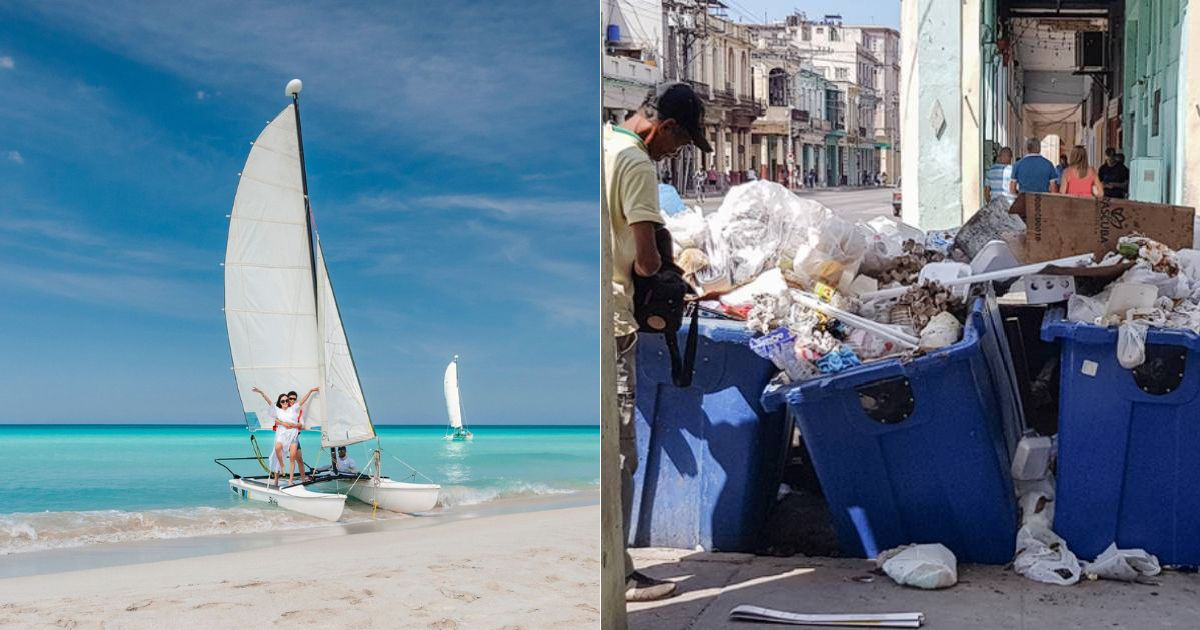
The official Cuban press reports on the last day this Saturday of the 44th edition of the International Tourism Fair FitCuba 2026 with the optimistic slogan that “Cuba is more than just a sun and beach destination”, while the country experiences the worst tourism crash in over two decades and more than a third of its families go hungry.
The event was held for the first time in a predominantly virtual format on May seventh and eighth, and concludes today in person at Josone Park in Varadero — the very sun and beach destination that the fair was dedicated to — with an awards gala for mixology, cooking, and social communication, reports the Cuban News Agency (ACN). A celebration worthy of a thriving sector, if the data didn’t tell a completely different story.
With around 900 participants and exhibitors from Colombia, Spain, Argentina, Canada, and other countries, the event had a much lower attendance compared to previous editions: in 2025, for instance, there were over 1,500 attendees. The digital format, presented as an innovative approach, largely responds to the limitations of a country suffering from power outages of up to 20 and 30 hours daily with a power generation deficit exceeding 1,900 MW. In Matanzas, the province where Varadero is located, power cuts can extend up to 70 continuous hours.
The Minister of Tourism, Juan Carlos García Granda, concluded the session on Friday with an encouraging speech: "Cuba has shown that it is ready to welcome the world" and "FitCuba is not just an event; it is a symbol of resilience, innovation, and confidence in the future." These words sound particularly bold when the accumulated hotel occupancy on the island stands at 21.5%, with more than eight out of ten rooms vacant.
Prime Minister Manuel Marrero Cruz inaugurated the fair with a recorded video —without being physically present— and made the already controversial statement that "every time a tourist travels to Cuba, they are helping the Cuban people." What he omitted is that the revenues from the sector are primarily channeled through GAESA, the business conglomerate of the Ministry of the Armed Forces, not necessarily to the pockets of the people he referred to.
The reality that contradicts the official narrative is overwhelming. The collapse of tourism left about 300,000 people connected to the sector without income, and Gaviota closed 20 hotels in Cayo Santa María, leaving more than 7,000 workers unemployed. In the first quarter of 2026, Cuba received only 298,057 international visitors, a 48% decrease compared to the same period in 2025. In March, the numbers were catastrophic: only 35,561 tourists, a 79% drop from a year earlier.
The Russian tourism plummeted to just 249 visitors in March 2026, compared to 15,688 in January of the same year. And this Saturday, while the official press celebrated the fair, a video was circulating on social media showing the Grand Aston Hotel in Havana completely empty, with not a single tourist in sight.
The San Cristóbal Travel Agency showcased urban tourism; Gaviota Tour highlighted nature tourism; Paradiso presented cultural offerings; and Cuban Medical Services focused on health tourism. A diverse catalog for a destination that welcomed only 1.81 million visitors in 2025, the lowest level since 2002 outside of the pandemic, representing a 62% drop compared to the record of 4.7 million in 2018.
While the regime sells hospitality to the world, a survey revealed that one in three Cuban households went hungry in 2025: 33.9% of families reported hunger and 79.4% spend 80% or more of their income solely on food. Cuba is, in fact, more than just sun and beach. It is also blackouts, hunger, and empty hotels.
Filed under: