
Related videos:
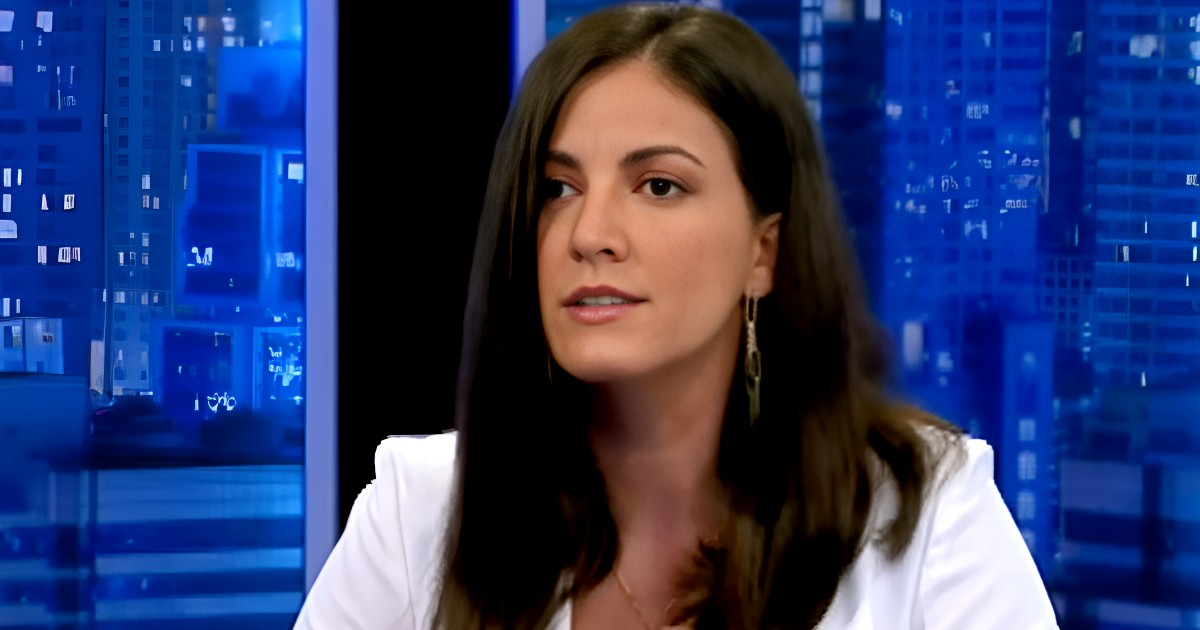
Rosa María Payá celebrated the decision of the U.S. Department of Justice to file a civil lawsuit aimed at revoking the citizenship of former ambassador and Cuban spy Víctor Manuel Rocha, calling it "a necessary step towards justice and accountability."
In a X, the activist and daughter of Cuban dissident Oswaldo Payá stated that "for decades, Rocha betrayed the U.S. while serving the Castro dictatorship from the highest levels of government."
He added that his family is pursuing a civil case aimed at holding Rocha accountable for his role in "aiding and concealing the terrorism linked to the murder of his father."
"Impunity cannot prevail," he concluded.
The Department of Justice filed a denaturalization lawsuit in the Federal Court for the Southern District of Florida last Thursday, arguing that Rocha fraudulently obtained his naturalization in September 1978 by concealing that he had been working as an undercover agent for Cuban intelligence (DGI) since 1973 and maintained ties to the Communist Party of Cuba.
Federal prosecutor Jason A. Reding Quiñones described Rocha as "one of the most prolific Cuban spies ever uncovered in the United States" and characterized the denaturalization as "finishing the job" following the criminal conviction.
"A person who secretly served the communist regime of Cuba should not retain the privilege of U.S. citizenship, even while in prison," he stated.
The lawsuit also requests the cancellation of his citizenship certificate, requires him to surrender all his American documents, and prohibits him from claiming benefits associated with that status.
Rocha, born in Colombia, developed a 25-year career in the State Department under both Democratic and Republican administrations. He held diplomatic positions in the Dominican Republic, Honduras, Mexico, Argentina, and Bolivia—where he served as ambassador—, in addition to working in the National Security Council and at the U.S. Interests Section in Havana.
According to the FBI, the extent of its espionage was extraordinary: it gained access to foreign policy toward Cuba, migration agreements, government operations, and the identities of officials.
He was arrested in Miami in December 2023 during an FBI undercover operation in which an agent posed as a supposed official from the Cuban DGI. In April 2024, he pleaded guilty, and Federal Judge Beth Bloom sentenced him to 15 years in prison and a fine of $500,000, stating that he "betrayed the United States for 51 years" and that his citizenship was "a privilege obtained unlawfully."
He is currently serving a sentence at the federal prison FCI Coleman in Florida, with an estimated release date of March 29, 2036.
The civil case of the Payá family was filed in Miami-Dade in February 2024 by Ofelia Acevedo, the widow of Oswaldo Payá, alleging that Rocha's actions as a Cuban agent directly contributed to the dissident's death.
The Inter-American Commission on Human Rights (IACHR) concluded in June 2023 that Cuban state agents were involved in the deaths of Oswaldo Payá and Harold Cepero on July 22, 2012.
Rosa María Payá, founder of Cuba Decide and a member of the Inter-American Commission on Human Rights since 2025, asserts that the demand for denaturalization is another link in the chain of responsibilities that still need to be established: "Impunity cannot prevail."
Filed under: