
Related videos:
Vladimir Putin made one of the most revealing admissions since the beginning of the war in Ukraine on Friday by publicly acknowledging that the conflict started due to Kiev's approach to the European Union.
The statement, which surprised many international analysts due to its bluntness, was interpreted as the clearest confirmation yet that Moscow invaded Ukraine to prevent its permanent departure from Russian influence.
During an extensive press conference following the Victory Day celebrations in Moscow, the Russian leader stated that “everything began with Ukraine's entry or attempted entry into the European Union,” a phrase that quickly sparked international reactions and was interpreted as an implicit acknowledgment that the true reasons for the war were geopolitical and not the official justifications put forward by the Kremlin since 2022.
"All of this subsequently led to the coup d'état, to the history of Crimea, to the stance of the southeastern regions of Ukraine and to military operations," Putin stated while explaining the Russian opposition to the association agreement between Kiev and Brussels.
The statement had a strong impact because it partially contradicts the official Russian narrative that has been upheld for years, focused on the "denazification" of Ukraine, the defense of Russian speakers in the Donbas, or the alleged immediate military threat from NATO.
The former U.S. ambassador to Russia Michael McFaul quickly responded, supporting that interpretation with a succinct yet powerful “Exactly” in social media, as he shared an analysis by Ukrainian journalist Olena Rohoza, who stated that Putin “admitted the true reason for the war.”
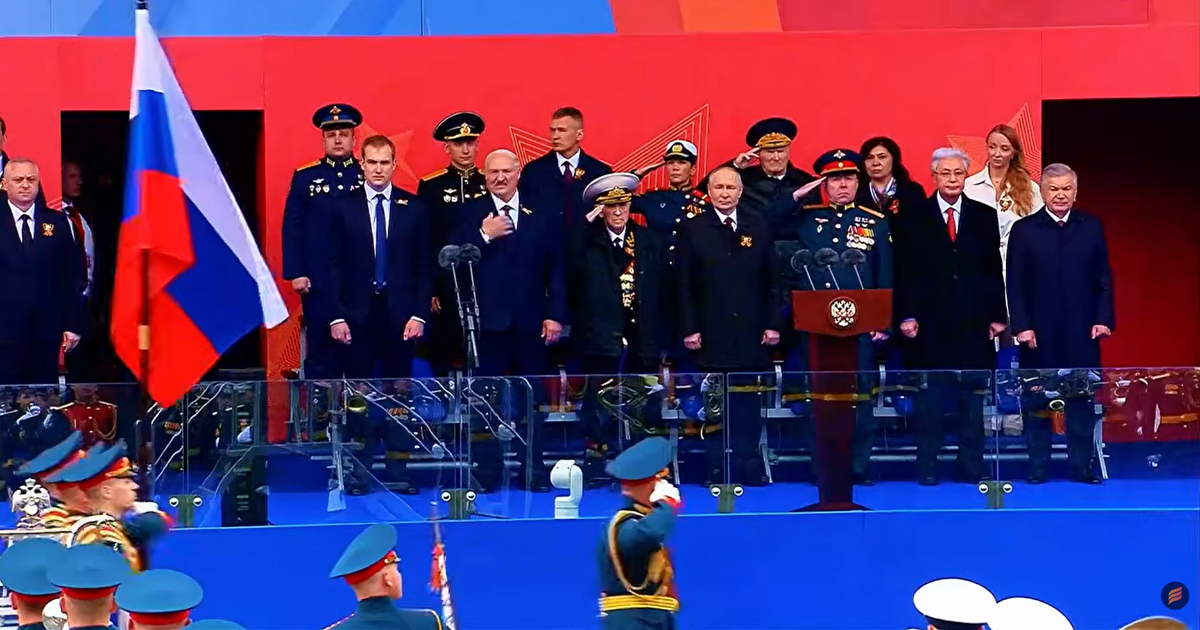
The statement also came at a particularly sensitive time for the Kremlin. The traditional military parade on May 9th in Red Square was characterized by strict security measures, communication restrictions, and a scaled-back format, lacking much of the usual heavy military display.
Putin denied that the reduction was motivated by fear of Ukrainian attacks and asserted that it was necessary to concentrate military resources "on the decisive defeat of the enemy." However, the leader himself acknowledged that Russia threatened Kiev with "massive missile strikes" if Ukraine attempted to disrupt the celebrations.
Even more revealing was that the Russian leader admitted to having sought diplomatic help from the United States, China, India, and other countries to prevent an escalation during Victory Day.
"We called the attention of the U.S. administration to the possible consequences and asked them to do everything necessary to ensure the safety of their diplomatic mission," said Putin.
According to the Russian president, Donald Trump subsequently intervened proposing an extension of the ceasefire and a prisoner exchange, an initiative that Moscow accepted immediately.
The scene painted a very different picture from the one the Kremlin traditionally tries to project during Russia's main patriotic holiday. Instead of showcasing absolute security, Moscow appeared fixated on preventing a symbolic Ukrainian coup in the very political heart of Russia.
Meanwhile, the toll of the war continues to accumulate for the Kremlin. Although Russia maintains offensive capability and continues to apply pressure in various sectors of the front, human and material losses have been enormous after more than four years of conflict.
The Russian economy also does not convey structural strength despite resisting Western sanctions. The country is increasingly operating as a war economy dependent on military spending, while facing persistent inflation, a brain drain, and growing reliance on China.
At the same press conference, Putin also reiterated his thesis that the West is using Ukraine as an “instrument” against Russia and once again accused Western elites of attempting to provoke the collapse of the Russian state.
"They were expecting a crushing defeat for Russia and the collapse of the Russian state within a few months. It didn't work," he stated.
However, his words about the European Union ended up dominating the international conversation.
For many observers, Putin implied that the true fear of the Kremlin was never solely military, but political and strategic: the definitive loss of control over Ukraine and the possibility of an old Soviet republic fully integrating into Europe, building a sovereign democratic state outside of Moscow's influence.
Filed under: