
Related videos:
A Qatari source revealed to CNN that María Corina Machado, the Nobel Peace Prize winner of 2025 and the leading opposition figure in Venezuela, was never included in the Qatar-mediated talks between the U.S. and Venezuela regarding a post-Maduro transition, which took place in the months leading up to Nicolás Maduro's capture on January 3, 2026.
According to the source, "neither U.S. officials nor Venezuelan officials discussed Machado as part of a post-Maduro transition plan," despite his open support for U.S. intervention in Venezuela and his strong criticism of the Maduro government.
Instead of Machado, the Trump administration allowed Vice President Delcy Rodríguez to take on the acting presidency of Venezuela, a figure who had actively participated in communications with Washington through Doha during 2024, including meetings with the Qatari Prime Minister and Foreign Minister, Sheikh Mohammed bin Abdulrahman Al Thani.
The Qatari source specified that Qatar positioned itself as a mediator between Washington and Caracas at the request of both parties, although it was not informed in advance of the operation on January 3 in which Maduro and his wife, Cilia Flores, were captured by U.S. special forces.
The revelation confirms what Trump had publicly stated about Machado shortly after Maduro's capture: that he did not believe the opposition leader had the necessary "support" within Venezuela to lead a transition, describing her as "a very nice woman" but noting that "she does not have enough support or respect within the country."
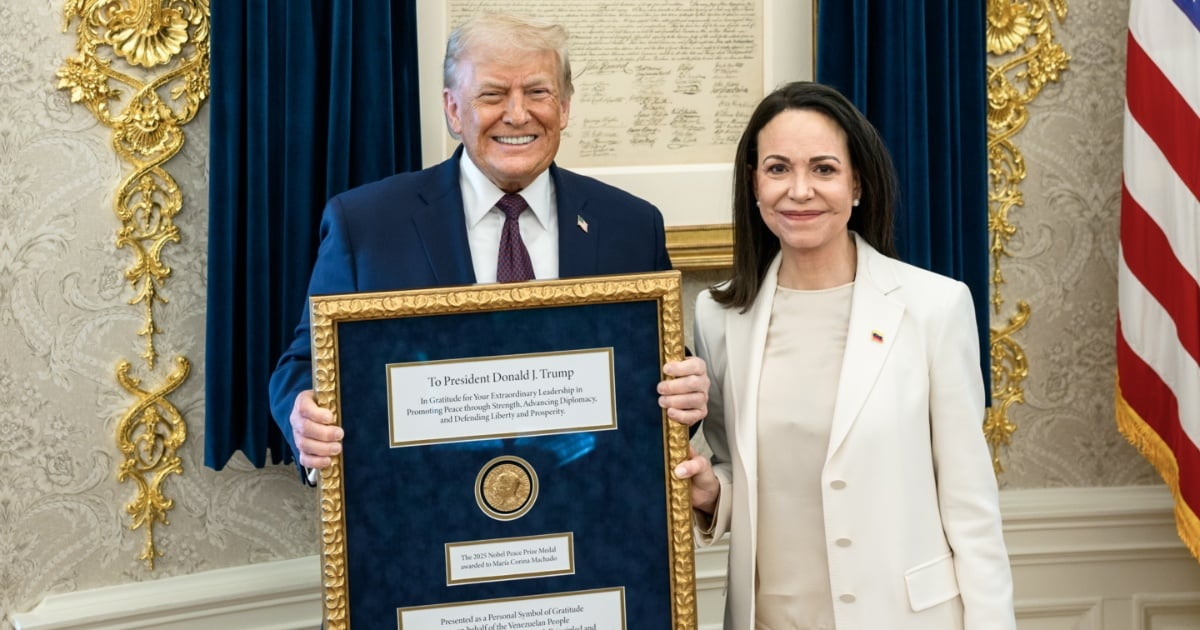
On January 15, 2026, Machado visited Trump at the White House and presented him with his Nobel Peace Prize medal, a gesture that prompted a statement from the Norwegian Nobel Committee reminding that the award is personal and non-transferable.
After that meeting, the White House Press Secretary, Karoline Leavitt, confirmed that Trump’s stance on Machado's potential leadership “had not changed,” describing the assessment as “realistic, based on what the president was reading and hearing from his advisers and his national security team.”
The advisor to Machado, David Smolansky, rejected that assessment and responded that she is "a leader with otherworldly support, and has the backing of almost all Venezuelans."
The Qatari source also revealed that a temporary bank account was set up in Qatar, at the request of the U.S. government, where the profits from the sale of Venezuelan oil would be deposited; that account has already been closed.
Meanwhile, Delcy Rodríguez has consolidated her position as a recognized interlocutor by Washington: the U.S. formally recognized her as the interim head of state in March 2026, reopened its embassy in Caracas on the 30th of that month, and removed her from the sanctions list of the Office of Foreign Assets Control on April 1.
Maduro and Cilia Flores remain detained at the Metropolitan Detention Center in Brooklyn, both declared innocent, with the next court hearing postponed until June 30, 2026, as reported by Judge Alvin Hellerstein on May 5.
The exclusion of Machado from the transition plans, now confirmed by a direct source from the mediation process, deepens tensions with sectors of the Venezuelan opposition that demand a transition without the participation of Chavismo, at a time when the U.S. is evaluating Machado's role in the future of Venezuela within the three-phase plan that includes free elections before the end of 2026.
Filed under: