
Related videos:
Cuba faces one of the most critical days of its already devastated electrical crisis this Tuesday, with a projected deficit of 1,960 MW during peak nighttime hours, according to the official report from the Electric Union (UNE).
The report reveals that at 06:00 hours today, the availability of the National Electric System (SEN) was only 1,250 MW against a demand of 2,884 MW, with 1,649 MW already affected since the early morning.
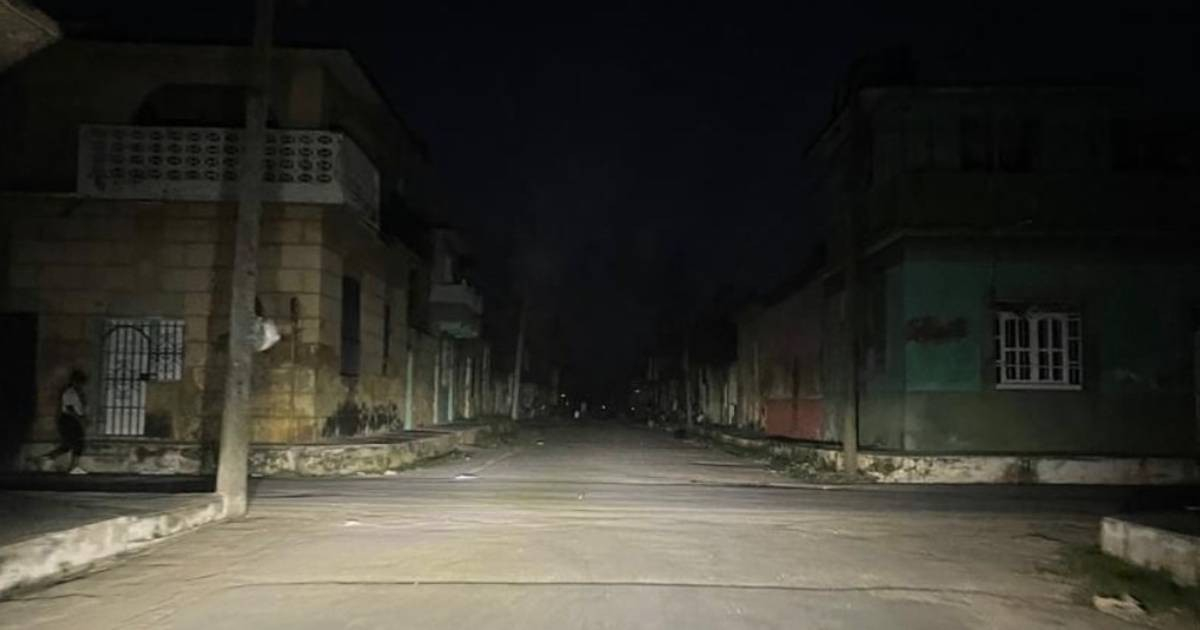
The situation is expected to worsen as night falls. The UNE estimates a supply of 1,290 MW against a peak demand of 3,250 MW, resulting in a deficit of 1,960 MW and a projected impact of 1,990 MW during peak hours, equivalent to leaving almost two-thirds of the country without electricity.
Monday was equally devastating. "The maximum impact due to generation capacity deficit yesterday was 2,012 MW at 9:10 PM, exceeding what was planned due to demand being higher than expected," states the UNE report.
The accumulated breakdowns partly explain the collapse. Units two and three of the Ernesto Guevara de la Serna Thermoelectric Power Plant (CTE), unit two of the Lidio Ramón Pérez CTE, and unit five of the Antonio Maceo CTE are out of service, while four other units are undergoing maintenance at the Mariel, Renté, and Nuevitas plants. The limitations in thermal generation total 379 MW out of service.
The only reinforcement planned for the nighttime peak is the entry of unit three of the CTE Santa Cruz with just 40 MW, an insignificant figure considering the magnitude of the deficit.
The 54 installed photovoltaic solar parks generated 3,822 MWh on Monday, with a maximum capacity of 490 MW during daylight hours; however, this source does not cover the nighttime deficit, which is when demand peaks.
The current crisis is part of a sustained deterioration over the past few weeks. The deficit was 1,887 MW last Sunday and 1,874 MW last Thursday, while the highest recorded in 2026 was 2,075 MW on March 6.
The structural cause combines an aging thermoelectric infrastructure with a severe fuel shortage. Cuba produces only 40,000 barrels of oil per day compared to a consumption of more than 110,000 barrels. The shipment of 730,000 barrels brought by the Russian tanker Anatoli Kolodkin on March 31 ran out by the end of April, and a second Russian ship remains adrift in the Atlantic with no confirmed destination under the pressure of international sanctions.
The human impact is devastating. The town of Cantel, in Cárdenas, Matanzas, has been without electricity for more than seven days since May 3, following the explosion of a transformer at the Humberto Álvarez sugar mill. "Not a single explanation. No one is taking responsibility. No one is providing any information," complained Christian Arbolaez, a resident of the community.
Filed under: