
Related videos:
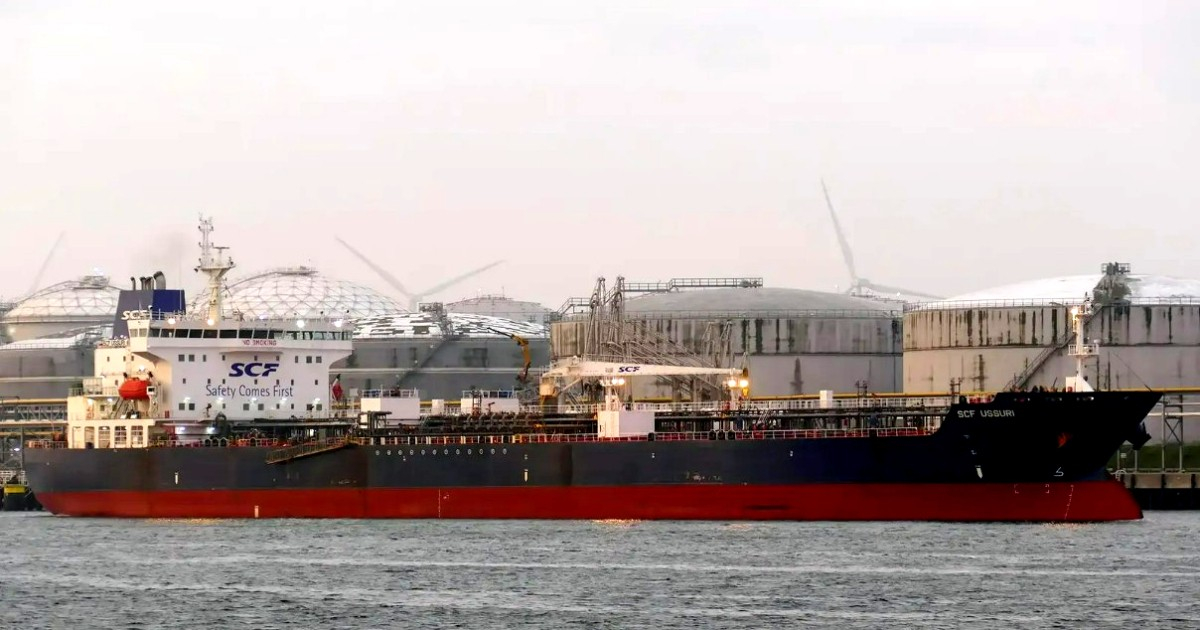
The Russian tanker Universal, sanctioned by the United States, the European Union, and the United Kingdom, has been adrift in the Atlantic Ocean since mid-April, stranded about 1,600 kilometers off the coast of Cuba with nearly 270,000 barrels of diesel on board, according to tracked data from Bloomberg.
The vessel, belonging to the Russian state shipping company Sovcomflot, departed from a port in the Baltic Sea in early April and crossed the English Channel on the 9th of that month, escorted by a Russian frigate. Its arrival in Cuba was expected at the end of April, but it interrupted the journey without declaring a destination in the automatic identification systems.
Since April 14, when maritime tracking platforms positioned the Universal about 15 days away from Cuba, the vessel's behavior became erratic.
On April 27, the Universal was sailing at 3.4 knots heading northwest, moving away from a direct route to the Caribbean and 3,175 kilometers from Havana.
Two days later, the vessel had partially corrected its course to the west-southwest at a mere 2.2 knots, but it still had not declared a destination.
The uncertainty surrounding its arrival follows a familiar pattern. Several ships have altered their routes to Cuba out of fear of being intercepted by U.S. naval forces. The most recent precedent is that of the Sea Horse, which in March 2026 rerouted its shipment of Russian diesel to Venezuela and Trinidad and Tobago without reaching Cuba.
The regulatory framework weighs heavily on any delivery attempts. The General License 134A from OFAC, issued on March 19, 2026, explicitly excludes Cuba from transactions involving Russian oil under U.S. jurisdiction. Additionally, on May 1, Trump signed a new executive order that expands sanctions against the Cuban regime, freezing assets tied to sectors such as energy and defense.
The only ship that managed to deliver oil to Cuba in 2026 was the Anatoly Kolodkin, which arrived at the port of Matanzas on March 31 with 730,000 barrels of crude, thanks to a temporary waiver from the Trump administration for humanitarian reasons. That shipment barely covered seven to ten days of consumption.
While the Universal remains still, Cuba is experiencing its worst energy crisis in decades. The island needs between 90,000 and 110,000 barrels daily but only produces about 40,000. As of May 2, the electrical deficit exceeded 1,415 MW, with power outages lasting up to 24 hours in eastern provinces such as Granma and Holguín.
The Cuban Minister of Energy, Vicente de la O Levy, acknowledged on April 22 that the reserves of the Kolodkin would be depleted before the end of that month and that Cuba needs eight ships like that each month. Díaz-Canel warned days later that Russian oil was running out with no replacement in sight.
In a partial response, the Cuban state oil company announced on Tuesday the replacement of equipment in two of its largest wells to increase production by 30%. However, experts warn that Cuba would need between 8 to 10 billion dollars in investment to overcome the crisis structurally.
The Russian Energy Minister, Serguéi Tsiviliov, had promised in April that Moscow would not leave the Cubans "in trouble," but Russian oil production registered its largest decline in six years during the same month, raising doubts about Russia's ability to sustain these shipments.
Filed under: