
Related videos:
The Department of State of the United States warned the Havana regime this Wednesday that if it rejects its 100 million dollars offer in direct humanitarian aid to the people, it will have to account to the Cubans for "standing in the way of that critical assistance."
The statement, signed by the Office of the Spokesperson, indicates that Washington has made "numerous private offers" to the Cuban regime—including support for free and fast satellite internet, in addition to the $100 million in humanitarian aid—and that Havana has rejected them all.
The note specifies that the aid would be distributed in coordination with the Catholic Church and other reliable independent humanitarian organizations, deliberately to avoid the mediation of the Cuban State.
"The decision lies with the Cuban regime: to accept our offer of assistance or to deny critical help that saves lives and ultimately to be held accountable to the Cuban people for obstructing that vital assistance," the official text states.
The offer had been publicly revealed for the first time on May 8 by Secretary of State Marco Rubio from Rome, a day after meeting with Pope Leo XIV in the Vatican during a private 45-minute audience where Cuba and the expansion of humanitarian aid took center stage.
Rubio then proclaimed, "We have offered the regime 100 million dollars in humanitarian aid that, unfortunately, they have not yet accepted to distribute to help the people of Cuba."
The regime's response has been one of denial and confrontation. The Chancellor Bruno Rodríguez Parrilla published on Tuesday on X that the offer was a "fable" and a "lie of 100 million dollars," denying having received any formal proposal and concluding with the rhetorical question: "Wouldn't it be easier to lift the fuel blockade?"
This Wednesday, Rodríguez insisted on warning of a possible "bloodbath" if the U.S. were to take military action against Cuba, which analysts interpret as an attempt to divert attention from the humanitarian offer.
The deputy minister Carlos Fernández de Cossío described the aid as a "dirty political business," while the Cuban ambassador to Belgium labeled it as "handouts."
Díaz-Canel accused the U.S. of wanting to take the Cuban people "as hostages" and acknowledged a "particularly tense" crisis with widespread blackouts.
The State Department describes the Cuban communist system as one that "has only served to enrich the elites and condemn the Cuban people to poverty."
The offer of 100 million represents a huge leap from previous commitments: the U.S. had already allocated nine million dollars in aid following Hurricane Melissa, which hit eastern Cuba on October 29, 2025, as a category three storm, affecting over 2.2 million people. Of those funds, six million were distributed through Caritas and the Catholic Church, benefiting around 24,000 people in Santiago de Cuba, Holguín, Las Tunas, Granma, and Guantánamo.
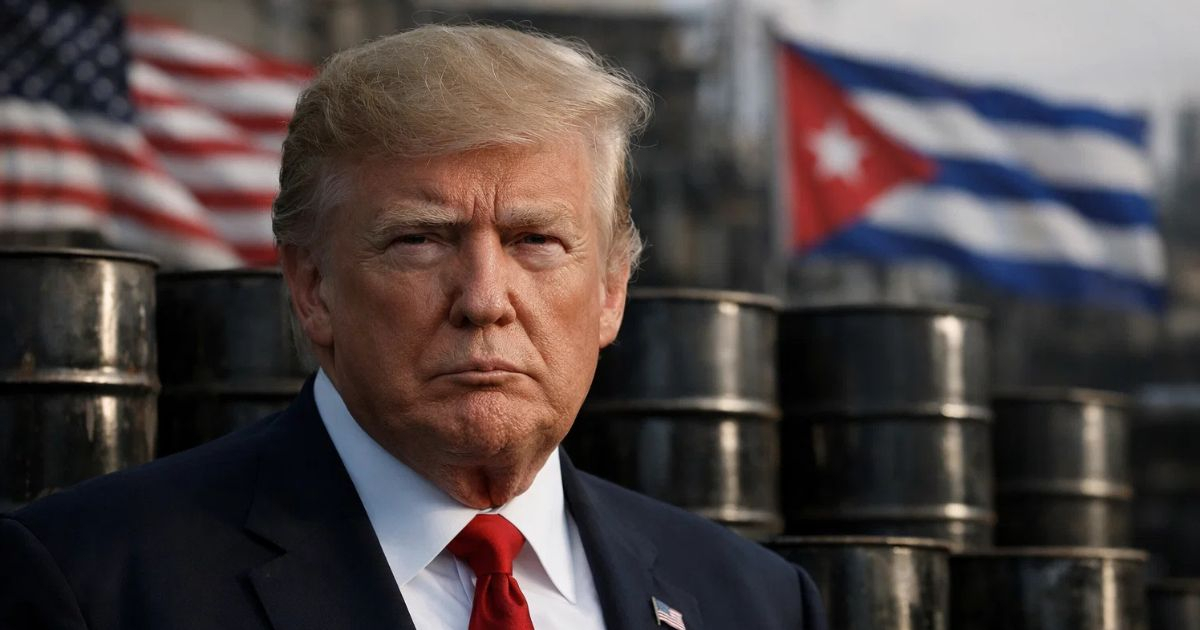
The announcement comes in the context of a sustained increase in U.S. pressure: since January 2026, the Trump administration has accumulated over 240 sanctions against the regime, intercepted at least seven tankers, and reduced the island's energy imports by between 80% and 90%.
The offer puts the regime in a politically uncomfortable position: accepting it means acknowledging the legitimacy of the independent channel of the Catholic Church; rejecting it implies publicly accepting responsibility for denying aid to its own population amid the worst humanitarian crisis in Cuba in decades.
Filed under: