
Related videos:
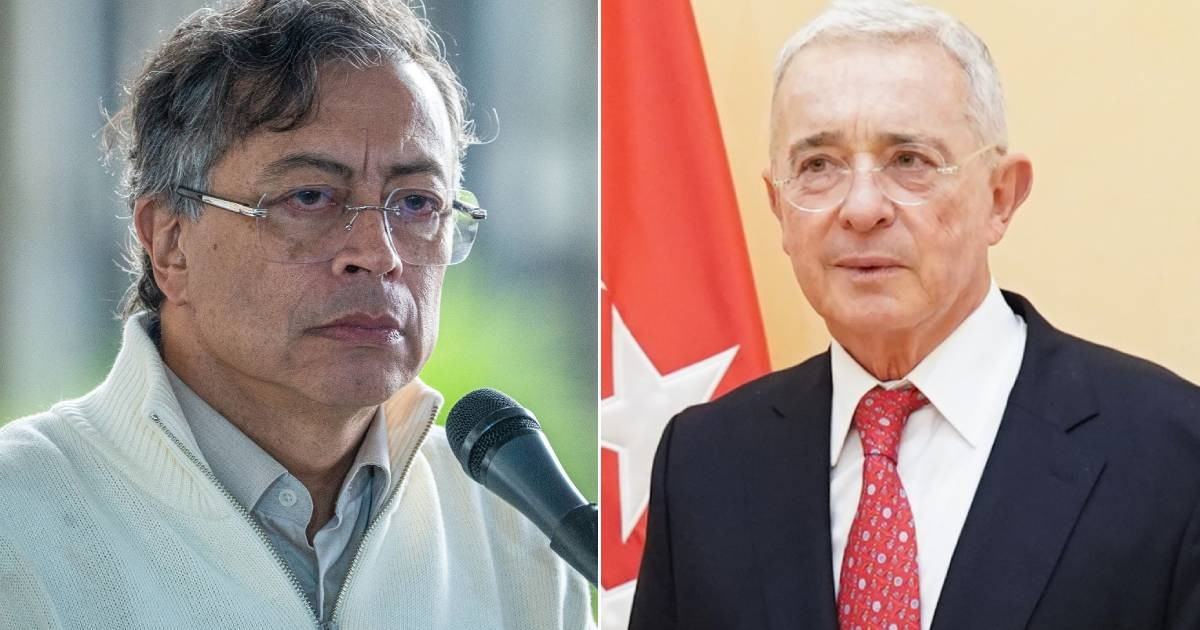
The former Colombian president Álvaro Uribe lashed out this Wednesday at President Gustavo Petro, comparing his healthcare model to the Cuban system, amid a financial crisis that the General Comptroller of the Republic deemed a “critical and sustained deterioration” in the health promotion entities (EPS) intervened by the government.
"Petro is destroying health so that we all become slaves of the State like in Cuba. Many people stop eating to buy medication. Paloma will overcome the problem with a system of free choice and solidarity," Uribe wrote on his social media.
The statement from the former president, leader of the Democratic Center party and president of Colombia from 2002 to 2010, came during a week filled with bad news for the Colombian healthcare system.
A report from the Comptroller's Office revealed that the eight EPS intervened by the government—Nueva EPS, Coosalud, Famisanar, Capresoca, Savia Salud, Asmet Salud, Emssanar, and SOS—are experiencing a deterioration that jeopardizes medical care for millions of Colombians.
The numbers are clear: Coosalud's liabilities rose from 1.88 trillion pesos in October 2024 to 6.34 trillion in 2025, following the government's intervention.
Nueva EPS has accumulated a shortfall of 4.9 trillion pesos in technical reserves and 13.6 trillion in unlegalized advances, with no certified financial statements for 2024 or 2025.
The net worth of the group of intervened EPS fell from 110 billion pesos in 2021 to -16.9 trillion in 2025, according to data cited by El País.
This situation was compounded by the fact that requests, complaints, and claims from users of the intervened EPS exceeded two million in 2025, marking an increase of 27.4% compared to the previous year.
In that context, the Health Superintendent, Daniel Quintero, requested the resignation of all the supervisors of the intervened EPS on Tuesday.
"I have requested today the resignation of all the supervisors of the intervened EPS. We will evaluate their actions, results, responses to requests, complaints, and claims, the delivery of medications, and based on that, their continuity or departure," declared Quintero.
The measure generated an immediate response from Jorge Iván Ospina, the intervenor of Nueva EPS, who publicly rejected the request: "My resignation is requested by Petro, not Quintero!"
Uribe took advantage of his criticism to support Paloma Valencia, a senator from the Centro Democrático and a presidential candidate for the 2026 elections, whose proposal advocates for a system of free choice of insurer—public, private, or solidarity—in direct opposition to the state centralization model promoted by Petro.
The health reform proposed by the Petro government, which aims to concentrate resources within the Administrator of the Resources of the General System of Social Security in Health (ADRES) and reduce the role of private EPS, failed legislatively in 2023 and 2024, and remains unapproved.
The reference to Cuba is a recurring theme in Uribe's discourse: the island's healthcare system is state-run and centralized, with no private insurers, a model that the former president uses as a warning about the direction he believes Colombia would take under the current government's policies.
Filed under: