
Related videos:
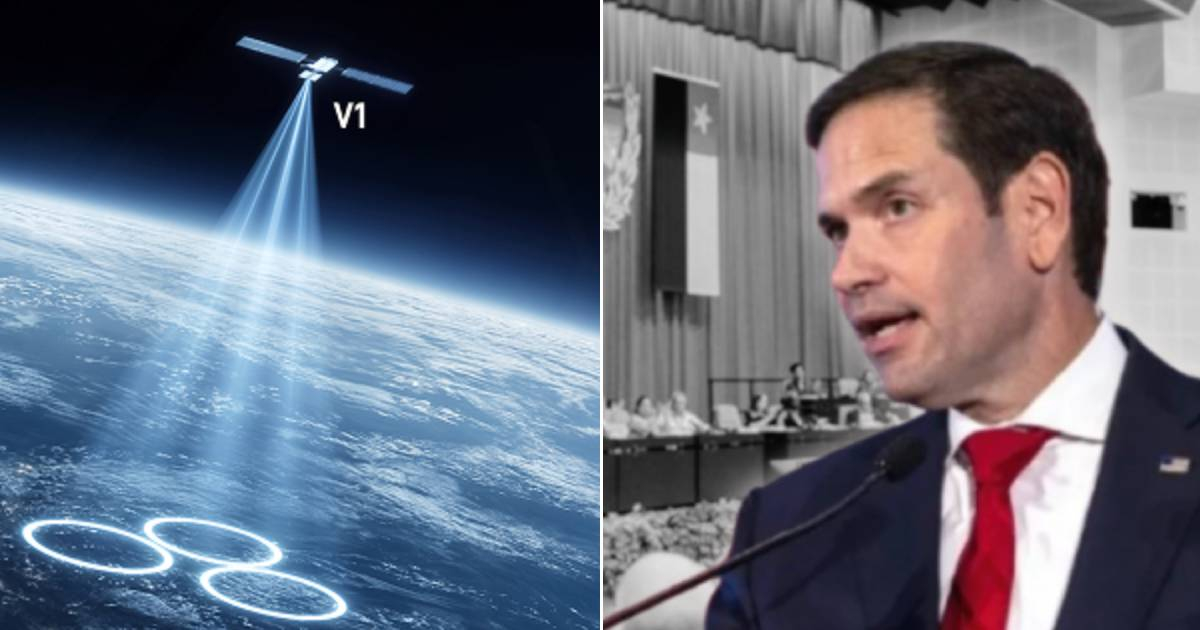
The U.S. State Department publicly announced on Wednesday its offer to provide 100 million dollars in direct humanitarian assistance to the Cuban people, along with free access to satellite internet via Starlink, after confirming that the regime in Havana has repeatedly rejected both proposals.
According to the official statement from the Office of the Spokesperson, Secretary of State Marco Rubio had made "numerous private offers" to the regime, including support for "free and fast" satellite internet and the 100 million in humanitarian aid, without receiving a favorable response.
Washington decided to make the offer public in light of the regime's systematic refusal, placing the responsibility squarely on Havana: "The decision rests with the Cuban regime to accept our assistance offer or deny critical, life-saving aid and ultimately be held accountable to the Cuban people for obstructing this assistance."
The proposal for the 100 million is now public and includes the distribution of this amount in coordination with the Catholic Church and other independent humanitarian organizations, to avoid the involvement of the Cuban state.
Rubio had publicly revealed the offer on May 8, one day after meeting with Pope Leo XIV at the Vatican, where Cuba was the central topic.
"We have offered the regime 100 million dollars in humanitarian aid, which, unfortunately, they have not yet agreed to distribute to help the people of Cuba," declared the Secretary of State.
The Cuban Minister of Foreign Affairs Bruno Rodríguez Parrilla responded on May 12 by denying the existence of such an offer, labeling it a "fable" and a "100 million dollar lie," and rhetorically asking, "Could it be a donation, a deception, or a dirty deal to undermine our independence?".
The Starlink proposal was presented on April 10 during the first visit of a U.S. government aircraft to Havana since 2016. A senior State Department official confirmed to EFE that the connectivity offered would be “free, fast, and reliable throughout the island”, directly challenging ETECSA's monopoly on Cuban telecommunications.
The regime rejected the offer, and the official media outlet Razones de Cuba published an article titled "Starlink's Hybrid War Against Cuba," in which it inadvertently acknowledged that the satellite network is "inherently resistant to physical attacks or government interdiction," revealing the true reason for the rejection: the fear of losing control over communications.
The Cuban regime compared the installation of Starlink to "the installation of microphones, cameras, or missile launch bases on national territory."
The U.S. had previously distributed six million dollars through Caritas Cuba, benefiting about 8,800 families in eastern provinces affected by Hurricane Melissa, which struck the island on October 29, 2025, as a category three hurricane, impacting more than 2.2 million people.
The State Department was emphatic in blaming Havana: "The regime refuses to allow the United States to provide this assistance to the Cuban people, who are in desperate need due to the failures of the corrupt Cuban regime."
The new offer of 100 million comes as Cuba faces its worst economic crisis in decades, with a cumulative contraction of 23% since 2019 and a projected GDP decline of 7.2% for 2026, exacerbated by the cut in Venezuelan oil supplies since January of this year.
Filed under: